

You follow a narrow road that dead-ends at a low seawall, and beyond it the beach unfolds in a wide crescent, sand the color of raw almonds. The Mediterranean is flat here, almost lake-like on calm mornings, and you can wade out thirty meters before the water reaches your waist. By mid-morning, umbrellas dot the upper beach, each one marking a family's territory—coolers, folding chairs, children in sun hats digging moats around imaginary castles.
“Gdyel's neighborhood beach, where local rhythms—not tourist seasons—dictate who spreads a towel and when.”
 Credit: Pexels
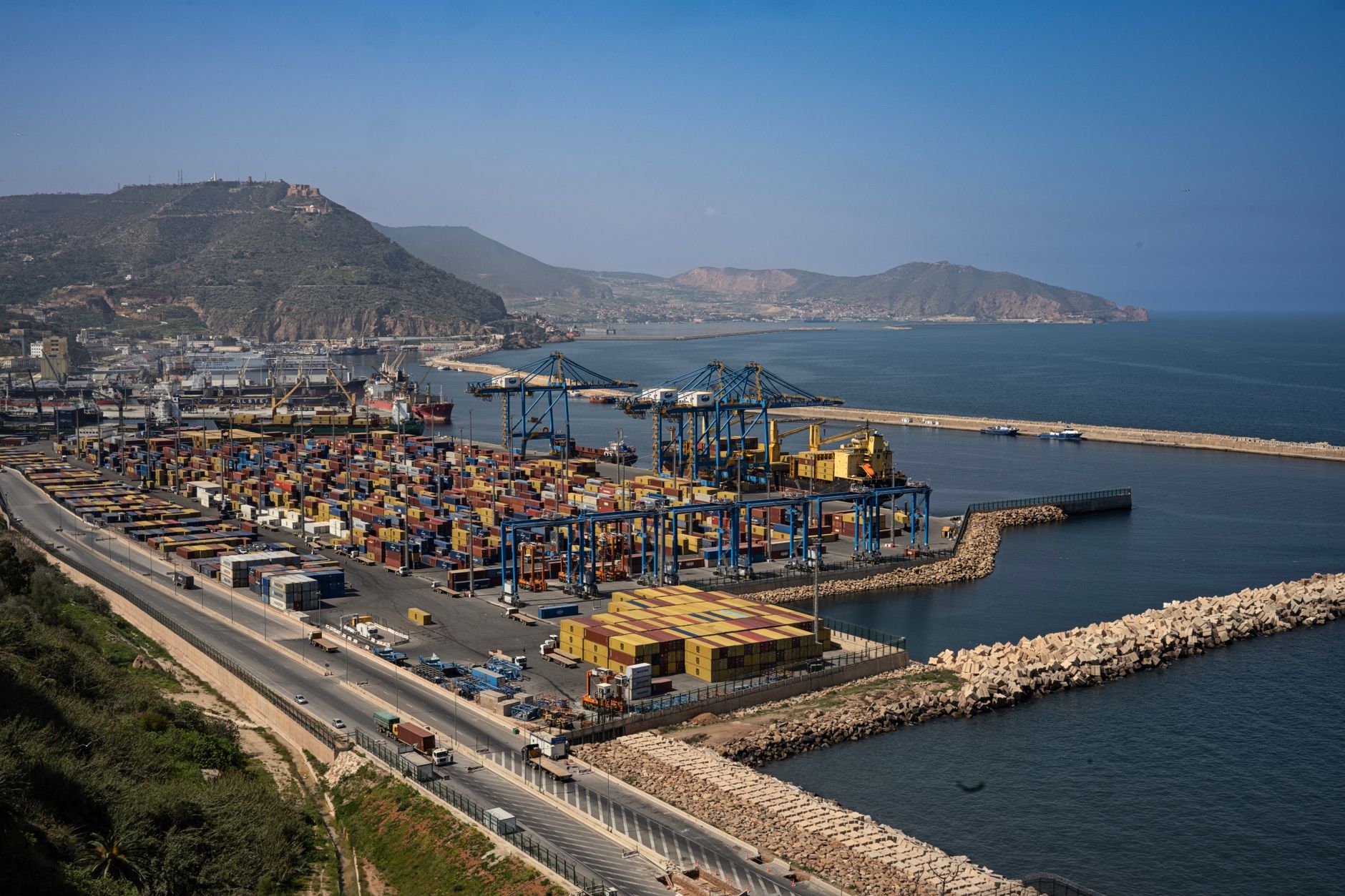
Port of Oran showing containers, cranes, and Algerian coastline in the background.
The scent of merguez from a nearby grill drifts across the sand, mixing with sunscreen and the faint iodine smell of seaweed drying along the wrack line. You spread a towel near the water's edge, where the sand is cool and packed firm, and watch fishing skiffs motor past, their bows slapping small waves. Gulls wheel overhead, calling in sharp bursts, and the only other sound is the gentle slosh of water against the shore.
Late afternoon brings a breeze off the water, and the light softens to honey. You walk the strand end to end, passing clusters of teenagers playing football and older men smoking in the shade of beached rowboats. This beach doesn't perform; it simply exists, a functional stretch of coast where Gdyel's residents come to cool off, to talk, to let the day slow down.


