Counting the waves…
Counting the waves…

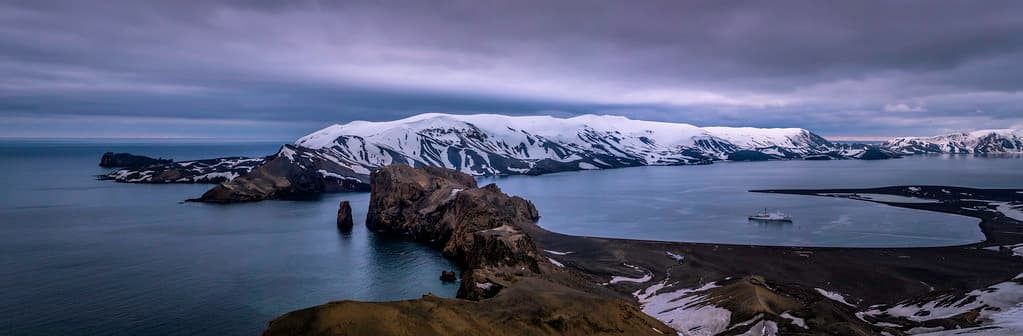
Baily Head sits on the raw outer coast of Deception Island, a flooded volcanic crater in the South Shetlands where the shoreline is still exhaling heat. You land by Zodiac through a notch in the caldera called Neptune's Bellows, then hike overland to reach this exposed crescent of obsidian grit. The beach stretches beneath rust-streaked cliffs, waves rolling in from the Drake Passage with a force that makes every landing an exercise in timing and nerve. The real draw is biological theatre on an epic scale. Chinstrap penguins—named for the thin black line beneath their beaks—cover every available slope in raucous, shuffling density. They toboggan down snowfields, bicker over pebbles, and march in unbroken columns to and from the surf. You stand amid the din, careful not to approach closer than five meters, watching chicks beg and adults projectile-defecate with startling accuracy. The smell is pungent, ammoniac, unforgettable. Summer here—November through February—brings near-perpetual daylight and marginally forgiving weather. Temperatures hover just above freezing, winds gust without warning, and the black sand absorbs what little solar warmth penetrates the overcast. You wear layers, keep your camera inside your parka between shots, and accept that conditions can shift in minutes. This is Antarctica unfiltered: no infrastructure, no safety net, just you and a landscape still shrugging off its last eruption.
Places, rentals, tours and events within walking and driving distance of Baily Head Beach.
Photos
Visitors must maintain a minimum five-meter distance from all wildlife at Baily Head Beach according to Antarctic Treaty guidelines, though penguins may approach you. Never chase, touch, or feed penguins. The massive chinstrap colony creates challenging terrain with slippery guano and aggressive birds protecting nests during breeding season. Antarctic fur seals also inhabit the area and can be territorial and dangerous. Always follow your expedition guide's instructions, move slowly, and respect wildlife space. Photography should be done with telephoto lenses to avoid disturbing animals.
Visit between December and February to witness chinstrap penguins during their breeding cycle at Baily Head. Late December through January offers peak activity with chicks hatching and adults actively feeding young. November sees nest building and courtship behaviors. By late February, chicks begin fledging and colonies start dispersing. The massive colony of over 100,000 chinstrap penguins creates spectacular viewing opportunities throughout the summer season. Weather permitting, January typically offers the best combination of penguin activity and stable landing conditions.
Landing at Baily Head Beach is considered challenging and weather-dependent. Located on Deception Island's exposed outer coast, it faces open ocean swells that can make Zodiac landings difficult or impossible. Expedition ships only attempt landings in calm conditions. The beach approach requires navigating through surf, and visitors must be physically capable of wet landings. Many Antarctic voyages list Baily Head as an alternative site attempted only when conditions permit. Success rates vary considerably depending on weather and sea state during your visit.
Baily Head Beach is completely undeveloped wilderness with no facilities, shelters, or infrastructure of any kind. The dramatic black volcanic sand beach and surrounding slopes are home only to the massive penguin colony and occasional seals. All visitors arrive via Zodiac from expedition ships and make brief shore visits of typically one to three hours. There are no bathrooms, no buildings, and no services. Visitors must be completely self-sufficient and prepared for exposed Antarctic conditions with proper clothing and following leave-no-trace principles.
Baily Head Beach hosts one of Antarctica's largest chinstrap penguin colonies, with over 100,000 breeding pairs creating an extraordinary wildlife spectacle. The dramatic setting combines black volcanic sand, crashing ocean surf, steep volcanic cliffs, and massive penguin colonies stretching up the slopes. This outer-coast location offers different scenery than sheltered caldera beaches, with powerful ocean dynamics and raw Antarctic exposure. The combination of volcanic geology, massive wildlife congregations, and challenging access makes it one of the most dramatic and sought-after landing sites in Antarctica.