
Counting the waves…
Counting the waves…

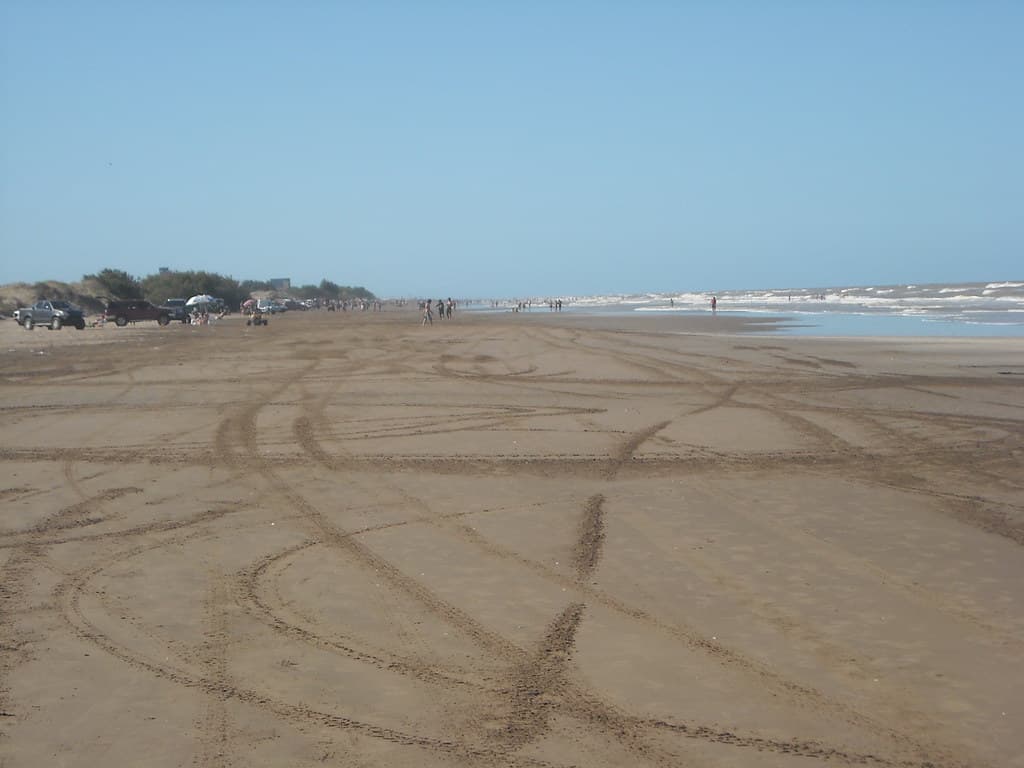
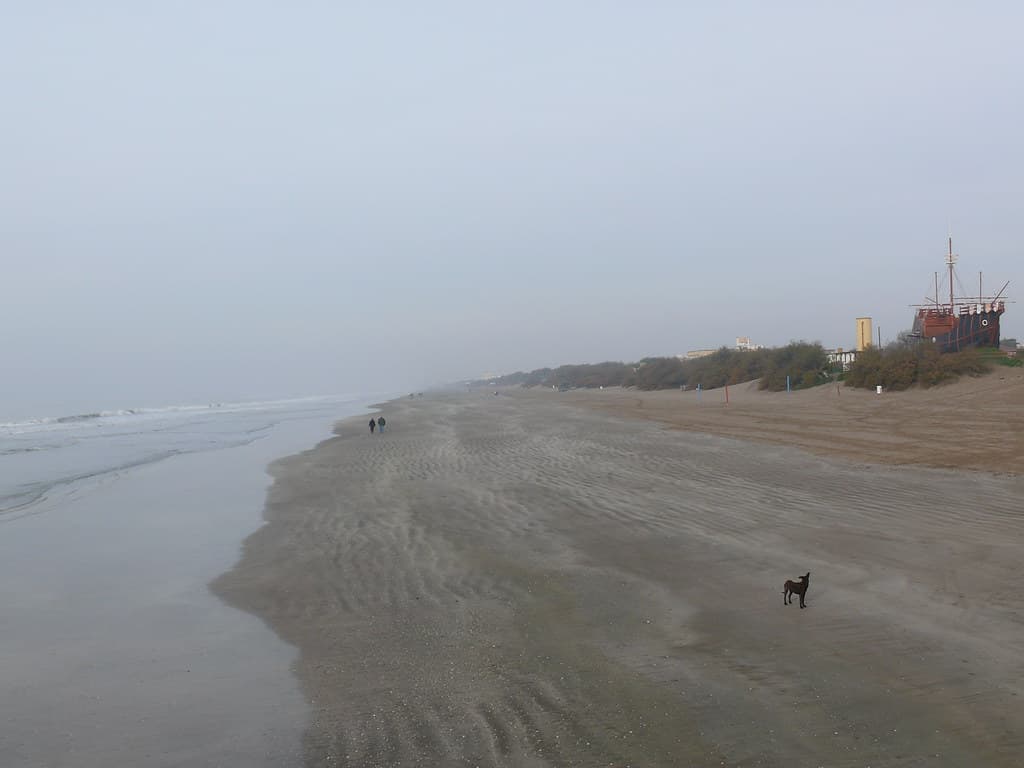
The sand here is fine-grained and pewter-toned, a firm platform for barefoot walks that can last an hour before the dunes behind you shrink to matchsticks. You'll share the beach with multigenerational Argentine clans who arrive with folding chairs, thermoses of mate, and coolers packed with milanesas. The water temperature hovers cool even in January, but that doesn't stop teenagers from sprinting into the surf while their grandmothers wade ankle-deep, skirts knotted at the knee. As administrative capital of Partido de La Costa, Mar del Tuyú hums with the practical rhythms of a real town—not a resort. You'll find butcher shops two blocks from the sand, hardware stores next to ice-cream parlors, and a main avenue lined with plane trees where locals buy empanadas by the dozen. The beach itself is democratic: no palapas, no VIP sections, just kilometers of public shoreline punctuated by wooden ramps. Sunset turns the sky lavender and tangerine, casting long shadows from the few fishermen still casting lines into the shallows. Families pack up slowly, shaking sand from towels, as the wind picks up and streetlights blink on along the beachfront. You leave with salt on your lips and the quiet satisfaction of a beach that never pretended to be anything other than itself.
Places, rentals, tours and events within walking and driving distance of Playa Mar del Tuyú.
Photos
Swimming at Playa Mar del Tuyú is generally safe during the supervised summer season when lifeguards patrol designated areas. The sandy beach has gradual entry into the Atlantic, suitable for most swimmers. Always swim within areas marked by safety flags and heed lifeguard warnings. Ocean conditions can vary, with occasional strong currents or waves. Water quality is monitored regularly by local authorities. The urban beach setting means emergency services are readily accessible. Avoid swimming at dawn, dusk, or outside supervised zones, and never swim alone or during adverse weather conditions.
The best weather for beach activities occurs from December through March, with peak warmth in January and February. For budget travelers, late November, early December, or March offer pleasant conditions with lower accommodation costs and fewer crowds. Weekdays are quieter than weekends year-round. January and February bring vibrant atmosphere but higher prices and more visitors. The beach town comes alive during summer with full services, while many facilities reduce hours or close from April to November when temperatures drop significantly.
Mar del Tuyú is approximately 320 kilometers from Buenos Aires, roughly 4 hours by car via Route 2 and Route 11. Numerous bus companies operate daily services from Buenos Aires' Retiro bus terminal, with journeys taking 4-5 hours depending on stops. Frequency increases during summer months. The town has a bus terminal with local connections throughout La Costa. Rental cars are available from Buenos Aires or coastal hubs. As the administrative center of La Costa, it's well-connected by public transport. Book tickets in advance during peak summer season.
Mar del Tuyú offers diverse lodging from budget hostels to hotels and vacation apartments, with beachfront and inland options. As the administrative center, it has year-round services though more choices open during summer. Restaurants serve seafood, traditional Argentine cuisine, pizza, and international fare. The town's commercial importance means supermarkets, bakeries, and food shops are readily available for self-catering. Beachfront dining tends to be pricier than establishments a few blocks inland. Accommodation ranges from basic to comfortable, generally offering good value compared to larger resort cities.
Mar del Tuyú serves as the administrative heart of Partido de La Costa, giving it a more functional, year-round character compared to purely seasonal resort towns. This central role means better infrastructure and services that operate beyond just summer months. The beach offers classic Atlantic coast experiences with beautiful sunsets over the water. Its position makes it a practical base for exploring the entire La Costa corridor. The blend of governmental services, residential community, and beach tourism creates a less exclusively tourist-focused atmosphere than neighboring towns.