Counting the waves…
Counting the waves…
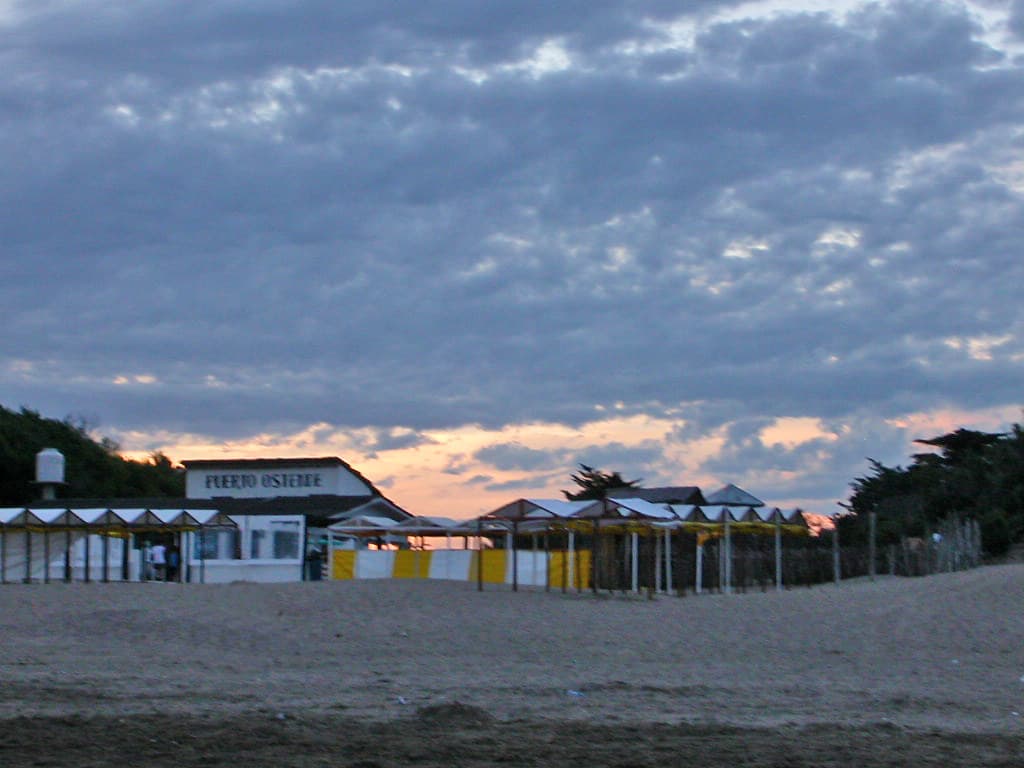
The rambla—a broad beachfront promenade lined with tamarisks and Norfolk pines—runs parallel to sand that compresses underfoot with a satisfying squeak. You'll notice the architecture first: stucco chalets with steep gables and wraparound porches, many dating to the 1920s when European settlers laid out Ostende as a retreat for Argentine intellectuals and artists. The beach itself unfolds in a wide, gently sloping ribbon, its tawny surface interrupted only by the occasional fishing skiff pulled above the tideline. Mid-morning brings the scent of facturas from corner bakeries drifting over the dunes, mingling with brine and the faintly metallic tang of seaweed left by the previous high tide. You'll share the sand with local families who arrive with coolers, mate thermoses, and canvas windbreaks striped in faded pastels. The surf here is consistent but forgiving, rolling in sets that allow children to bodysurf while their parents wade knee-deep, chatting in loose circles. Unlike the high-rise corridors of Pinamar to the north, Ostende retains a low skyline and a rhythm that bends toward long lunches and evening strolls. The beach empties by late afternoon, leaving you to walk the firm sand at the water's edge, where gulls pick through foam and the horizon blurs into haze the color of weak tea.

Places, rentals, tours and events within walking and driving distance of Playa La Rambla de Ostende.
Photos
Playa La Rambla de Ostende offers generally safe swimming conditions during summer months when lifeguard services are available. The Atlantic waters are cool with typical moderate waves and occasional currents common to this coastline. The beach has a sandy bottom with gradual depth progression suitable for families. Always observe flag warnings and swim near lifeguard stations when available. As a more tranquil resort area compared to larger neighbors, the beach may have fewer lifeguard posts, so checking service availability and swimming during supervised hours is advisable, especially for less experienced swimmers.
Playa La Rambla de Ostende naturally attracts fewer crowds than nearby Pinamar or Villa Gesell due to its smaller, more historic resort character. The best time for minimal crowds is during shoulder seasons from October to November and March to April, offering pleasant weather without peak-season congestion. Weekdays throughout the year are quieter than weekends. Even during high summer (January-February), Ostende maintains a more relaxed atmosphere compared to larger resort towns. The historic beachfront area appeals to visitors seeking a more intimate, traditional Argentine coastal resort experience year-round.
Ostende is located approximately 350 kilometers from Buenos Aires along the Atlantic coast. By car, take Route 2 south then Route 11, with the journey taking about 4.5-5 hours. Some bus services from Buenos Aires Retiro terminal stop in Ostende, or you can take buses to nearby Pinamar (more frequent services) and transfer via local taxi or bus to Ostende, just a few kilometers away. The compact size of Ostende makes the beachfront easily accessible on foot or by bicycle once you arrive in town.
Ostende offers a selection of dining options reflecting its historic resort character, including traditional Argentine restaurants, beachfront cafes, and seafood eateries, though the variety is more limited than in larger neighboring resorts. Accommodation includes small hotels, family-run guesthouses, and vacation rental properties, many with a charming, established character befitting one of the coast's earliest resort zones. The town caters to visitors seeking a quieter, more traditional beach vacation. For broader dining and lodging options, nearby Pinamar (just minutes away) provides additional choices while Ostende remains your peaceful beach base.
Playa La Rambla de Ostende holds special significance as part of one of the Argentine Atlantic coast's earliest resort developments, giving it a historic character distinct from newer beach towns. Ostende was established in the early 20th century and retains an old-world charm with traditional architecture and a more intimate scale. The beachfront rambla (promenade) reflects classic seaside resort planning. This historic legacy attracts visitors interested in experiencing a more authentic, less commercialized Argentine beach resort atmosphere, offering a glimpse into the coastal vacation traditions that preceded the development of larger, more modern resort cities.