Counting the waves…
Counting the waves…
A refined fusion of water purity, environmental stability, and communal vibrancy for Playa Punta Rasa.
View MethodologyAnalyzed via live sensors and environmental data.
Wave height, wind, and atmospheric stability.
Live footfall and crowd balance metrics.
Community reviews and curated sentiment.
“You'll see the line in the water—literally. On one side, the milky sediment of South America's widest river; on the other, the indigo Atlantic swells. The sand here stretches flat and pale, littered with mollusk shells…”
Limited recent visitor reports — live OBI telemetry is your best guide for current conditions.
Stand at the southernmost tip of San Clemente del Tuyú and you're witnessing a geographical handshake. The Río de la Plata, carrying silt from Uruguay and Argentina's interior, collides with the Atlantic in a visible seam of contrasting water. The beach itself runs long and exposed, backed by low dunes and scrubby vegetation that bends under the near-constant coastal wind. Salt hangs thick in the air.
This is not a beach for umbrella-and-towel lounging. The currents where bay meets ocean can be fierce, and the wind ensures sand finds its way into every crevice of your camera bag. But that same remoteness delivers something rarer: solitude. During weekdays, especially outside Argentine summer holidays, you may share the expanse with only a few fishermen casting into the surf and clusters of seabirds working the tideline.
 Credit: Unsplash
people walking on beach during daytime
 Credit: Unsplash
black metal framed wall lamp
Two-toned water meets at horizon
Striped tower frames coastal views
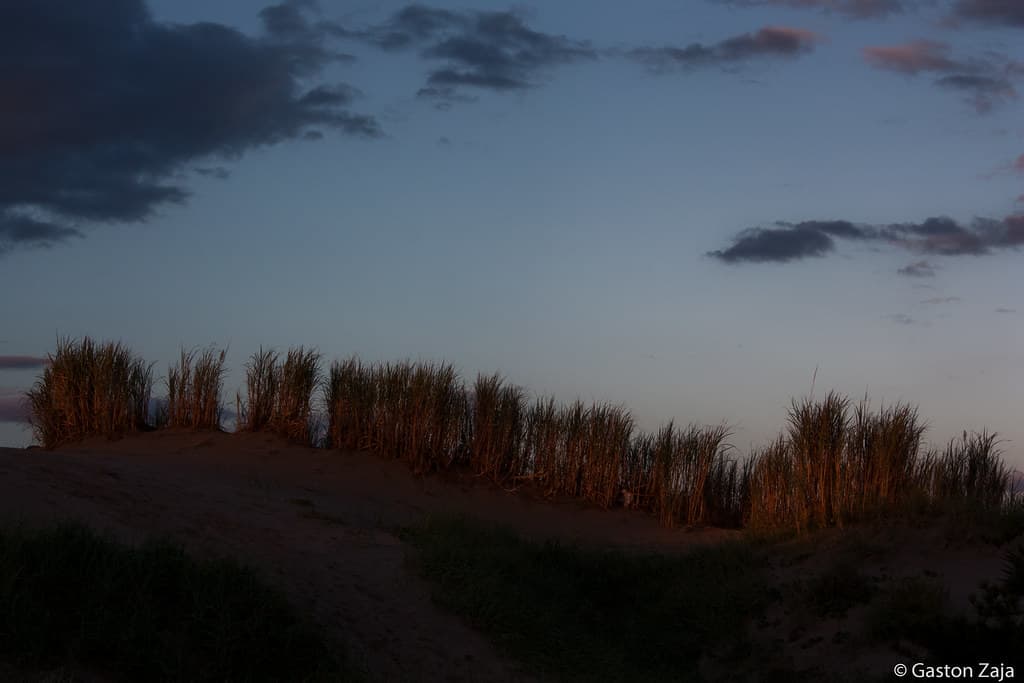
Unobstructed skies ignite at dusk
Prime Visitation
Best Weather | Less Crowds
Where it is
Playa Punta Rasa
San Clemente del Tuyú, Buenos Aires, Argentina
-36.308500°, -56.765200°
Weather
Loading…
Swell
—
Temp
Warm · Restorative
UV Index
Moderate
Wind
—
Tidal State
Last known
Max Sunlight
—
Ideal Shade
—
Jan - Dec (Peak)
Mar - Nov (Off-season)
Best Weather | Less Crowds
Select a category to load nearby places.
Unlock restaurants, luxury stays and curated maritime experiences within 2km
Swimming at Playa Punta Rasa requires understanding its unique geography as the meeting point of Samborombón Bay and the Atlantic Ocean, creating variable conditions. Waters can have stronger currents and changing characteristics compared to typical beach areas. This natural zone attracts nature enthusiasts more than swimmers. Lifeguard presence may be limited given its less developed character. If swimming, exercise extreme caution, check conditions locally, avoid swimming alone, and be aware that this area emphasizes scenic and ecological value over recreational swimming. Safer swimming options exist at San Clemente del Tuyú's main beaches nearby.
Playa Punta Rasa shines during shoulder seasons—spring (September-November) and autumn (March-May)—when migratory birds pass through and weather remains pleasant for exploration without summer crowds. Sunset viewing and photography opportunities excel year-round, though summer (December-February) offers warmest conditions. The area's ecological significance means nature observers visit throughout the year based on wildlife patterns. For Instagrammable moments with fewer people, weekdays in spring or autumn provide optimal lighting and tranquility. Winter (June-August) offers solitude and dramatic coastal scenery but cold temperatures; birders may still find this period rewarding depending on migration cycles.
Playa Punta Rasa lies at the northeastern tip of Buenos Aires province, accessible from San Clemente del Tuyú, the nearest town. From San Clemente's center, head northeast following coastal roads toward the point where bay meets ocean; the distance is roughly 10-15 kilometers. A car or bicycle provides best access, as public transport to this natural area may be limited. Taxi or remise services from San Clemente can arrange trips. The route passes through less developed coastal landscape, so confirm directions locally. Some visitors combine it with trips to the nearby Punta Rasa lighthouse and nature reserves.
Playa Punta Rasa itself is a natural beach area with minimal development, offering little to no on-site food service or lodging. Visitors typically base themselves in San Clemente del Tuyú, approximately 10-15 kilometers away, which provides full range of hotels, apart-hotels, restaurants, and services as a established resort town. Pack water, snacks, and sun protection for visits to Punta Rasa, as amenities are scarce. The area's charm lies in its undeveloped, natural state rather than tourist infrastructure. Day trips from San Clemente allow exploration while maintaining access to comfortable lodging and dining.
Playa Punta Rasa stands apart as a distinctive natural zone where Samborombón Bay's calmer waters meet the Atlantic Ocean, creating unique ecological conditions and dramatic coastal scenery. Unlike typical resort beaches, it emphasizes natural beauty, wildlife observation, and photography opportunities—particularly renowned for spectacular sunsets over the bay-ocean confluence. The area attracts birders during migration seasons and nature enthusiasts year-round. Its relatively undeveloped character, combined with geographical significance as a coastal transition point, offers visitors something beyond typical beach recreation: a genuine natural experience highlighting Argentina's coastal ecology and scenic diversity.
Photos