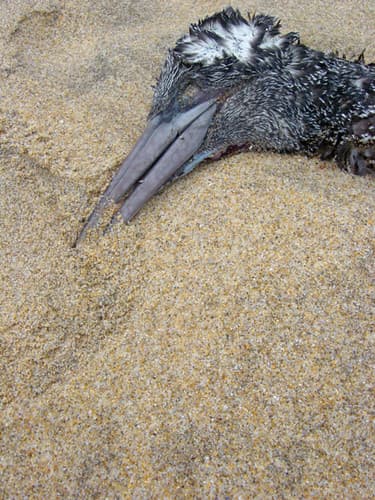
Counting the waves…
Counting the waves…
The gravel road ends at a cluster of tin-roofed cottages facing a sweep of blonde sand and shallow water so blue it seems imported from the Caribbean—until the Patagonian wind reminds you otherwise. Bahía Bustamante began as a seaweed harvesting camp in 1953, and today fewer than twenty families live here year-round, still drying algae on wooden racks that creak in the relentless gusts. You'll share the beach with Magellanic penguins that nest in the scrubland behind the dunes and with the occasional southern sea lion hauled out on the rocks. The bay itself curves gently, sheltered enough for wading but animated by swells that roll in from the open Atlantic. At low tide, tide pools reveal sea anemones and crabs; at high tide, the water laps against driftwood logs bleached bone-white. Kayakers paddle out to observe Commerson's dolphins, their black-and-white flanks flashing near the kelp beds, while orcas hunt along the outer reef during summer months. There are no restaurants, no beach bars, no umbrellas for rent—just the lodge's communal dining room serving grilled lamb and line-caught merluza. The isolation is the attraction. You'll walk for miles without encountering another footprint, the only soundtrack the percussive boom of waves and the dry rustle of coirón grass bending in the wind.
Places, rentals, tours and events within walking and driving distance of Playa Bahía Bustamante.
Photos
Swimming at Playa Bahía Bustamante is possible but requires caution due to cold Patagonian Atlantic waters, potential currents, and variable conditions. The bay offers some protection from open ocean swells, making it calmer than fully exposed beaches. Water temperatures remain cool year-round, typically suitable only for brief dips or hardy swimmers. No lifeguard services are available. The beach is better suited for walking, beachcombing, and scenic enjoyment. If you swim, stay close to shore, never swim alone, and be prepared for cold water even in summer.
The best time to visit Playa Bahía Bustamante is during the warmer months from November through March when weather is most pleasant and the eco-lodge operates at full capacity. December to February offers the longest daylight hours and warmest temperatures, ideal for beach walks and wildlife watching. Spring (September-November) and autumn (March-April) provide excellent conditions with fewer visitors and spectacular light for photography. The remote village offers year-round scenic beauty, but services may be limited outside peak season. Wind is constant, so pack accordingly.
Playa Bahía Bustamante is reached via Ruta 1, the coastal route, accessed from either Comodoro Rivadavia (approximately 200 kilometers north) or Camarones (about 60 kilometers south). The turnoff leads along a gravel road to the coastal village. The journey requires a sturdy vehicle, preferably 4WD, as roads can be rough. Most visitors staying at Bahía Bustamante's eco-lodge arrange transfers from Trelew or Comodoro Rivadavia airports. Public transport is virtually nonexistent. Confirm road conditions and directions with your accommodation before departure.
Bahía Bustamante offers a unique eco-lodge experience with all-inclusive packages in restored seaweed-harvesting village buildings. The lodge provides meals featuring local Patagonian cuisine and seafood, accommodations in comfortable rooms, and guided excursions. This is the primary lodging option directly at the beach. Services are upscale and environmentally focused, with limited capacity requiring advance reservations. Alternative accommodation exists in Camarones, about 60 kilometers away. The remote location means no restaurants or shops outside the lodge, so all provisions are included or must be brought.
Playa Bahía Bustamante stands out as an authentic Patagonian coastal experience, combining stunning scenery with rich wildlife and cultural history. The beach sits within a former seaweed-harvesting village now converted into an eco-tourism destination. Visitors enjoy pristine sandy beaches, dramatic coastal landscapes, and access to nearby penguin colonies, sea lion rookeries, and petrified forests. The remote location ensures uncrowded exploration and spectacular stargazing. The eco-lodge's sustainable tourism model preserves the area's natural beauty while offering comfortable access to one of Patagonia's most scenic and wildlife-rich coastal areas.