Counting the waves…
Counting the waves…
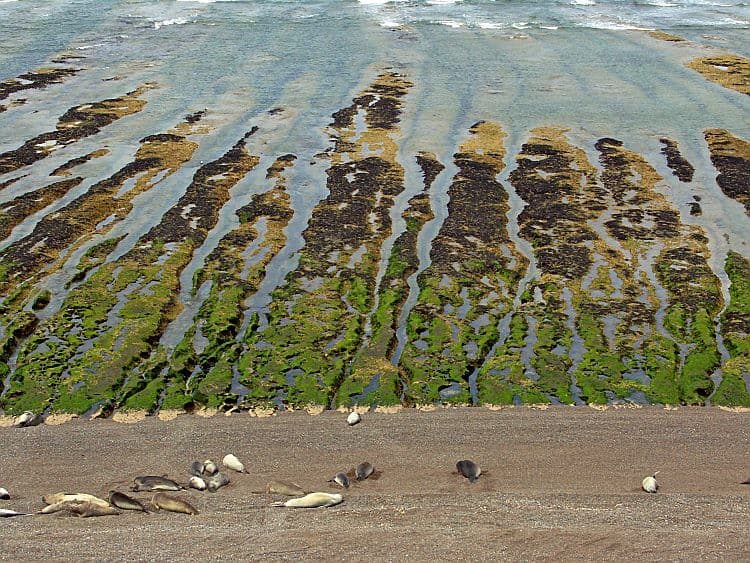
The drive down Península Valdés narrows to a rutted track, and suddenly you're standing on a beach that belongs more to wildlife than to humans. Playa Sur Caleta Valdés stretches along the Atlantic in hues of slate and pewter, each pebble polished by centuries of tidal friction. The cliffs rising behind you bear horizontal striations—sedimentary time made visible—while offshore, the water shifts from steel-blue to green depending on the angle of light filtering through Patagonian cloud cover. This is prime territory for southern elephant seals during breeding season, their massive forms sprawled across the stones like boulders with whiskers. Orcas patrol the shallows from September through April, sometimes launching themselves partway onto the beach in pursuit of sea lion pups—a hunting technique found in only a handful of places worldwide. You'll need binoculars and patience; the drama unfolds on nature's schedule, not yours. The remoteness is the point. No snack bars interrupt the coastline, no marked trails soften the approach. You bring what you need, you respect the wildlife corridor, and you leave with pebbles clicking in your pocket and salt crust on your jacket. The wind never stops here, scouring the beach clean of human evidence within hours, preserving the illusion—and the reality—that you've stepped outside the usual tourist circuits into something older and less forgiving.
Places, rentals, tours and events within walking and driving distance of Playa Sur Caleta Valdés.
Photos
Swimming at Playa Sur Caleta Valdés is not recommended for several reasons. The beach features a pebble shoreline with cold Atlantic waters and no lifeguard presence. Strong currents and unpredictable waves characterize this exposed coastline. The area is known for orca (killer whale) activity, particularly during elephant seal pupping season, which presents unique wildlife safety considerations. The remote location means emergency services are hours away. Additionally, the beach is primarily valued for wildlife observation—elephant seals, sea lions, and orcas—requiring respectful distances from animals. The combination of harsh conditions, isolation, and active wildlife makes this a viewing destination rather than a swimming beach.
Timing your visit to Playa Sur Caleta Valdés depends on wildlife interests. February through April is spectacular for watching orcas hunt elephant seal pups using their distinctive beaching technique. September through November brings elephant seal breeding activity. Penguin colonies are active from September through March. Summer (December-February) offers the most wildlife diversity and warmest temperatures, though winds remain strong. Winter (June-August) is quieter with fewer visitors but harsher conditions. Year-round, the remote location ensures minimal crowds. Weather is unpredictable across all seasons, so layered clothing is essential. For photographers and nature enthusiasts, wildlife breeding seasons offer the most dramatic experiences.
Playa Sur Caleta Valdés sits on the eastern coast of Península Valdés, approximately 120 kilometers from Puerto Madryn. Access requires driving Provincial Route 2 across the peninsula, then taking the eastern branch toward Caleta Valdés—a journey of 2.5-3 hours on gravel roads. A reliable vehicle with good ground clearance is necessary; road conditions vary seasonally. There's no public transportation to this remote area. Most visitors either rent a car in Puerto Madryn or join organized wildlife tours that include Caleta Valdés in their itinerary. GPS and maps are important as signage is sparse. The final approach to the beach may involve walking from parking areas.
Playa Sur Caleta Valdés has minimal facilities. A visitor center at Caleta Valdés typically offers basic information and sometimes simple refreshments, but services are limited and seasonal. There is no permanent lodging directly at this beach. Most travelers stay in Puerto Madryn or Puerto Pirámides, treating Caleta Valdés as a day excursion. The remote location demands self-sufficiency: bring substantial food, drinking water, snacks, and emergency supplies. Mobile coverage is unreliable. The nearest services are hours away by gravel road. Pack complete provisions including sun protection, warm layers, and extra water. Some organized tours include box lunches, but independent travelers must be fully prepared.
Playa Sur Caleta Valdés is world-renowned for orca (killer whale) beaching behavior, where these apex predators intentionally strand themselves on shore to hunt elephant seal pups—one of nature's most dramatic spectacles, visible from the beach during autumn months. The area hosts significant elephant seal colonies, particularly during breeding season. Magellanic penguin colonies are accessible nearby. The combination of marine mammals, seabirds, and dramatic Atlantic scenery creates exceptional wildlife photography opportunities. Unlike boat-based whale watching, observations here happen from shore, offering stable viewing platforms and extended time. The remote, pristine environment enhances the experience, making this an Instagram-worthy destination for serious nature enthusiasts and photographers.