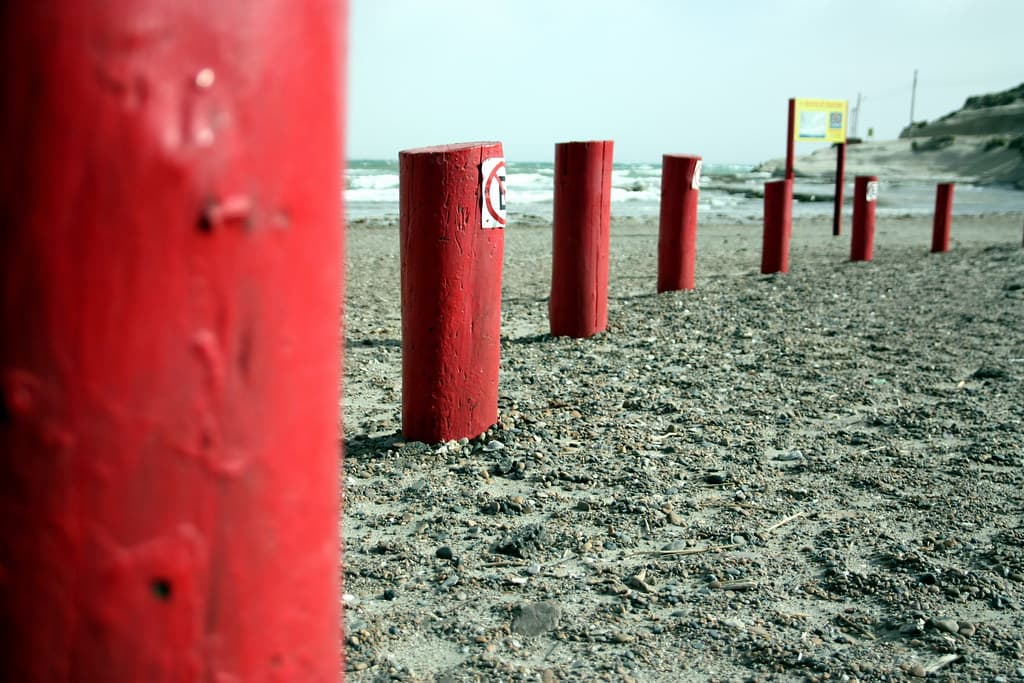
Counting the waves…
Counting the waves…

Playa Bahía Nueva curves along the protected side of Puerto Pirámides, where the turquoise shallows of Golfo Nuevo lap against pale sand instead of the drama of open Atlantic swells. You'll walk past the central beach—the one where tour groups gather for whale-watching departures—and continue north to where the shoreline bends into a quieter crescent. Here, the water stays calm even when wind rattles the thorn bushes behind the dunes, and children wade knee-deep without fighting undertow. The beach earns its place not through postcard grandeur but through reliable shelter. Families arrive mid-morning with empanadas wrapped in foil, staking claim to patches of sand warmed by Patagonian sun. You'll spot elephant seals hauled out on distant rocks, their bulk dark against the waterline, and if you time your visit between June and December, the spouts of Southern right whales punctuate the horizon. The sand holds boot prints from beachcombers and the delicate etchings of shorebirds hunting sand crabs. Unlike the wind-battered eastern shores of the peninsula, Bahía Nueva offers respite—a place to spread a towel without chasing it across the beach, to let smaller swimmers splash in bathwater shallows, or simply to sit with mate and watch light shift across the gulf. The town's handful of restaurants and provisions sit a short walk inland, close enough for a midday parrilla break before returning to the shore.
Places, rentals, tours and events within walking and driving distance of Playa Bahía Nueva.
Photos
Playa Bahía Nueva is generally safer for swimming than ocean-facing beaches due to its protected bay location, with calmer waters and gentler waves. However, water temperatures in Patagonia remain cold year-round, typically ranging from 10-15°C. Always supervise children closely, as conditions can change with tides and winds. The sandy bottom makes it family-friendly for wading. Check locally about jellyfish seasons and current conditions before entering the water, and be aware that facilities and lifeguards may be limited outside peak summer months.
The best weather occurs during the Argentine summer (December through February), with warmer temperatures and longer daylight hours, though it's also busier. For fewer crowds while maintaining decent weather, consider the shoulder seasons of October-November or March-April. Wildlife watching in the broader Península Valdés area peaks during different months depending on species: southern right whales visit June-December, while elephant seals are present year-round with peak activity in breeding seasons. The beach itself is accessible throughout the year, offering different experiences each season.
Playa Bahía Nueva is located very close to Puerto Pirámides, the only village on Península Valdés. From the village center, you can reach this beach on foot or by short drive along the coastal road. Most visitors arrive in Puerto Pirámides by car from Puerto Madryn, approximately 100 kilometers away via paved Route 2 and then the Península Valdés access road. There's an entrance fee to Península Valdés Natural Reserve. No public transportation runs to this specific beach, so having your own vehicle or joining a tour is recommended.
Puerto Pirámides village, just minutes away, offers the closest food and lodging options. The small village has restaurants, cafés, hostels, hotels, and cabin rentals catering to various budgets, though options are limited compared to larger cities. Many visitors base themselves in Puerto Madryn, which has more extensive dining and accommodation choices, making day trips to the beach and peninsula. During high season (December-February), booking accommodation well in advance is essential as Puerto Pirámides fills quickly. Some establishments close during winter months, so confirm availability if visiting off-season.
Playa Bahía Nueva stands out as a quieter alternative to the main central beach in Puerto Pirámides, offering more solitude while maintaining easy access to village amenities. Its protected bay position provides calmer waters compared to the Atlantic-facing beaches on Península Valdés, making it more suitable for families and those seeking a gentler beach experience. The sandy beach type contrasts with the pebble and rocky beaches common elsewhere on the peninsula. Its location serves as a peaceful retreat for visitors primarily focused on the area's famous wildlife watching opportunities.