Counting the waves…
Counting the waves…

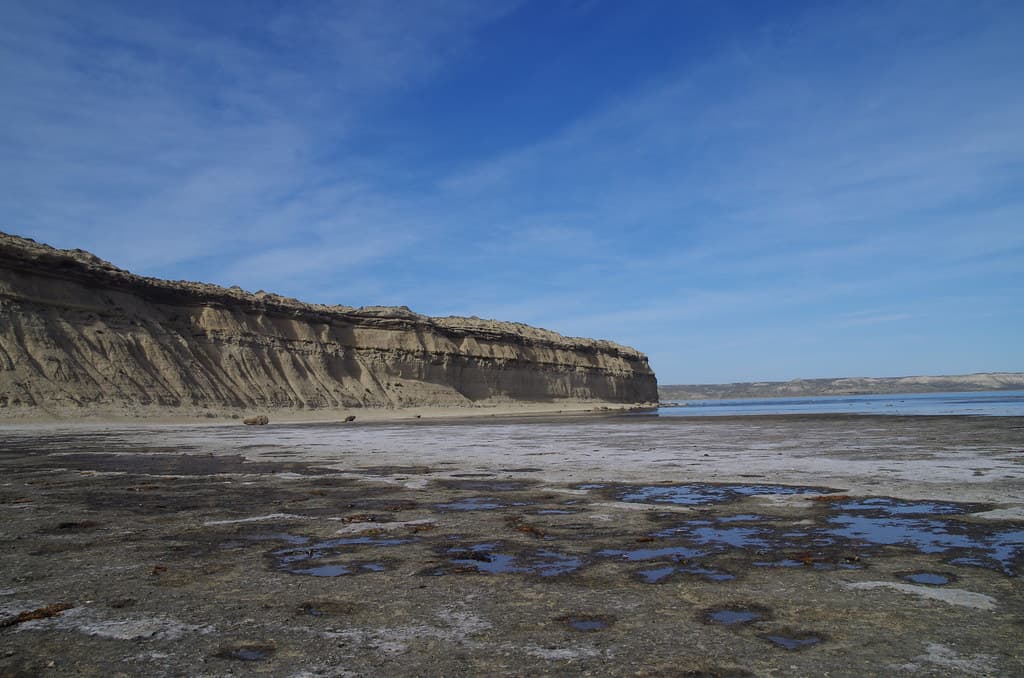
You park along the dusty provincial route and scramble down a short embankment to a cove that feels more Patagonian steppe than postcard beach. Cormoranes isn't sand; it's a mosaic of charcoal-dark boulders smoothed by millennia of tide, interspersed with tide pools teeming with purple urchins and rust-colored starfish. The cliffs behind you rise ochre and rust, striated layers of sediment that tell a geologic story stretching back millions of years. The real theater happens offshore. From June through December, southern right whales calve in the protected waters of Golfo Nuevo, and from this vantage you can watch mothers teaching their young to breach, the thud of tonnes of mammal hitting water audible even against the wind. Kelp gulls and imperial cormorants—the beach's namesake—patrol the shallows, diving for silverside and anchovy. There's no infrastructure here, no beach club or lifeguard stand. Bring your own water, a windbreaker, and binoculars. The lack of crowds isn't incidental—it's structural. Most visitors to Puerto Pirámides stick to the main harbor beach or book whale-watching catamarans. Cormoranes demands a bit more effort, a willingness to trade comfort for solitude and a shoreline that hasn't been softened for tourism.
Places, rentals, tours and events within walking and driving distance of Playa Cormoranes.
Photos
Swimming at Playa Cormoranes is challenging due to its rocky nature and typical Patagonian conditions. The rocky beach structure makes entry and exit difficult, and sharp rocks can pose hazards. Water temperatures remain cold year-round, generally between 10-15°C, requiring wetsuits for any water activity. Currents and waves can be unpredictable. This beach is primarily valued for its scenic qualities and coastal exploration rather than swimming. If you do enter the water, wear protective footwear and exercise extreme caution. Check local conditions first, and be aware that lifeguards and rescue services may not be present.
Playa Cormoranes can be visited year-round, with each season offering different appeals. Summer months (December-February) provide the warmest weather and longest daylight for photography and exploration, though expect more visitors in Puerto Pirámides. Shoulder seasons (October-November and March-April) offer fewer crowds while maintaining reasonable weather. Winter brings dramatic wave action and stormy coastal scenery ideal for photographers, but requires warm clothing against fierce Patagonian winds. The beach's photogenic rocky formations look spectacular in various lighting conditions. Early morning and late afternoon typically provide the best light for capturing coastal scenery.
Playa Cormoranes is located near Puerto Pirámides and can be reached by walking or driving from the village center, typically within a short distance along the coast. The exact access may involve coastal paths or roads that vary with conditions. Puerto Pirámides itself is reached from Puerto Madryn via approximately 100 kilometers of paved road through Península Valdés Natural Reserve, requiring payment of a reserve entrance fee. Once in the village, ask locals for specific directions to this beach sector, as informal paths may provide access. The small size of Puerto Pirámides makes most coastal areas relatively accessible.
Since Playa Cormoranes is located near Puerto Pirámides, you'll find all necessary services in this small village. Puerto Pirámides offers various restaurants serving local seafood and Argentine cuisine, cafés, small markets, and accommodation ranging from hostels to hotels and cabin rentals. Options are limited compared to cities, and many establishments close during winter months. For more extensive choices, Puerto Madryn (100km away) provides greater variety in all price ranges. During peak season (December-February), advance booking is essential. Bring snacks and water when visiting the beach itself, as no facilities exist at this specific rocky sector.
Playa Cormoranes distinguishes itself through dramatic coastal scenery created by its rocky formations, offering excellent photography opportunities and a wilder aesthetic than sandy beaches. The rocky character creates interesting tidepools and geological features for exploration during low tide. Its photogenic nature makes it popular with photographers seeking dramatic Patagonian coastal landscapes. The beach's name suggests cormorant presence, potentially offering bird-watching opportunities. Unlike swimming-oriented beaches, this location appeals to those seeking scenic walks, photography, and nature observation. The contrast between rocky shore and ocean creates particularly striking visuals at sunrise and sunset.