
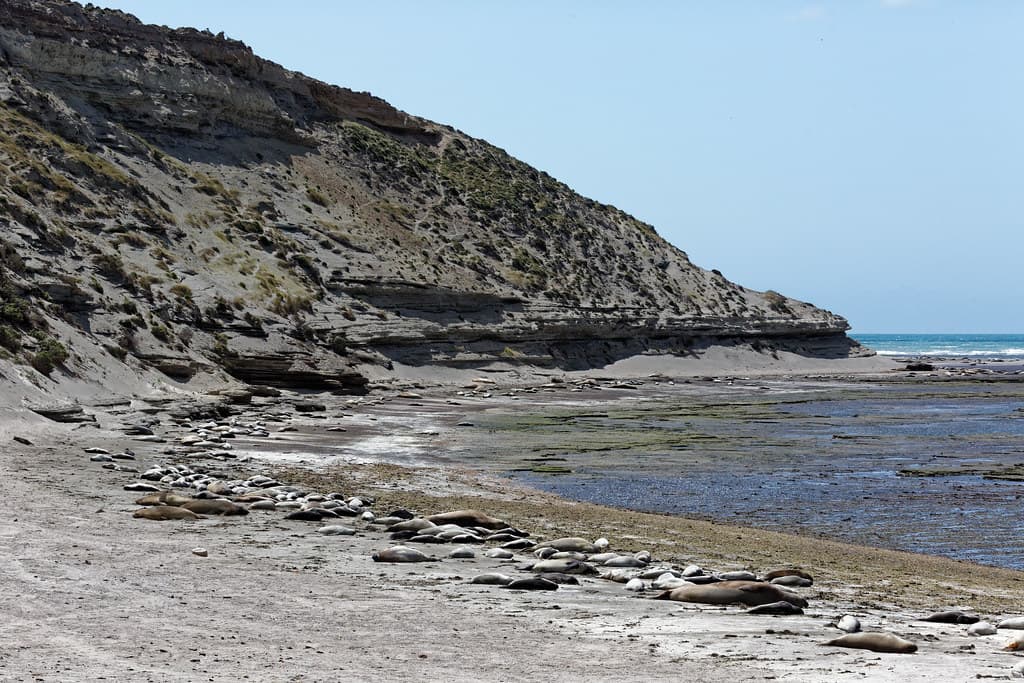
The pebbles underfoot are the size of quail eggs, tumbled smooth by centuries of Patagonian swells. You walk along the tideline where kelp lies in dark ribbons, and the only other movement comes from southern elephant seals hauled out on the rocks, their bodies rising and falling with breath so deep you can hear it between wave sets. The lighthouse keeper's quarters perch on the bluff above, whitewashed against a sky that shifts from cerulean to pewter in minutes.
“The southernmost accessible beach on Península Valdés, where Patagonian wilderness meets the open Atlantic with zero development in sight.”
 Credit: Flickr
Playa Sur Punta Delgada — photo by KimonBerlin
This is the peninsula's forgotten edge, forty-three miles from Puerto Pirámides, where most visitors turn back after seeing the famous whale-watching beaches. The few who continue find a coastline stripped to its essentials: stone, water, wind, and the occasional skua wheeling overhead. The beach curves south toward cliffs that glow amber in late afternoon, their sedimentary layers telling stories older than the Andes.
Sunset here feels like a private screening. The horizon stretches unbroken to Antarctica, and as the sun drops, it paints the wave crests copper and sets the pebbles ablaze. You'll stand in wind that's crossed an entire ocean to reach this point, tasting salt and feeling the temperature drop ten degrees in as many minutes—Patagonia reminding you, gently but firmly, exactly where you are.


