Counting the waves…
Counting the waves…
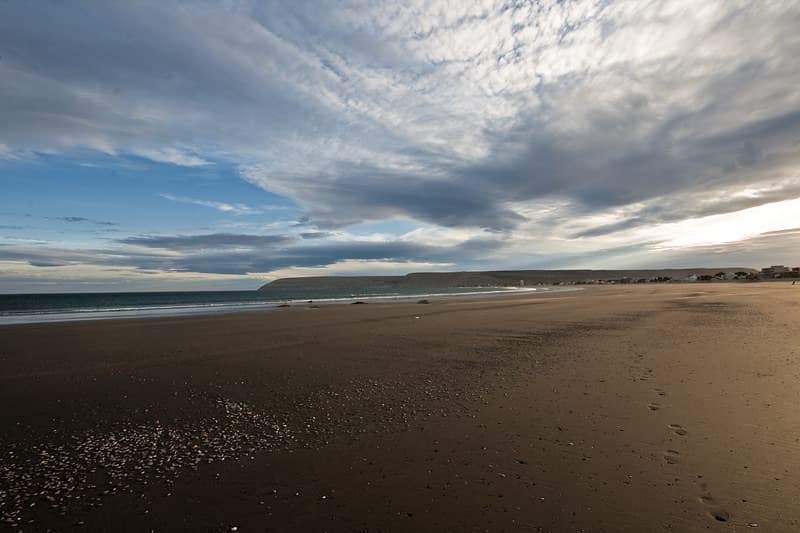
The gravel road from Rada Tilly ends at a lip of crumbling bluff, and suddenly you're staring down at a coastline that looks more Mars than Argentina. Russet and amber strata cascade toward the sea, each layer a page in a 40-million-year geological diary. Waves hammer the base with metronomic persistence, sending plumes of spray skyward that catch the low Patagonian sun and fracture into fleeting rainbows. Cormorants dry their wings on offshore rocks; if you're lucky, a southern sea lion hauls out to doze on a kelp-draped shelf. This isn't a place for umbrellas or beach chairs. The wind here is a living thing—it sculpts the scrub vegetation into leeward flags and erases footprints within minutes. Locals from Comodoro Rivadavia make the short drive to clear their heads, walking the clifftop path that skirts erosion gullies and offers new vantage points at every bend. You'll find no lifeguard towers or snack kiosks, only the occasional mate-drinking family perched on a folding chair, binoculars trained on the whale-spotting zone offshore during austral winter. Sunset here is a slow-motion spectacle: the horizon swallows the sun in stages, painting the bluffs burnt orange, then violet, then charcoal. By the time darkness settles, the Southern Cross has already emerged, sharp and brilliant in the unpolluted sky. You drive back to Rada Tilly with salt on your lips and the certainty that you've stood somewhere genuinely untamed.
Places, rentals, tours and events within walking and driving distance of Playa Punta Marqués.
Photos
Swimming at Playa Punta Marqués requires caution due to its cliff-backed geography and typical Patagonian coastal conditions. The area features rocky terrain and can have strong currents and cold water temperatures year-round. This location is primarily valued for its scenic viewpoint qualities rather than swimming. If you plan to enter the water, check local conditions first, never swim alone, and be aware that coastal Patagonia typically lacks lifeguard services at remote spots. The beach is better suited for coastal walks and photography than recreational swimming.
Playa Punta Marqués can be visited year-round, with each season offering different appeal. Summer months (December-February) provide the warmest weather and longest daylight hours, ideal for photography and exploration. However, visiting during shoulder seasons (March-May, September-November) offers fewer crowds while still providing good conditions for sightseeing. The location is particularly stunning at sunset throughout the year. Patagonian weather is unpredictable, so bring windproof layers regardless of season. Winter visits are possible but expect stronger winds and colder temperatures, though dramatic storm-watching opportunities arise.
Playa Punta Marqués is located adjacent to Rada Tilly, a small coastal town near Comodoro Rivadavia. From Rada Tilly's center, the point is accessible by car via local coastal roads—follow signs toward the southern end of town. The drive takes just a few minutes. Some visitors walk along the coastal path from central Rada Tilly, though terrain can be uneven. If coming from Comodoro Rivadavia, drive south approximately 15 kilometers to Rada Tilly first. Rental cars are available in Comodoro Rivadavia. Taxi services from either town can also take you to the viewpoint area.
Rada Tilly, the adjacent town, offers various accommodation options including small hotels, hostels, and rental apartments catering to beach visitors. The town has several restaurants, cafés, and pizzerias serving Argentinian cuisine, particularly along the main coastal avenue. For more extensive lodging and dining choices, Comodoro Rivadavia (15 kilometers north) provides numerous hotels ranging from budget to mid-range, plus supermarkets and diverse restaurants. Many visitors base themselves in Comodoro Rivadavia and make day trips to Rada Tilly and Punta Marqués. In summer, some beachfront spots in Rada Tilly operate seasonal food kiosks.
Playa Punta Marqués stands out for its dramatic cliff formations meeting the Atlantic Ocean, creating striking coastal compositions that are highly photogenic. The landmark point offers elevated perspectives of the Patagonian coastline, with layered sedimentary cliffs providing interesting geological textures and colors. Sunset photography is particularly rewarding here, as the western light illuminates the cliffs and ocean. The relatively undeveloped, natural setting provides authentic Patagonian coastal scenery without urban intrusion. The area's raw, windswept character and contrast between rugged cliffs and ocean make it distinctive for landscape and nature photography, especially appealing for Instagram-worthy shots.