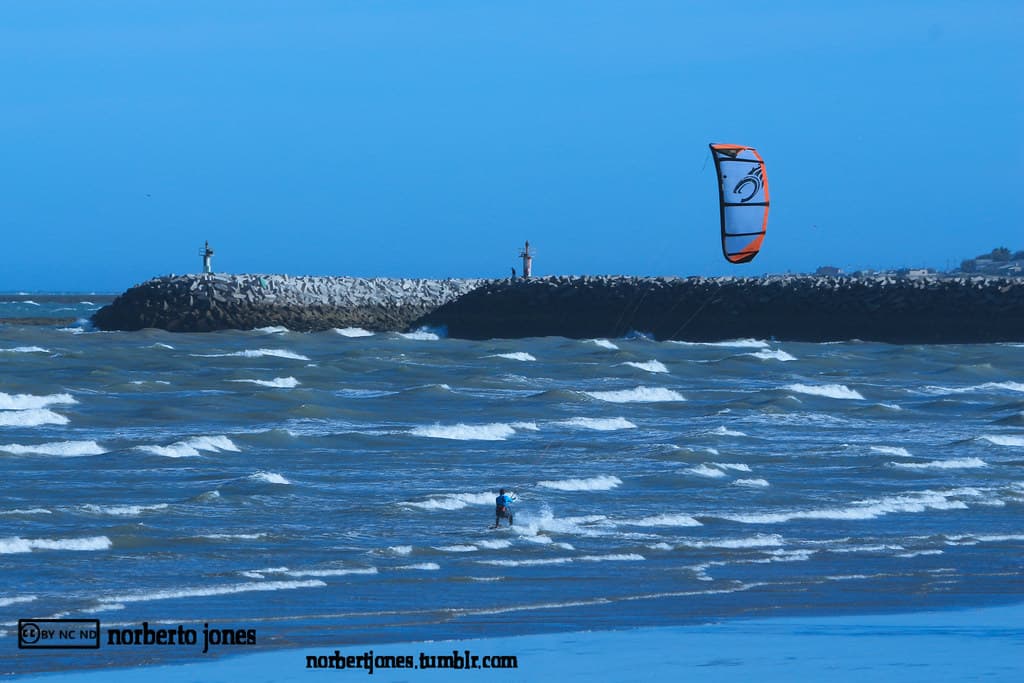
Counting the waves…
Counting the waves…

The boundary between river and ocean isn't a clean line at Boca del Río—it's a sprawling negotiation zone where brown freshwater braids through green Atlantic swells, creating eddies that swirl bits of Andean sediment in lazy helixes. You can walk the firm sand at low tide and watch the color shift beneath your feet as underground springs bubble up through compacted gravel. Gulls wheel overhead, diving for silversides that congregate where salinity gradients confuse their predators. The beach curves gently north toward Playa Unión, backed by low dunes anchored with coiron grass that hisses in the perpetual Patagonian wind. Families cluster near the river mouth where the water runs ankle-deep and tepid compared to the numbing Atlantic. Children dig channels to redirect the current, their temporary engineering washed away every six hours by the tide. Sunset here is a study in refracted light—the mineral-rich water catches copper and rose tones an hour before the sun actually drops, turning the confluence zone into a smoldering mirror. You'll share the view with cormorants drying their wings on driftwood snags and the occasional sea lion that rides the freshwater plume offshore, fishing the turbulent edges where baitfish lose their bearings.
Places, rentals, tours and events within walking and driving distance of Playa Boca del Río Chubut.
Photos
Swimming at Playa Boca del Río Chubut requires caution as it's a river-mouth zone where the Chubut River meets the Atlantic Ocean. These areas typically have unpredictable currents, mixing fresh and saltwater, and changing depths. The calmer designation refers to sheltered areas, but conditions vary with tides and river flow. This beach is better suited for wading, scenic viewing, and family beach activities rather than serious swimming. Always supervise children closely, avoid the strongest current zones near the channel, and check local conditions before entering any water.
This beach can be visited anytime during the year and remains uncrowded, making it flexible for travelers. Summer months (December-March) offer the warmest temperatures for comfortable beach time. The location is particularly famous for sunsets, so late afternoon visits are magical year-round, with the sun setting over the river mouth creating stunning photographic opportunities. Spring and autumn provide pleasant weather with fewer visitors. Even winter visits can be worthwhile for dramatic landscapes and birdwatching, though dress warmly for Patagonian winds.
The beach is located near Rawson where the Chubut River flows into the Atlantic Ocean. From Rawson's center, follow signs toward the coast and river mouth (approximately 5-10 kilometers). From Trelew, drive through Rawson following Provincial Route 1 toward Playa Unión; the river mouth is accessible via coastal roads. A personal vehicle is most convenient, though some local buses from Rawson may stop nearby. Look for access points near the river's Atlantic entrance. The area is relatively easy to navigate with clear geographical markers.
Playa Boca del Río Chubut is primarily a natural river-mouth zone with minimal developed facilities. Some basic amenities may exist nearby, but visitors should plan to bring their own food, water, and beach supplies. Rawson, just a short drive away, offers restaurants, supermarkets, gas stations, and accommodations including hotels and guesthouses. For extended stays, most travelers base themselves in Rawson or Trelew and visit the river mouth as a day trip or evening excursion for sunset viewing and scenic enjoyment.
The unique meeting point of the Chubut River and Atlantic Ocean creates distinctive scenery and ecological conditions. You'll witness the dramatic convergence of freshwater and saltwater, often visible through color differences and wildlife activity. Birdwatching opportunities are excellent, with species attracted to estuarine environments. The location provides spectacular sunset views as light reflects across both river and ocean. This geographic feature creates calmer zones sheltered from full ocean swells, and the river mouth's dynamic nature means the landscape constantly changes with tides and seasons, offering ever-changing photographic possibilities.