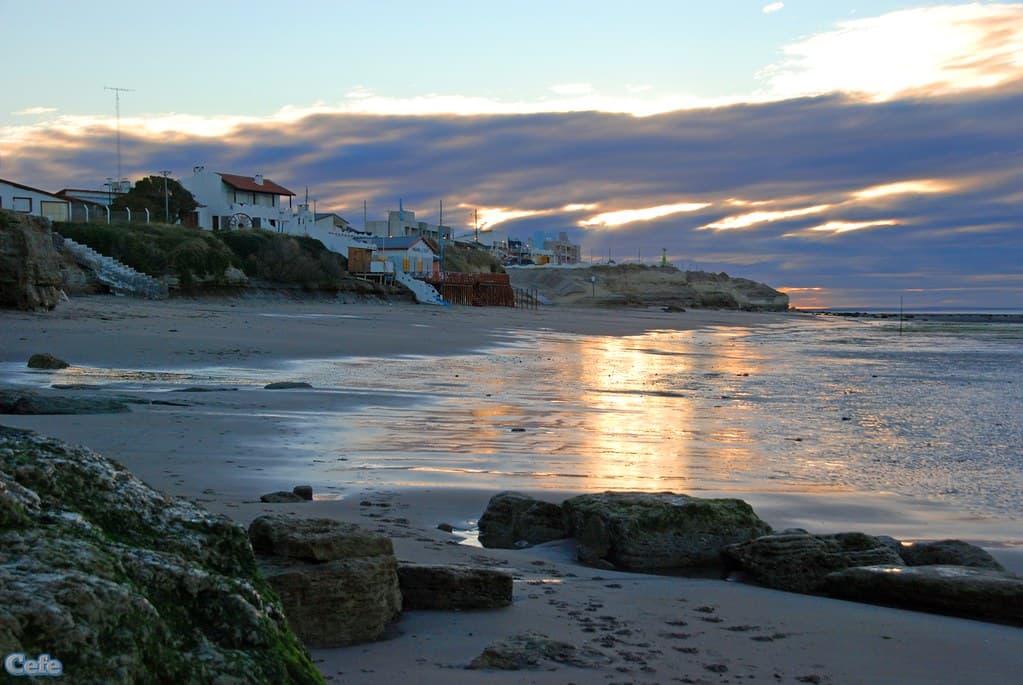
Counting the waves…
Counting the waves…

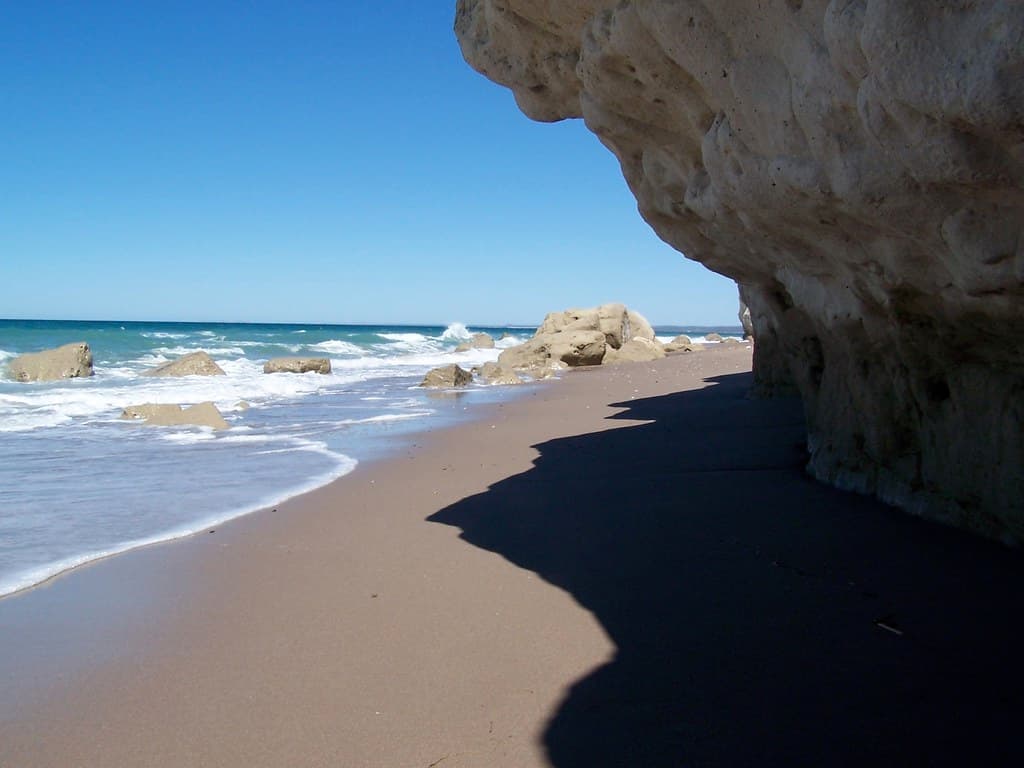
The cliffs announce themselves from the coastal road—burnt sienna striations stacked like geology textbooks, their faces smoothed by millennia of Patagonian gales. You descend onto a beach where red dominates: ruddy boulders the size of sedans, rust-streaked platforms that jut into knee-deep water, even the sand itself carries a faint terracotta tint when wet. Families claim spots in the natural windbreaks these formations create, spreading blankets in alcoves warmed by radiant rock. Tide determines your experience. At low water, broad flats emerge dotted with tidal pools—miniature aquariums where translucent shrimp dart between anemones and small crabs scuttle over pebbled bottoms. Children crouch with plastic buckets, parents wade shin-deep across warm shallows that stretch fifty meters seaward. High tide brings the Atlantic against the cliff base, limiting the strand but deepening swimming zones where the water runs exceptionally clear over sandy bottom. The chromatic drama peaks in late afternoon. That russet stone absorbs daylight all morning, then radiates it back as the sun arches west, turning every surface into a warm-toned studio for smartphone photographers. The contrast—oxblood rock, cream sand, cobalt water—creates compositions so saturated they barely need filtering. You'll leave with gritty feet, wind-tangled hair, and a camera roll that finally does justice to Patagonia's mineral palette.
Places, rentals, tours and events within walking and driving distance of Playa Piedras Coloradas.
Photos
Playa Piedras Coloradas is generally safe for families, though it's less developed than central Las Grutas beaches. The beach has rocky areas alongside sandy sections, requiring supervision of children. Swimming is possible, but the distinctive red rocks create a more rugged landscape than other local beaches. Lifeguard presence may be limited compared to Primera Bajada. The beach is less crowded, offering a quieter family experience. Appropriate footwear helps when exploring rocky areas. Tide pools form among the rocks, providing safe shallow areas for children to explore marine life during low tide.
The best time to visit Playa Piedras Coloradas for photography is during golden hour—early morning or late afternoon—when sunlight enhances the red rock colors dramatically. Summer months (December-February) offer the best weather but more visitors. For fewer crowds, visit during shoulder seasons (November or March) or on weekdays. The beach is less crowded year-round compared to central Las Grutas beaches due to its slightly more remote location. Low tide reveals more of the colorful rock formations, creating excellent photo opportunities. Check tide tables to plan your visit for optimal scenic conditions.
Playa Piedras Coloradas is located south of the main Las Grutas beach area, approximately 3-5 kilometers from the town center. It's accessible by car via coastal roads heading south from Las Grutas proper. Some visitors walk or bike along the coastal path, though distances can be significant. Parking is available near beach access points. During peak season, local tour operators may offer excursions. The beach is less centrally located than Primera Bajada, requiring deliberate effort to reach, which contributes to lower crowd levels. Bring supplies as on-site facilities are minimal.
Playa Piedras Coloradas has limited on-site facilities, with most services located in Las Grutas town center several kilometers away. A few beachfront businesses may operate during peak summer season, but options are minimal compared to central beaches. Most visitors stay in Las Grutas proper and visit Piedras Coloradas as a day trip or afternoon excursion. Bring food, drinks, and beach supplies with you. Some accommodations in southern Las Grutas are within reasonable distance. The area's appeal lies in its natural beauty and quieter atmosphere rather than commercial development and convenience.
Playa Piedras Coloradas features distinctive reddish-colored rock formations that create its unique visual identity and name ('colored stones'). The red hue comes from iron oxide in the geological formations along this coastline. These dramatic rocks contrast beautifully with the blue ocean and sandy beach, making it highly photogenic and Instagrammable. The beach offers a different landscape than typical sandy Las Grutas beaches, with tide pools forming among the rocks. This geological feature provides opportunities for exploration, photography, and observing marine life, distinguishing it from more conventional beach experiences in the area.