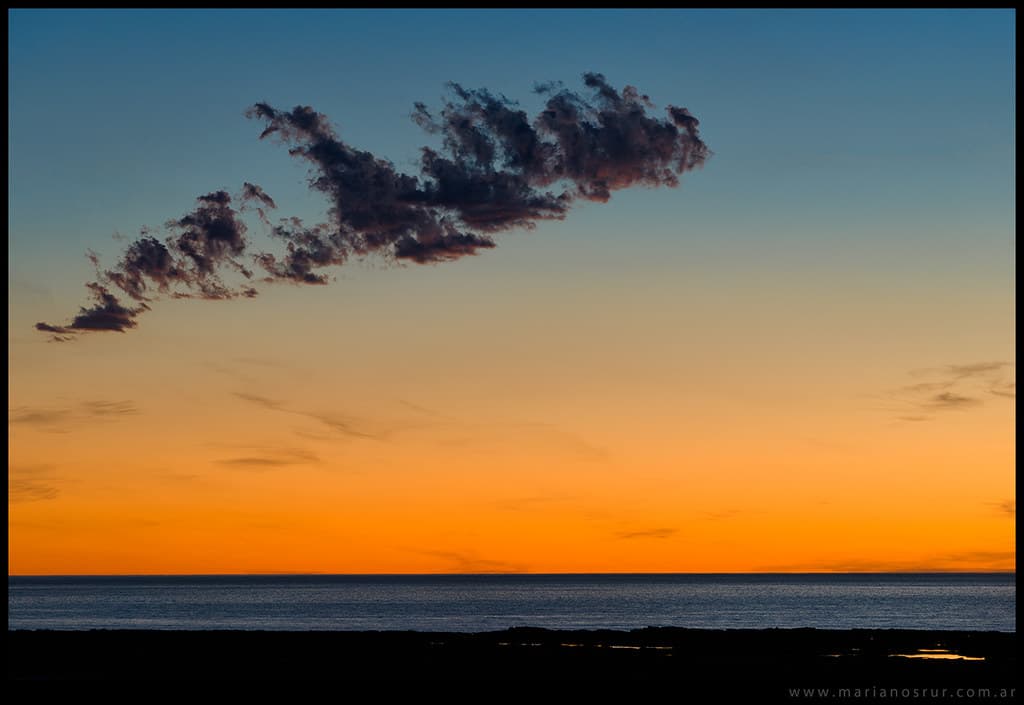
Counting the waves…
Counting the waves…
The stairway deposits you onto a sandy corridor flanked by low coastal bluffs, their rust-and-ochre striations marking millions of years of sediment. During January and February, this central sector hums with the particular energy of Argentine beach culture: mate circles passing beneath canvas umbrellas, children building moats to capture the incoming tide, vendors threading between towels with cold drinks and bills of empanadas. The gulf's extreme tidal range—among the most dramatic in South America—reveals vast tidal pools twice daily, their temporary basins warming to bathtub temperatures under the Patagonian sun. You time your swim to the incoming tide, when the water is warmest, joining locals who know the rhythm by heart. The urban proximity means beachside showers, changing rooms, and a promenade dotted with rental shops and casual seafood restaurants just steps from your towel. By late afternoon, the beach empties in waves as families retreat for siesta, leaving behind sand still dimpled with footprints and the occasional forgotten bucket. The evening return brings a different crowd—teenagers playing volleyball, couples strolling the firm wet sand left by low tide, the offshore breeze finally arriving to temper the day's accumulated heat.
Places, rentals, tours and events within walking and driving distance of Playa Sexta Bajada.
Photos
Playa Sexta Bajada provides safe swimming conditions suitable for families. The beach features the calm, protected waters characteristic of San Antonio Bay, with gentle waves and a sandy bottom. Lifeguard services operate during the peak summer season, particularly in January and February. The area sees good visitor traffic during peak season, providing natural supervision and safety. However, be aware of significant tidal variations that can dramatically change water depth and beach width throughout the day. Always check tide tables, observe posted flags and warnings, and supervise children closely. The urban proximity ensures help is available if needed.
The best time to visit Playa Sexta Bajada is during Argentina's summer months, from December through February, when weather is warm and the beach operates at full capacity. January is the peak period with the warmest water temperatures and most active atmosphere, though it brings higher prices and larger crowds. For better value while maintaining pleasant conditions, consider late November, early December, or March. Water temperatures are most comfortable from mid-January through February. Early morning visits during peak season offer quieter conditions. Winter months are cold with limited services, making them unsuitable for beach activities.
Playa Sexta Bajada is reached via the sixth numbered beach access point along the Las Grutas coast, located in the southern portion of the central beach corridor. From the town center, walk or drive along the coastal avenue following signs for 'Bajada 6' or 'Sexta Bajada.' The access features stairs or ramps descending to the beach below. Parking is available near the entrance, though spaces can be limited during busy summer periods. The beach is easily walkable from most Las Grutas accommodations. Las Grutas itself is accessible by bus from regional cities or by car via well-maintained paved roads.
Playa Sexta Bajada benefits from its urban Las Grutas location, with various accommodation and dining options within walking distance. Hotels, apart-hotels, cabañas, and vacation rentals are available in the surrounding blocks. Restaurants along the main avenue serve traditional Argentine parrilla, seafood, and casual fare. Beach kiosks operate during peak season offering snacks and beverages. Supermarkets and grocery stores are accessible for self-catering needs. While slightly more removed from the very center than lower-numbered bajadas, the area still provides comprehensive services. Book accommodation early for January visits when Las Grutas reaches maximum capacity.
Playa Sexta Bajada occupies a position in the southern central section of the Las Grutas beach corridor, offering a slightly more relaxed atmosphere while maintaining urban convenience. While it shares the warm waters and sandy characteristics of all Las Grutas beaches, its location provides a balance between accessibility and a somewhat calmer environment than the most central sectors. The beach remains popular during peak season but may feel less crowded than bajadas 1-3. It appeals to visitors seeking family-friendly conditions with good services but preferring a marginally quieter setting. The area maintains the same excellent beach quality that defines Las Grutas.