
Counting the waves…
Counting the waves…

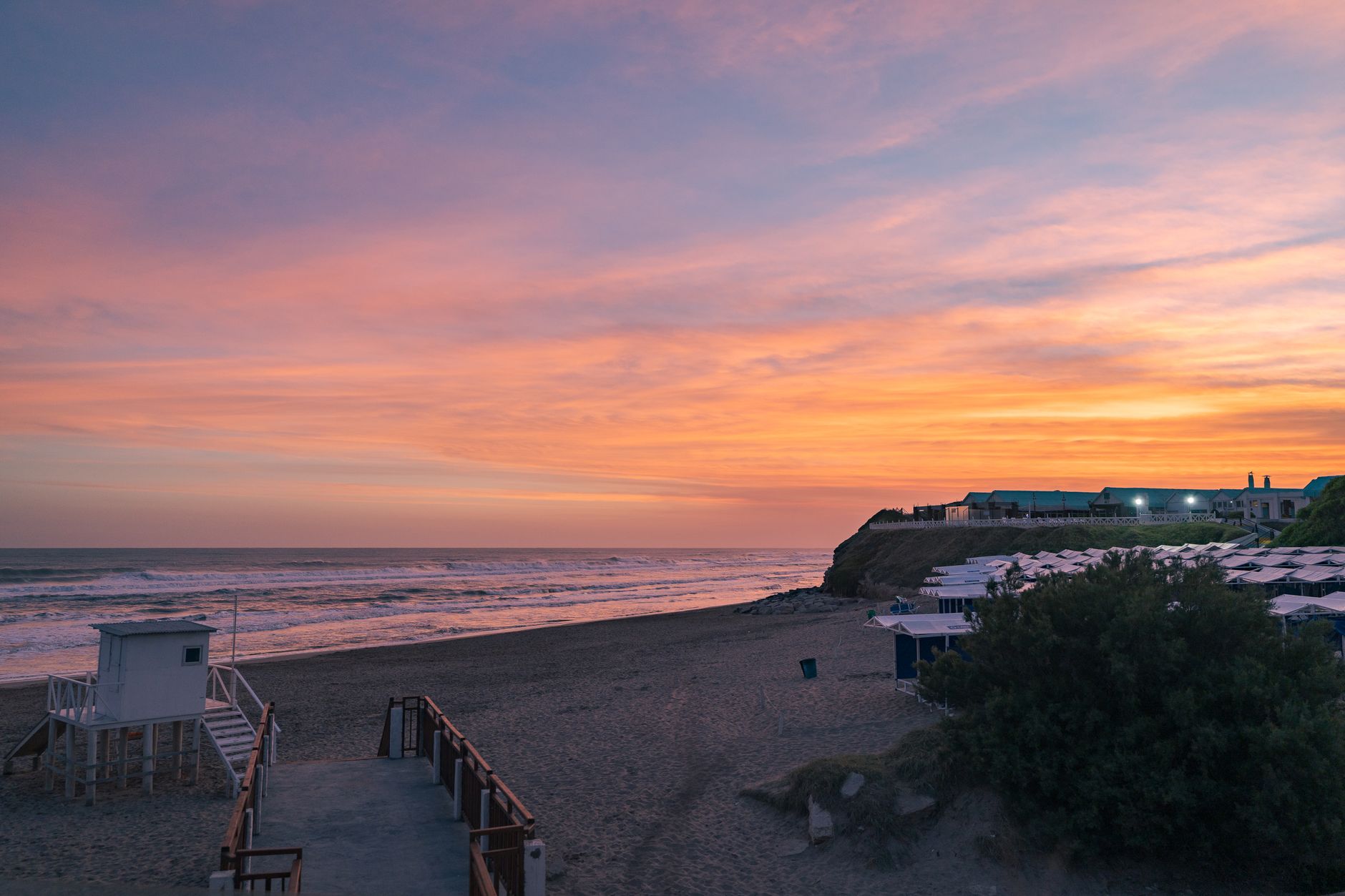
Pebbles dominate the upper beach, grading to coarse sand near the waterline where the river's current sorts sediment. You watch the freshwater flow cut channels through the shore, creating temporary lagoons that trap kelp and small fish. The stream runs tea-colored from upstream peat bogs, staining the surf zone amber before the Atlantic dilutes it to transparency. Sunset here backlights the river's outflow, turning spray into golden mist. The western sky often shows layered clouds in shades of pewter and salmon, their reflections rippling across the delta's shallow pools. Seabirds congregate at the confluence—gulls, terns, and occasional cormorants—exploiting the mixing zone where nutrients concentrate. You'll see their footprints crisscrossing the sand, a temporary record erased by the next tide. The beach curves gently southward, disappearing into coastal haze. No structures break the sightline, no paths suggest regular visitation. You're alone with the wind's constant commentary and the overlapping rhythms of river and ocean. The isolation feels complete but not hostile—indifferent, perhaps, which seems appropriate. Pack out everything you bring; there are no second chances here, no supply caches or emergency shelters.
Places, rentals, tours and events within walking and driving distance of Playa Río Bueno.
Photos
Swimming at Playa Río Bueno is not recommended due to frigid Atlantic waters that rarely exceed 8°C, even in summer. Strong currents along this exposed coastline create dangerous conditions, and the remote location means emergency help could take a full day or more to arrive. The pebble beach surface can be slippery and unstable. Cold-water shock is a serious risk for anyone entering the water without specialized equipment. Most visitors appreciate this beach for coastal walks, sunset photography, and wildlife observation rather than water activities. Always prioritize safety in this isolated wilderness environment.
Summer months (December-February) offer the most accessible conditions with temperatures around 10-15°C and extended daylight for exploration and photography. However, Playa Río Bueno remains extremely uncrowded year-round due to its remote location on Península Mitre. Autumn (March-May) provides excellent sunset opportunities with dramatic skies and changing light. Winter requires advanced cold-weather skills but delivers stark, atmospheric beauty. Spring brings wildlife activity along the coast. Wind is constant in all seasons, so bring appropriate layers and weatherproof gear regardless of when you visit this low-density Atlantic sector.
Reaching Playa Río Bueno demands serious expedition preparation. From Ushuaia, the journey requires a capable 4x4 vehicle and 8-12 hours of challenging off-road driving across Península Mitre's trackless terrain. Many travelers join organized overland expeditions with experienced guides who handle navigation and logistics. Some approach via multi-day trekking routes. There is no public transportation, no marked roads in the final sections, and no cell phone coverage. Satellite communication devices, GPS navigation, comprehensive maps, and emergency supplies are essential. Always travel with others and file detailed itineraries before departing into this wilderness.
Playa Río Bueno has absolutely no facilities, services, or infrastructure of any kind. This isolated Atlantic beach sector requires complete self-sufficiency, including all camping equipment, food, water, fuel, and emergency gear. The nearest town with services is Ushuaia, requiring at least a full day's difficult travel to reach. Wilderness camping is the only option, and you must practice strict Leave No Trace principles. Some expedition companies offer guided trips with logistical support and meals included. Prepare as thoroughly as for a remote polar expedition, because the isolation level is comparable.
Playa Río Bueno stands out for its distinctive river-mouth setting where freshwater meets the Atlantic, creating unique ecological conditions and photographic opportunities. The beach benefits from particularly dramatic sunset angles along this stretch of coast, with the low Patagonian light painting the pebbled shore and surrounding landscape in golden and crimson tones. The area's extreme isolation—even by Península Mitre standards—means you'll likely experience complete solitude. The combination of riverine and marine environments attracts diverse wildlife. This sector represents some of the least-visited coastline in all of Argentina, appealing to adventurers seeking truly off-the-map experiences.