
Counting the waves…
Counting the waves…

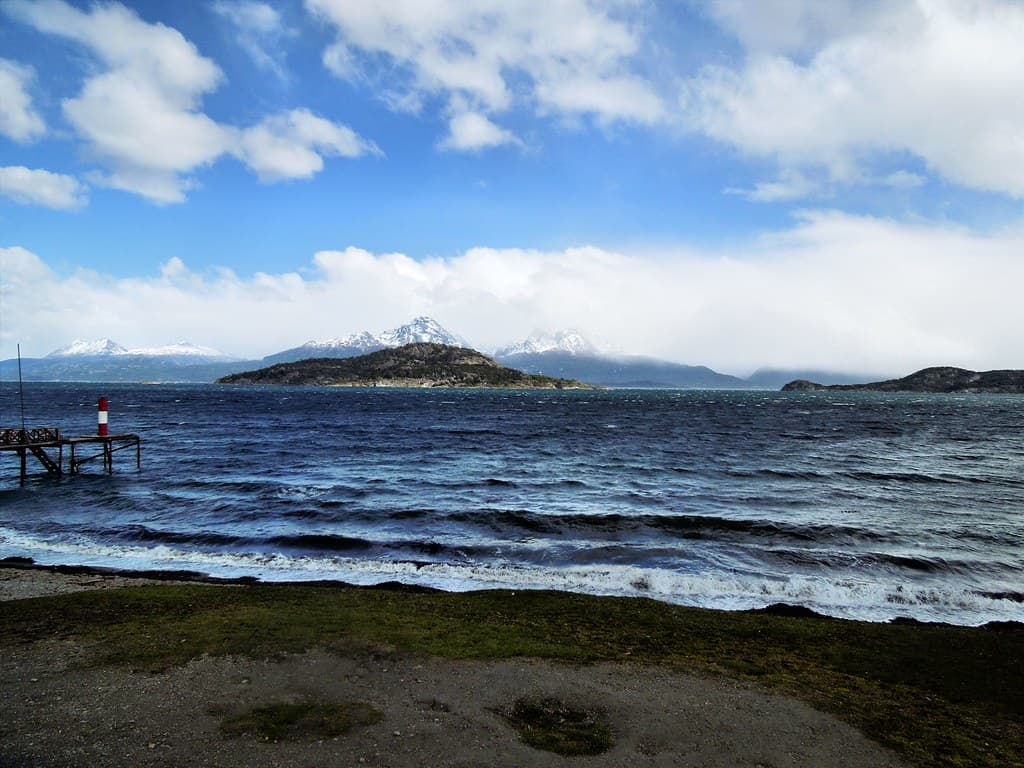
The beach hides behind a curtain of southern beech—twisted lenga and ñire trees stunted by Patagonian wind into shapes that look designed by a committee of surrealists. You reach the sand via boardwalk, your footsteps hollow on weather-grayed wood that keeps you above the saturated peat. Then the forest opens and the bay reveals itself: a protected curve of tawny sand and smooth pebbles, water shifting from jade in the shallows to ink-blue where the channel deepens. Mountains frame every sightline. Snow-draped peaks across the Beagle Channel belong to Chile's Isla Navarino, their reflections wobbling in the bay's surface whenever wind drops. Behind the beach, the forest climbs steep slopes in dense, dark green ranks. You hear the whistle of a Patagonian sierra-finch, the occasional splash of a diving cormorant, and the constant low conversation of wind through beech leaves. Families spread blankets on the sand—nobody swims, not when the water temperature makes hypothermia a ten-minute proposition—while photographers work the headlands for compositions that capture forest, mountain, and channel in a single frame. The bay's shelter makes it Lapataia's gentlest beach, protected from the channel's worst moods, a place where beauty comes without quite so much suffering.
Places, rentals, tours and events within walking and driving distance of Playa Bahía Zaratiegui.
Photos
Swimming is not recommended despite the bay's sheltered nature. Water temperatures in the Beagle Channel remain dangerously cold year-round (4-9°C), posing severe hypothermia risks within minutes of immersion. The calm bay conditions reduce wave and current dangers compared to exposed beaches, but the cold remains the primary hazard. Visitors should enjoy the beach for walking, photography, and scenic appreciation. Wading briefly at the shoreline is possible with caution, but prolonged water contact is unsafe. Children should be closely supervised near the water, and all visitors should dress warmly with windproof, waterproof layers.
The beach welcomes visitors year-round, with each season offering distinct advantages. Summer (December-February) provides the most comfortable temperatures (5-15°C) and extended daylight for photography and exploration. The sheltered bay location makes it accessible even during periods when other areas experience harsher conditions. Autumn (March-May) showcases spectacular fall colors in the surrounding lenga forests. Winter brings snow-covered mountain backdrops, though shorter days and cold limit visit duration. Spring offers awakening wildlife and fewer crowds. Midday visits typically offer the best light for capturing the famous mountain and forest views.
Bahía Zaratiegui is located within Tierra del Fuego National Park, about 8-10 kilometers from Ushuaia via Route 3. After entering the park (entrance fee required), follow signs toward the bay. You can reach it by private or rental car, organized tour, or the seasonal Tren del Fin del Mundo tourist train, which stops nearby. From the parking area or train stop, a short, relatively easy walking trail leads to the beach viewpoints. The path is generally well-maintained but can be muddy or slippery. Public buses serve the park during peak season, offering an economical option.
As part of Tierra del Fuego National Park, Bahía Zaratiegui has no commercial facilities at the beach itself. The park entrance area offers basic services including restrooms and a small café, but options are minimal. Visitors should pack food, water, and snacks for their visit. All comprehensive services, including diverse restaurants and accommodations ranging from budget hostels to upscale hotels, are located in Ushuaia, approximately 15-20 minutes away by vehicle. Most visitors base themselves in Ushuaia and make day trips to the park's various beaches and attractions with provisions prepared in advance.
The bay offers an exceptional composition of classic Patagonian elements: pristine Beagle Channel waters framed by dense sub-Antarctic forest and dramatic mountain peaks. The sheltered bay creates mirror-like reflections on calm days, doubling the visual impact of surrounding landscapes. Ancient lenga trees often frame shots naturally, adding depth and character. The combination of water, forest, and mountains in a single view is particularly striking. Changing weather patterns create diverse atmospheric conditions, from misty mystique to brilliant clarity. The protected location within the national park ensures unspoiled scenery, making every angle photograph-worthy throughout the year.