Counting the waves…
Counting the waves…

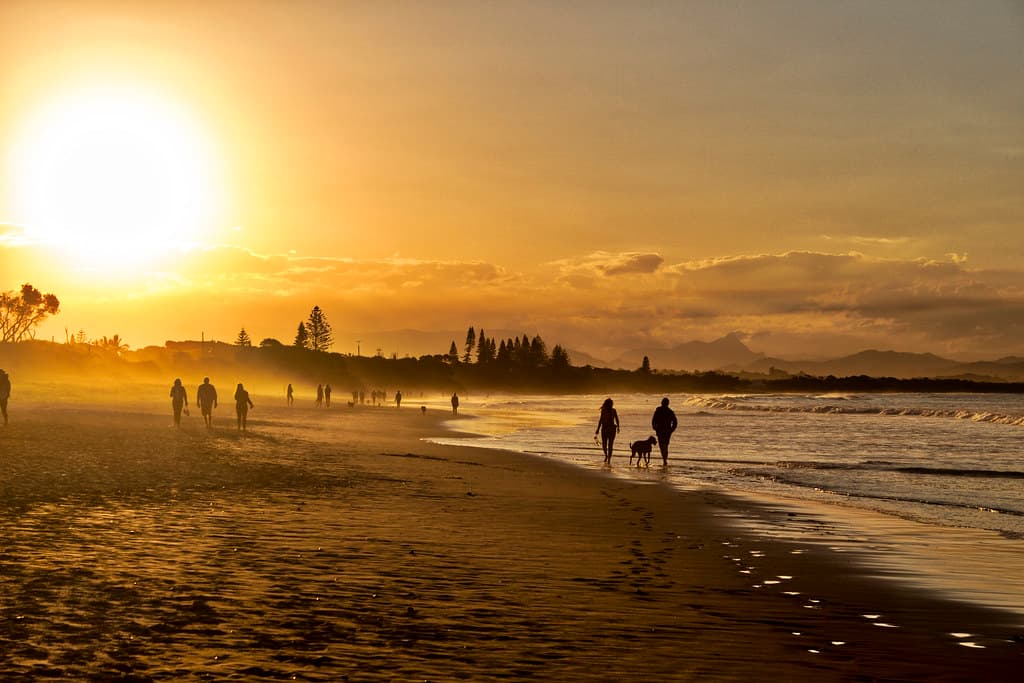
The walk down from the carpark winds through she-oak and tuckeroo, their branches framing glimpses of cobalt water before you step onto sand the color of wet terracotta after rain. Broken Head sits in a scalloped bay between two headlands—the southern point, Kings Beach bluff, juts into swells that march in from New Zealand, while the northern rocks shelter a stretch of calmer water where you can float without fighting the pull. Low tide exposes platforms of columnar basalt, tide pools crowded with purple urchins and weed-covered stones that clack underfoot. Surfers spread out along the beach, reading the sandbars that shift with each winter storm. The Rights can handle size when a cyclone swell wraps around the point, but most days you'll find waist-high peaks peeling over shallow banks, the take-off zone marked by a single Norfolk pine on the southern end. The national park boundary means no cafés, no umbrellas for rent, no surf school flags dotting the shore. You carry in what you need. By late afternoon, the headland shadow creeps across the sand and eastern grey kangaroos emerge from the littoral forest to graze the coastal heath, unbothered by the last swimmers toweling off beside driftwood logs smoothed silver by salt.
Places, rentals, tours and events within walking and driving distance of Broken Head Beach.
Photos
Broken Head Beach is unpatrolled and relatively isolated, so swimmers should exercise caution. The beach can experience strong currents, rips, and shore breaks, particularly after storms or during larger swells. It's best suited for experienced swimmers and surfers who can assess conditions independently. Always check surf reports before entering the water, swim between the flags if lifeguards are present during peak season, and never swim alone. The rocky headlands at either end create hazards, so stay in the main beach area.
Broken Head Beach is excellent year-round, with each season offering something different. Summer (December-February) brings warm water and ideal swimming conditions, though it can be busier. Autumn and spring offer pleasant temperatures with fewer crowds and consistent surf. Winter (June-August) sees larger swells attracting experienced surfers, though water temperatures drop. Early morning visits any time of year provide the best chance for spotting wildlife and enjoying the tranquil national park setting before day-trippers arrive.
Broken Head Beach is located about 10 minutes south of Byron Bay. Take the Broken Head Road turnoff from the Pacific Highway, then follow the signs through Broken Head Nature Reserve. There's a small car park at the end of Broken Head Road, which can fill quickly during peak times and weekends. From the car park, it's a short walk through coastal vegetation to reach the beach. The access road is unsealed in parts but suitable for regular vehicles in dry conditions.
Broken Head Beach has no commercial facilities—there are no cafes, shops, toilets, or showers at the beach itself. The nearby Broken Head Holiday Park offers camping and cabin accommodation within walking distance. For restaurants, cafes, and supplies, you'll need to head to Suffolk Park (5 minutes) or Byron Bay (10 minutes). Pack everything you need for the day, including water, food, and sun protection, as the beach maintains its natural, undeveloped character within the nature reserve.
Broken Head stands out for its protected national park setting and relative seclusion compared to busy Byron Bay beaches. The beach offers excellent right-hand point breaks for surfing and remains largely undiscovered by mass tourism. Its location within Broken Head Nature Reserve means pristine natural surroundings with chances to spot dolphins, turtles, and migrating whales (June-November). The lack of development and facilities preserves an authentic, untouched coastal experience that's increasingly rare in the Byron region.