Counting the waves…
Counting the waves…

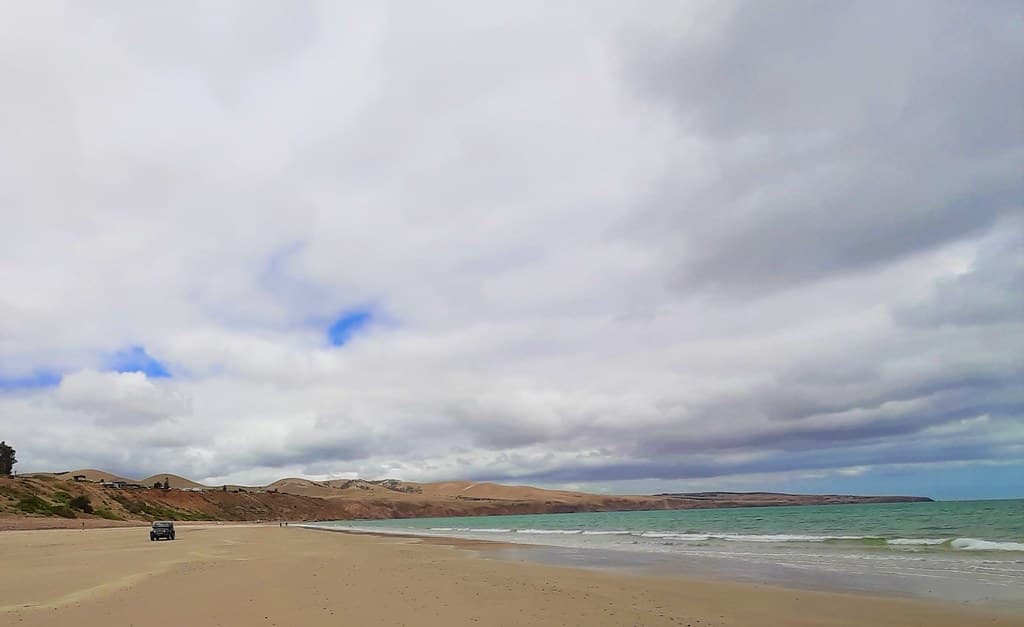
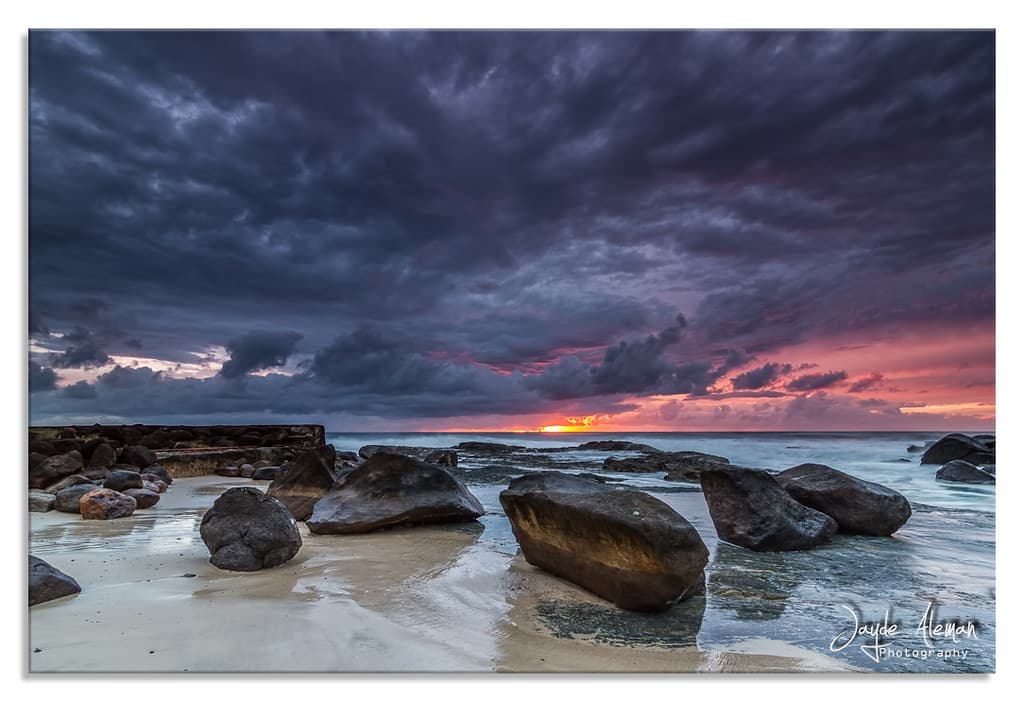
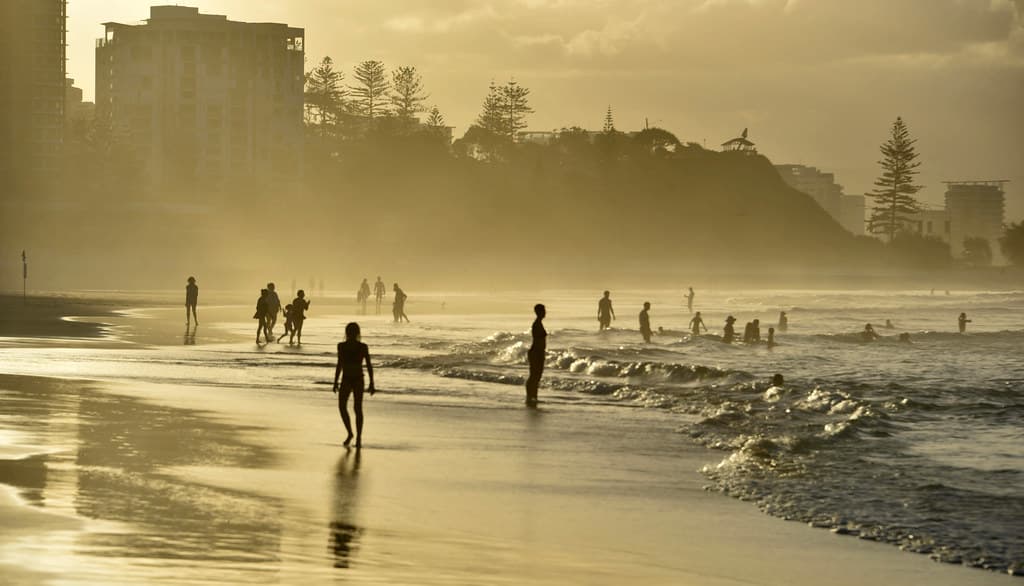
The Giant Causeway juts into the Pacific like a stone jetty, its interlocking basalt pillars forming tide pools that fill and drain with each swell. You'll pick your way across these volcanic hexagons at low tide, peering into crevices where anemones bloom and tiny wrasse dart. The rock platform extends far enough that fishermen set up for the day, esky at their feet, lines cast toward the deep blue beyond the break. The beach itself curves gently between Dreamtime Beach to the south and the headland to the north. Morning brings glassy conditions and pods of dolphins working the shorebreak, their fins slicing the surface just beyond the sandbar. Norfolk pines lean over the grassy reserve behind the sand, and kookaburras call from the branches as you spread your towel. The sand here is coarser than you'd expect—golden with flecks of shell—and compacts firm near the waterline for barefoot runs. By afternoon, the nor'easter picks up and the waves build. Surfers gather near the headland where the swell wraps around the point, creating a longer ride than the beach break offers. The light turns amber as the sun angles west over the hinterland, casting long shadows across the rock pools. You'll find yourself lingering, watching the tide change the shoreline inch by inch.
Places, rentals, tours and events within walking and driving distance of Fingal Beach.
Photos
Fingal Beach is generally considered safer for swimming than many nearby surf beaches due to its more sheltered position, though conditions vary with tides and swell. The beach is unpatrolled, so swimmers should exercise caution and check conditions before entering the water. Rock platforms at either end can create strong currents during certain tides. The southern end near the boat ramp tends to be calmer. Always swim between the flags when lifeguards are present during peak holiday periods, and avoid swimming alone or in rough conditions.
Fingal Beach is enjoyable year-round thanks to the region's subtropical climate. Summer (December-February) offers warm water temperatures around 23-26°C, ideal for swimming, though it's busier and can be humid. Autumn and spring provide pleasant weather with fewer crowds, perfect for walking and surfing. Winter (June-August) sees cooler temperatures (17-21°C) but remains mild compared to southern Australia, with excellent conditions for whale watching from June to November. Early mornings offer the calmest conditions and best light for photography of the distinctive rock formations.
Fingal Beach is located approximately 10 minutes south of Tweed Heads. From the Pacific Motorway, take the Tweed Heads exit and follow signs to Fingal Head. Free parking is available along Fingal Road, which runs parallel to the beach, and at the boat ramp car park at the southern end. Parking can fill quickly on weekends and holidays, especially in summer. There's no public transport directly to the beach, so a car is recommended. The beach is easily accessible with clearly marked entrances from the main road.
Fingal Beach has limited immediate facilities, maintaining its quiet, residential character. The Fingal Beach Sports Club offers meals and overlooks the ocean. For more dining and shopping options, drive 5 minutes to Kingscliff, which has numerous cafes, restaurants, and supermarkets. Accommodation options include holiday rentals and apartments in Fingal Head itself, plus hotels and resorts in nearby Kingscliff and Tweed Heads. Basic facilities like public toilets and outdoor showers are available at the beach, but bring your own food and drinks for a beach day.
The Giant's Causeway is Fingal Head's most distinctive feature—a dramatic rock formation of hexagonal basalt columns extending into the ocean at the northern headland. Formed by ancient volcanic activity around 20 million years ago, these geometric columns create a striking geological wonder similar to Ireland's famous Giant's Causeway. The formation is accessible at low tide via a short walk from Fingal Beach, making it popular with photographers and geology enthusiasts. Check tide times before visiting, wear sturdy shoes, and exercise caution as rocks can be slippery and waves unpredictable.