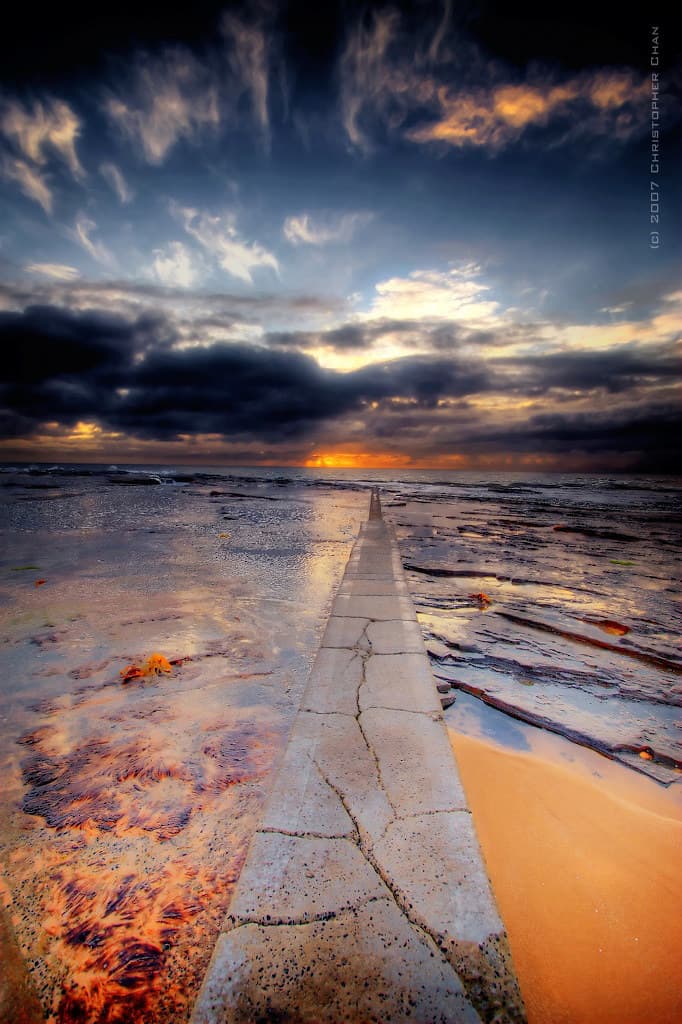
Counting the waves…
Counting the waves…

The first thing you notice is the size. North Narrabeen stretches in both directions, a long unbroken sweep of sand that separates the Pacific from the lagoon's calm, tea-coloured water. The beach faces east, catching swells that travel thousands of kilometres before detonating on the sandbar near the rocks at the southern end. On big days, the sets roll in stacked and furious; on smaller mornings, the inside reforms offer gentler shoulders. You'll share the sand with a cross-section of Sydney's Northern Beaches: wetsuit-clad locals who know every ripple in the sandbar, teenagers sprawled on towels, parents wading toddlers into the shallows where the lagoon mouth spills fresh water into the brine. The rockpool at the northern headland fills and drains with the tide, and the walking path above the beach curves past wind-sculpted banksias and lookout points where you can watch the entire two-kilometre stretch at once. Come midweek in autumn and you'll have whole sections to yourself, the only sound the white noise of surf and the occasional kookaburra laughing from the she-oaks. The sand here is coarse underfoot, studded with shell fragments, and the offshore breeze in the afternoon grooms the waves into crisp, glassy walls.

Places, rentals, tours and events within walking and driving distance of North Narrabeen Beach.
Photos
North Narrabeen Beach is patrolled by surf lifesavers during peak seasons, making supervised areas safest for swimming. The beach is known for powerful surf and can experience strong rips and currents, so swimmers should stay between the red and yellow flags. Beginners and families may find conditions challenging, particularly during larger swells. Always check the safety flags before entering the water, and avoid swimming alone or after heavy rainfall when water quality may be compromised. The northern end near the rock pool typically offers calmer conditions.
North Narrabeen Beach is excellent year-round, with each season offering different advantages. Summer (December-February) brings warm water and reliable lifeguard patrols, ideal for families. Autumn and spring provide pleasant temperatures with fewer crowds. Winter delivers the best surf conditions, attracting experienced surfers to its renowned waves. Water temperatures range from 18°C in winter to 23°C in summer. Early mornings generally offer cleaner conditions and lighter crowds regardless of season. The beach faces northeast, providing good protection from southerly winds.
North Narrabeen Beach is located approximately 23km north of Sydney's CBD. By car, take Pittwater Road and turn onto Ocean Street or Narrabeen Park Parade. Public parking is available on Ocean Street and surrounding streets, though it fills quickly on weekends and holidays. The B1 bus from Wynyard or Mona Vale stops nearby. Limited metered parking is available along the beachfront. Arriving before 9am on weekends significantly improves parking prospects. The beach is also accessible via the coastal walking track from Collaroy.
The North Narrabeen Surf Life Saving Club operates a café with ocean views, offering breakfast and lunch options. Several cafés and takeaway shops are located on nearby Ocean Street and Waterloo Street, within a short walk. Basic amenities include public toilets, outdoor showers, and change rooms near the surf club. The North Narrabeen rock pool at the northern end is popular for safer swimming. For accommodation, the area offers holiday apartments and rental homes, while larger hotels are available in nearby Collaroy and Mona Vale.
North Narrabeen Beach, often called 'Narrabeen' by surfers, is one of Australia's premier surf breaks and regularly hosts professional competitions including World Surf League events. The beach produces consistent, powerful waves ranging from 2-8 feet, with the northern corner offering a quality right-hand point break over sand and rock. Its northeast-facing aspect captures swells from multiple directions, providing surfable conditions most days. The beach has produced numerous professional surfers and remains a testing ground for serious wave riders, though conditions can be challenging for beginners.