Counting the waves…
Counting the waves…

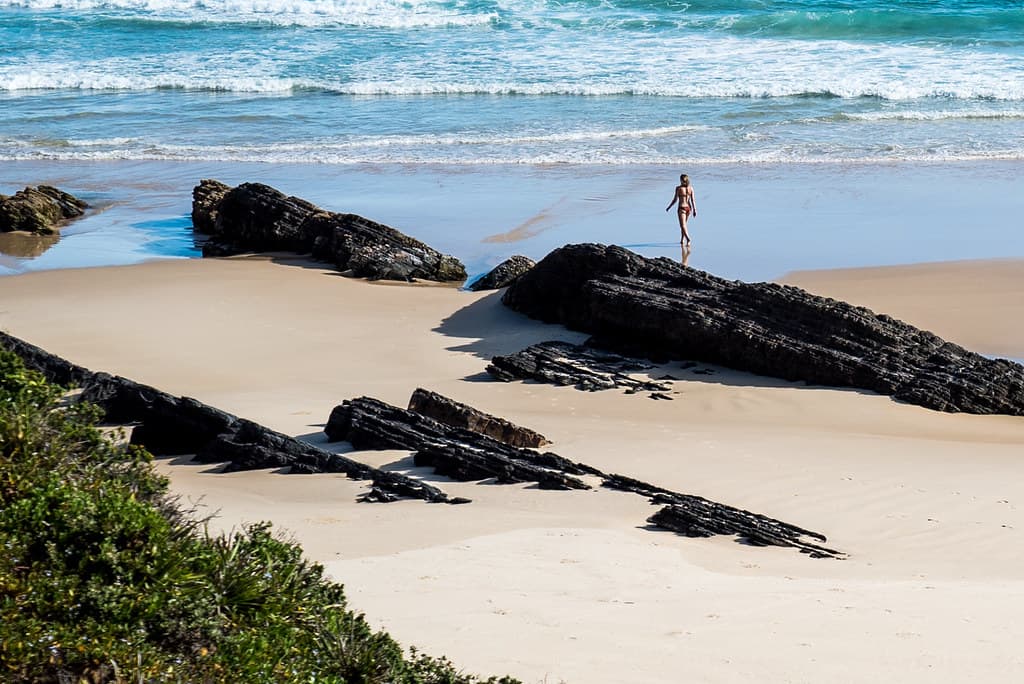
The beach earns its name not through hyperbole but through geography: it was simply the first strand settlers encountered when rounding the northern headland. What unfolds below is a textbook example of coastal symmetry—twin rock platforms embrace a half-kilometre sweep of sand that angles just enough to catch both northerly and southerly swells. The southern end tapers into a jumble of volcanic boulders where rock pools trap blue gropers and eastern rock lobsters at low tide. Mid-beach, the sand is coarse underfoot, studded with crushed pipis and moon snail shells. Families stake out territory near the patrolled flags, where the shore break stays gentle and the water rarely pushes past chest-deep before a sandbar takes hold. Walk north toward Lighthouse Beach and you'll cross a tidal creek that cuts a shifting channel through the sand, its current strong enough after rain to sweep thongs out to sea. The headlands bookending the beach rise forty metres, their clifftops matted with coastal heath that flowers yellow in spring. From either vantage point the view is almost absurdly photogenic—the kind of panorama that makes you understand why Seal Rocks remains stubbornly uncommercialised. During whale migration season, May through November, humpbacks linger so close to shore you can watch their tail flukes without leaving your towel.
Places, rentals, tours and events within walking and driving distance of Number One Beach.
Photos
Number One Beach offers generally safe swimming conditions, though it's an ocean beach with variable surf. The beach is patrolled during peak holiday periods, but not year-round. Swimmers should stay between the flags when lifeguards are present and be aware of rips and changing conditions. The beach is relatively sheltered compared to nearby surf beaches, making it suitable for families, but always check local conditions before entering the water. Rock platforms at either end require caution due to waves and slippery surfaces.
Number One Beach can be visited year-round, with each season offering different experiences. Summer (December-February) brings warm weather perfect for swimming, though it's busiest during school holidays. Autumn and spring offer milder temperatures and fewer crowds, ideal for beach walks and photography. Winter provides opportunities for whale watching (June-November) as humpbacks migrate along the coast. The beach's sheltered position makes it enjoyable even on cooler days. Sunrise visits are particularly stunning given the easterly aspect.
Number One Beach is accessed via Kinka Road in Seal Rocks village, approximately 50km east of Forster. From the Pacific Highway, take the Lakes Way then follow signs to Seal Rocks. A sealed car park is located at the beach entrance with space for around 30 vehicles. During peak holiday periods, parking fills quickly, so arrive early. The beach is just a short walk from the car park across the dunes. The village itself is small and walkable once you've parked.
Seal Rocks is a small village with limited dining options. The Seal Rocks Camping Reserve sits directly behind Number One Beach, offering powered and unpowered sites. Several holiday houses and apartments are available for rent in the village. The nearest café and general store are within walking distance of the beach. For more extensive dining and shopping, visitors typically travel to Forster-Tuncurry (50km) or Hawks Nest (25km). It's advisable to bring supplies, especially if visiting outside peak season when some facilities may have limited hours.
Number One Beach derives its name from Seal Rocks' historic numbering system for its beaches. The village has three main beaches numbered in sequence: Number One Beach facing east, followed by Boat Beach and Lighthouse Beach. While the origin of this simple naming convention isn't definitively documented, it likely stems from early settlement days when the small community needed straightforward identifiers. The name has endured, becoming part of the area's charm and character, distinguishing it from the more formal names of nearby beaches.