Counting the waves…
Counting the waves…

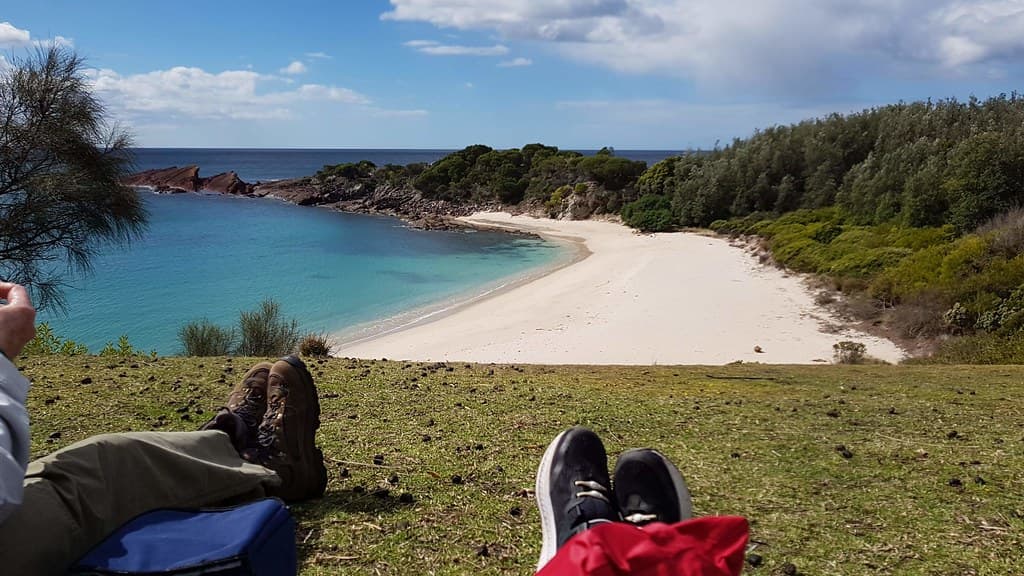
You park beneath stands of coastal banksias, their serrated leaves catching the offshore breeze, and the path spits you onto sand the color of wet cardboard. Sharpes Beach runs north for nearly a kilometre, backed by low dunes threaded with spinifex and the occasional Norfolk pine leaning at improbable angles. The beach faces due east, soaking up swells that travel unimpeded across the Tasman, and on a clean four-foot day the rights peel with metronomic reliability off the southern rocks. Mid-morning the onshore tends to ruffle things, but dawn patrols find the surface glassy and the line-up sparse—maybe three boardriders, maybe none. Between sets you'll spot dolphins working the gutters and, if the baitfish are running, gannets folding their wings into vertical dives just beyond the break. The water holds a greenish tint year-round, stained by tannins from the hinterland creeks, and the rip near the headland carves a highway back to the take-off zone. There's no cafe, no surf school, no umbrella hire. A single picnic shelter offers shade for the handful of families who arrive mid-afternoon, their esky lids clicking open to reveal sandwiches wrapped in greaseproof paper. By five o'clock the car park empties, the light slants gold across the banksias, and you're left with the rhythmic thud of waves and the high, needling call of oystercatchers working the tide line.
Places, rentals, tours and events within walking and driving distance of Sharpes Beach.
Photos
Sharpes Beach is an unpatrolled surf beach with variable conditions that can be challenging for inexperienced swimmers. The beach experiences strong currents, rips, and consistent surf breaks that attract experienced surfers but can be hazardous for casual swimmers. There are no lifeguards on duty, so swim at your own risk and stay close to shore if you're not a confident swimmer. Check ocean conditions before entering the water, avoid swimming alone, and be particularly cautious during high tide and after storms when currents strengthen.
Sharpes Beach offers year-round appeal, though conditions vary seasonally. Summer (December-February) brings warm weather ideal for beach days, though it can be busier. Autumn and spring offer pleasant temperatures with fewer crowds, making them excellent for both surfing and relaxed beach visits. Winter (June-August) delivers the best surf swells for experienced surfers but cooler air and water temperatures. Early morning visits any time of year reward you with stunning sunrises and peaceful surroundings before day visitors arrive.
Sharpes Beach is located at Skennars Head, approximately 15 minutes north of Ballina via the Ballina-Skennars Head Road. From the Pacific Highway, follow signs to Skennars Head. There's a small, free parking area at the end of Sharpes Beach Road with limited spaces. The beach access involves a short walk down stairs and a path. Parking fills quickly during peak periods and weekends, so arrive early. The beach is relatively hidden and less developed than nearby Ballina beaches.
Sharpes Beach has minimal amenities directly at the beach—no cafes, shops, or facilities. The small village of Skennars Head, a few minutes' drive away, has a general store and limited services. For more dining options, cafes, and supermarkets, head to Ballina (15 minutes south) or Lennox Head (10 minutes north). Accommodation options include holiday rentals and houses in Skennars Head, while Ballina and Lennox Head offer broader choices including hotels, motels, and resorts. Pack food, water, and supplies before visiting.
Sharpes Beach remains relatively uncrowded compared to famous nearby breaks like The Pass at Byron Bay or Lennox Head. The beach offers quality, consistent waves with multiple peaks that work across various swell directions and tides, making it popular with locals who prefer avoiding tourist-packed spots. The rocky headland at the northern end creates excellent surf conditions, while the beach's hidden location keeps crowds minimal. Experienced surfers appreciate the challenging conditions and the relaxed, uncommercialised atmosphere that's increasingly rare along this coast.