Counting the waves…
Counting the waves…

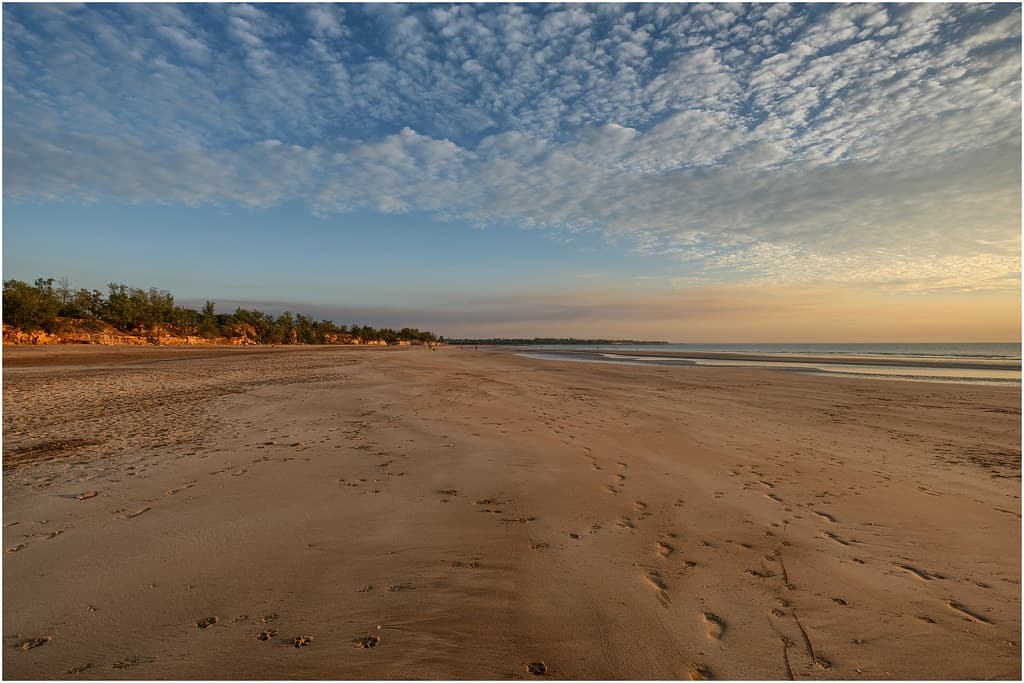
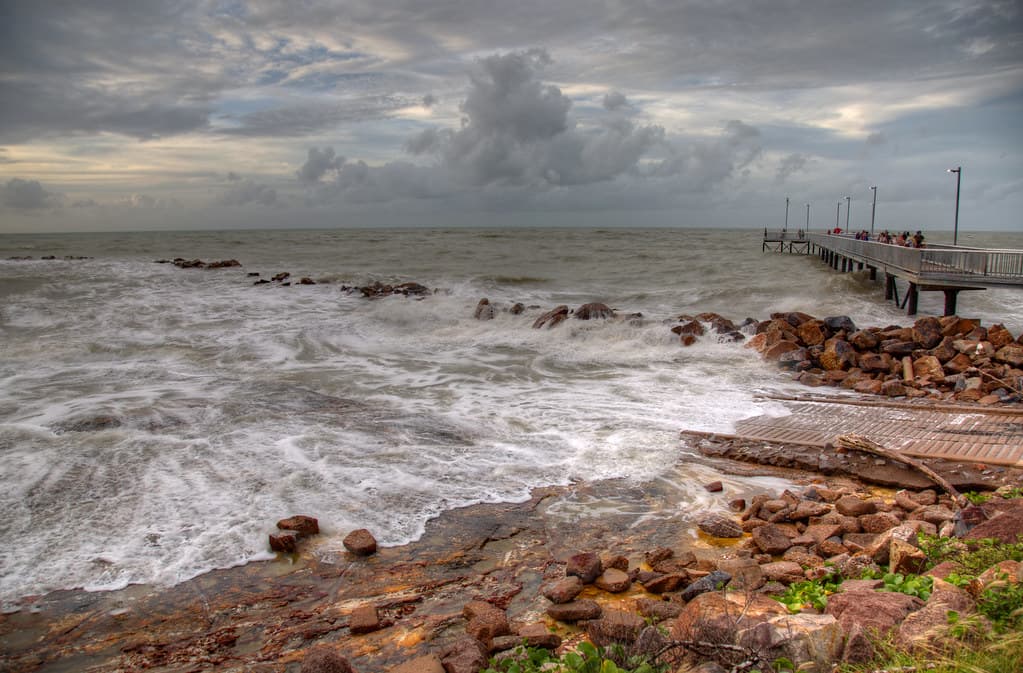
The drive along Lee Point Road ends where asphalt yields to packed sand and spinifex grass, the kind of transition that tells you you've left the city's humid embrace behind. Here, at Darwin's northern tip, the beach runs for miles—a tawny sweep of sand backed by low dunes and paperbarks that whisper in the constant breeze. The Timor Sea rolls in with a gentle insistence, carving shallow pools in the flats during the Dry, while overhead, brahminy kites wheel against skies that shift from cobalt to gunmetal in the space of an afternoon. You'll share this stretch with dog walkers and kite fliers rather than sunbathers; the Top End climate favors early-morning visits when the air still holds a trace of coolness. Children wade through ankle-deep water hunting soldier crabs, while parents set up beneath the scattered shade. The red pindan cliffs to the south glow amber in the slanting light, and if you time it right, you'll watch the sun sink into the sea with nothing but water between you and Indonesia. This isn't a beach for swimming laps or testing your backstroke—saltwater crocodiles and box jellyfish keep most visitors wading rather than diving. Instead, Lee Point offers something rarer in Darwin: elbow room, unobstructed horizons, and the particular silence that comes when wind and waves are the only soundtrack for miles.
Places, rentals, tours and events within walking and driving distance of Lee Point Beach.
Photos
Swimming at Lee Point Beach requires caution year-round. Box jellyfish are present during the wet season (November to May), making swimming dangerous without protective stinger suits. Saltwater crocodiles also inhabit Northern Territory waters and have been spotted in the area, so swimming is not recommended. The beach lacks lifeguard patrols and has no stinger nets. Lee Point is better suited for walking, picnicking, and enjoying the scenery rather than swimming. Always check local warnings and never swim alone or at dawn/dusk when crocodiles are most active.
Lee Point Beach can be visited year-round, though the dry season (May to October) offers the most comfortable conditions with lower humidity, minimal rainfall, and warm temperatures around 25-32°C. This period is ideal for beach walks and sunset viewing. The wet season (November to April) brings monsoonal rains, high humidity, and increased marine stingers, though it also delivers spectacular storm displays and dramatic skies. Early mornings and late afternoons provide the best light for photography and cooler temperatures, particularly during the dry season when crowds are minimal.
Lee Point Beach is located approximately 15-20 minutes' drive north of Darwin's city center via Stuart Highway and McMillans Road. Follow McMillans Road to its end where it meets the coast. The beach has a dedicated car park with ample free parking spaces near the beach access points. The road is sealed and suitable for all vehicles. Public transport options are limited, so a car is recommended. The beach stretches for several kilometers, with multiple access points along the coastline, making it easy to find your own quiet spot.
Lee Point Beach is relatively undeveloped with minimal facilities on-site. You'll find basic amenities including toilets and picnic tables, but no cafes or restaurants directly at the beach. The nearby suburb of Lee Point has a small shopping area with a convenience store about 2-3 kilometers away. For dining options and supplies, it's best to visit Casuarina Shopping Centre (approximately 10 minutes' drive) before heading to the beach. Bring your own food, drinks, and shade as there are limited sheltered areas. The closest accommodation is in Darwin's northern suburbs.
Yes, Lee Point Beach is an important nesting site for flatback turtles during the dry season, typically from June to August. Female turtles come ashore at night to lay their eggs, and hatchlings emerge approximately 50-60 days later. The area is monitored by conservation groups who sometimes conduct guided turtle watches. If you encounter nesting turtles or hatchlings, maintain a respectful distance, avoid using lights or flash photography, and never touch or disturb them. Check with local wildlife organizations for any organized viewing opportunities that support conservation efforts in this special nesting habitat.