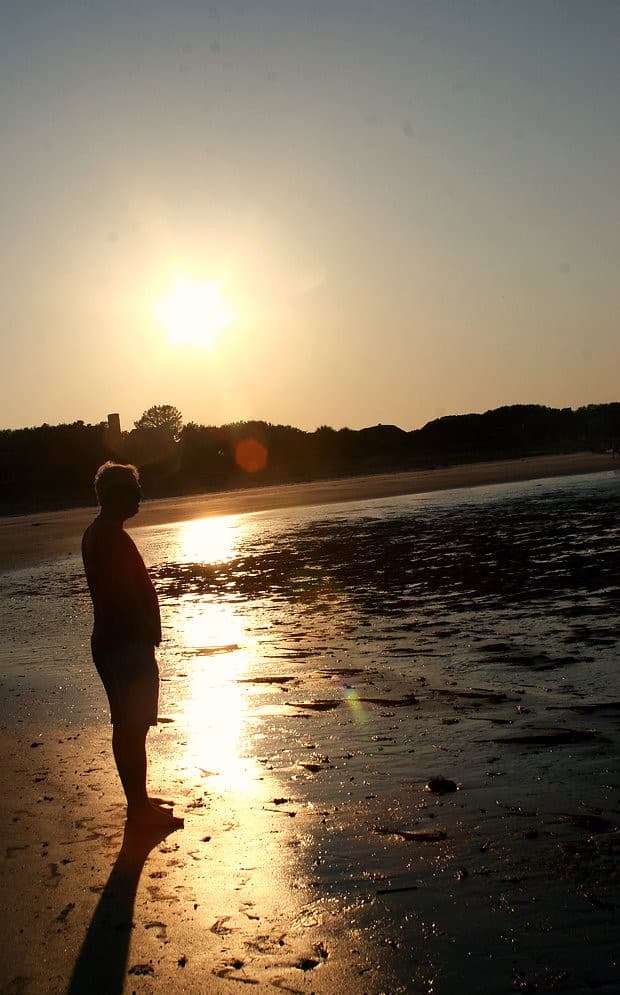
Counting the waves…
Counting the waves…
The Northern Territory's top end doesn't do easy beauty, and Kalkarindji Beach rewards your effort with something rarer than postcard views: solitude stitched into ancient country. You walk beneath sandstone escarpments striped in ochre and charcoal, the same pigments Yolngu artists grind for bark paintings in nearby communities. Pandanus palms rattle in the offshore breeze, their fibrous leaves catching light like green glass. The sand shifts from salmon pink to burnt sienna depending where the sun hangs, and at low tide you can trace rock platforms dimpled with tide pools harboring anemones and juvenile barramundi. Brahminy kites circle overhead, their rust-and-white plumage echoing the cliffscape. You'll share this stretch with precisely nobody most mornings—just the occasional four-wheel-drive from Nhulunbuy's mining community seeking respite from the red dust. This isn't swimming-and-daiquiris coastline. Saltwater crocodiles inhabit these waters year-round, so you keep boots on and eyes sharp. What you get instead is the rare privilege of walking country that has looked essentially unchanged for sixty thousand years, where every headland carries a Dreamtime story and the Gulf of Carpentaria stretches north toward Indonesia with nothing but open water and weather.
Places, rentals, tours and events within walking and driving distance of Kalkarindji Beach.
Photos
Swimming conditions vary seasonally at Northern Territory beaches. During the wet season (November-April), marine stingers including box jellyfish are present in coastal waters, making swimming dangerous without protective clothing. Saltwater crocodiles also inhabit NT coastal areas year-round. Always check local signage, observe warning flags, and consult with locals or your accommodation about current conditions. The beach is better suited for nature walks and shoreline exploration rather than swimming. Never swim alone and stay alert to your surroundings when visiting any NT coastal area.
The dry season (May-October) offers the most comfortable conditions for visiting Kalkarindji Beach, with lower humidity, minimal rainfall, and temperatures around 25-32°C. Clear skies and pleasant weather make this ideal for beach walks and exploration. The wet season (November-April) brings high humidity, heavy rainfall, and increased marine stinger activity. However, the lush, green landscape during the wet season can be spectacular. Year-round visits are possible, but dry season provides the best overall experience for outdoor activities and beach exploration.
Kalkarindji Beach is located in Nhulunbuy, a remote town in Northeast Arnhem Land. Access to Nhulunbuy requires a permit from the Northern Land Council, as it's on Aboriginal land. Most visitors fly into Nhulunbuy Airport from Darwin or Cairns. Once in town, the beach is accessible by car, and local roads are generally well-maintained during the dry season. Parking availability varies by specific beach access points. Check with your accommodation about permit requirements, local driving conditions, and the best access routes to the beach.
Nhulunbuy is a small mining town with limited but adequate facilities. You'll find supermarkets, cafes, and a few restaurants in the town centre, though dining options are modest compared to major cities. Accommodation includes a hotel, motel options, and serviced apartments—booking ahead is essential as availability is limited. Beach facilities are basic; bring your own water, snacks, and sun protection. The town has fuel stations and essential services. Most visitors stock up on supplies in Nhulunbuy before heading to beach areas for day trips.
Yes, permits are required to visit Nhulunbuy and surrounding areas as they're located in Northeast Arnhem Land on Aboriginal land. If staying in town accommodation or visiting for work, your hosts typically arrange permits. Independent travellers must apply through the Northern Land Council well in advance. Some areas may have additional access restrictions. Always respect local Indigenous culture, follow permit conditions, and stay within designated areas. Check current permit requirements before planning your trip, as regulations can change and processing times vary throughout the year.