Counting the waves…
Counting the waves…
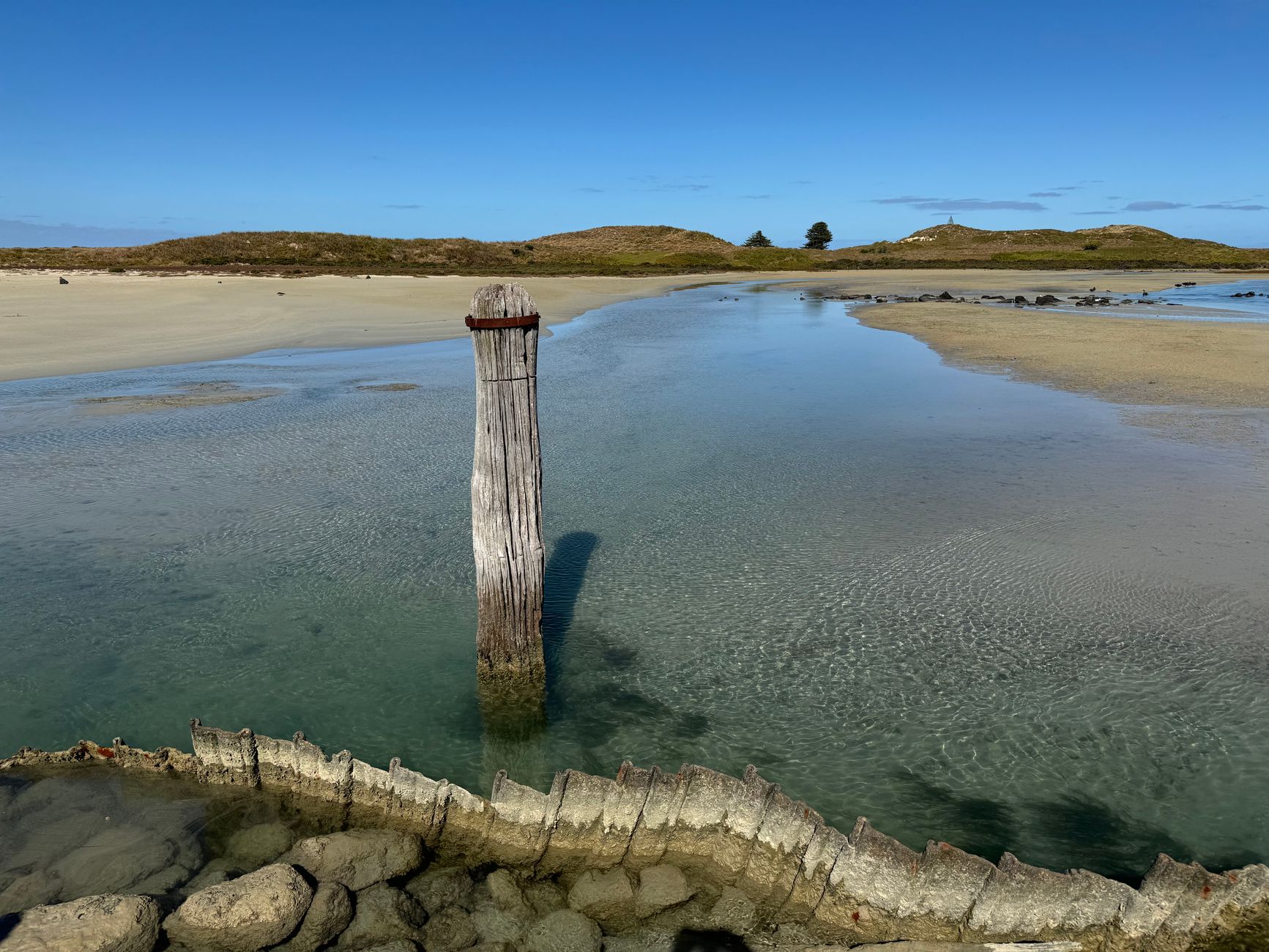
The flight from Nhulunbuy is your first clue that this beach exists on a different scale. Below, the Wessel Islands unfurl in a patchwork of mangrove-fringed bays and ochre headlands, while the Arafura Sea stretches north toward Arnhem Land's most guarded coastlines. Woodah Island Beach lies at the end of this remoteness, a sweep of fine white sand bordered by she-oak trees that lean landward, shaped by decades of offshore winds. You'll notice the absence first—no beach umbrellas, no jetty, no vendors hawking cold drinks. The shallows are bathwater-warm during the dry season, the sand beneath your feet rippled by tidal currents that redraw the seabed twice daily. Families stake out shady patches under the trees, children wade through ankle-deep pools left by the receding tide, and the only footprints are your own, at least until the next high tide erases them. This is a beach that rewards the effort it takes to reach it. You'll scan the horizon and see nothing but water meeting sky, perhaps a fishing boat in the far distance. Bring everything you need—there's no kiosk, no lifeguard tower—and leave with sand in your shoes and the kind of quiet that settles into your bones, the kind you came to the Top End to find.
Places, rentals, tours and events within walking and driving distance of Woodah Island Beach.
Photos
Swimming at Woodah Island Beach requires caution, particularly during the wet season (November to April) when marine stingers, including potentially dangerous box jellyfish, are present in northern Australian waters. Saltwater crocodiles also inhabit coastal areas throughout the Northern Territory, so always observe warning signs and local advice. The beach is remote with no lifeguard services or facilities. Check conditions with local authorities or your accommodation before swimming, and never swim alone or at dawn/dusk when crocodiles are most active.
The dry season (May to October) offers the most comfortable conditions for visiting Woodah Island Beach, with lower humidity, minimal rainfall, and pleasant temperatures averaging 25-32°C. This period also presents reduced risk from marine stingers. The wet season (November to April) brings monsoonal rains, high humidity, and extreme heat, though the landscape becomes lush and dramatic. Year-round access is generally possible, but road conditions may deteriorate during heavy wet season rains. Early dry season (May-July) provides ideal weather with fewer tourists.
Woodah Island Beach is located near Nhulunbuy in remote northeast Arnhem Land. Access to Arnhem Land requires a permit obtained through the Northern Land Council, which must be arranged in advance. Visitors typically reach Nhulunbuy by air from Darwin or Cairns. From Nhulunbuy town, the beach requires local navigation, often with 4WD recommended. Parking is informal and limited given the remote nature of the location. It's strongly advised to seek guidance from local accommodation providers or tour operators regarding specific access routes and current conditions.
Woodah Island Beach itself is undeveloped with no facilities, amenities, or services on-site. Visitors should bring all necessary supplies including water, food, and sun protection. Nhulunbuy town, approximately 10-15 kilometers away, offers limited accommodation options including a hotel and guesthouse, along with a supermarket, fuel station, and a few dining options. The town serves the local mining community and has restricted services compared to major tourist destinations. Pre-booking accommodation is essential, and visitors should plan to be self-sufficient when visiting the beach.
Yes, Woodah Island Beach is located within Arnhem Land, which is Aboriginal land requiring an official permit for entry by non-residents. Permits must be obtained through the Northern Land Council before travel, and applications can take several weeks to process. Some tour operators and accommodation providers in Nhulunbuy may assist with permit arrangements. The permit system helps protect the cultural significance and environmental integrity of this Indigenous-owned land. Traveling without a valid permit is illegal and visitors should respect all cultural protocols and restricted areas indicated by local signage.