Counting the waves…
Counting the waves…

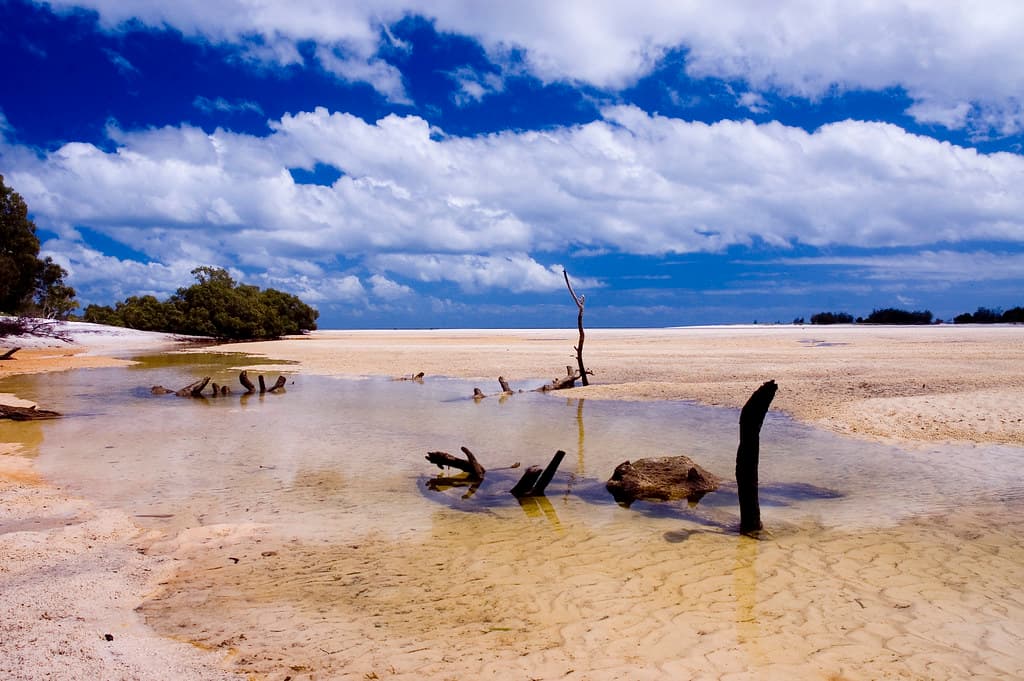
Moon Point sits on K'gari's Hervey Bay side, where the shoreline trades the island's famous eastern surf for sheltered shallows and a stillness that feels almost conspiratorial. You step off the tender onto sand that shifts from pale gold to rust-brown depending on the tide, and overhead the casuarinas create long afternoon shadows striped like tiger pelts. Behind the beach, mangrove estuaries twist inland, their roots exposed at low water, while out front the bay spreads pewter-flat toward the mainland. This has long been a favored anchorage for sailors threading the Great Sandy Strait—protected from southeasterlies, close enough to the island's interior lakes and rainforest tracts to serve as base camp. You'll see catamarans swinging on their chains, tenders ferrying coolers and towels ashore, families wading knee-deep where the water stays bath-warm even in winter. At low tide the flats stretch so far you can walk a hundred meters out and still not get your shoulders wet. The beach curves gently, punctuated by driftwood logs bleached gray as driftstone and small tidal pools that trap fingerlings and moon jellies. Kites wheel overhead, osprey hunt the shallows, and if you time your arrival for late afternoon the light turns everything—sand, water, bark—the color of burnt honey. There's no café, no lifeguard tower. Just the creak of rigging, the hiss of receding foam, and the knowledge that beyond the trees lie seventy-five miles of wilderness island.
Places, rentals, tours and events within walking and driving distance of Moon Point Beach.
Photos
Moon Point Beach is generally safer for swimming than K'gari's eastern ocean beaches, as it's located on the sheltered western side facing the Great Sandy Strait. The calm, protected waters make it more suitable for swimming, particularly for families. However, always exercise caution and be aware of boat traffic, as this is a popular anchorage point. Check current conditions before entering the water, and never swim alone. Unlike the eastern beaches, dingo encounters are possible but less common here.
Moon Point Beach can be visited year-round, though each season offers different advantages. April to October (dry season) typically brings mild temperatures, less humidity, and calmer seas, making it ideal for swimming and boating. Summer months (November to March) are warmer but can bring afternoon storms and higher humidity. Weekdays are generally quieter than weekends. Sunset viewing is particularly spectacular from this western-facing beach throughout the year, making late afternoon an especially popular time to visit.
Moon Point Beach is accessible only by boat or as part of a 4WD beach driving route along K'gari's western coast. If driving, you'll need a vehicle permit for K'gari and must access the island via barge from River Heads or Inskip Point. The beach serves as a natural anchorage, so many visitors arrive by private boat or charter from Hervey Bay. There's no formal parking area—4WD vehicles park on the beach above the high-tide line. Always check tide times before parking.
Moon Point Beach has no facilities, amenities, or commercial services. This is a remote, undeveloped beach where you must be completely self-sufficient. Bring all food, water, and supplies with you. The nearest accommodations are at established camping zones elsewhere on K'gari, such as Central Station or Lake McKenzie areas, requiring prior permits. Kingfisher Bay Resort on the western side of the island is the closest option with restaurants and lodging. Pack out all rubbish, as there are no bins.
Yes, Moon Point is one of K'gari's most popular anchorages for boaters, offering excellent shelter from prevailing southeast winds. Many sailors and recreational boaters anchor overnight in the calm waters of the Great Sandy Strait. The protected location makes it suitable for most weather conditions, though northerly winds can create uncomfortable conditions. Ensure you have proper anchor equipment and check marine forecasts. No mooring facilities exist—you must anchor independently. Respect the marine park regulations and maintain safe distances from the shore.