
You reach Orchid Beach after hours of sand-track driving—the last settlement before K'gari's northern tip tapers into ocean. The compact cluster of timber houses and camping pitches feels provisional, held in place only by the weight of the paperbarks behind it. Out front, the beach runs wide and flat, interrupted by the occasional dune blowout and the dark wrack line left by high tide.
“This is K'gari's true outback: the island's most remote beach settlement where infrastructure ends and raw coastline begins.”
 Credit: Flickr
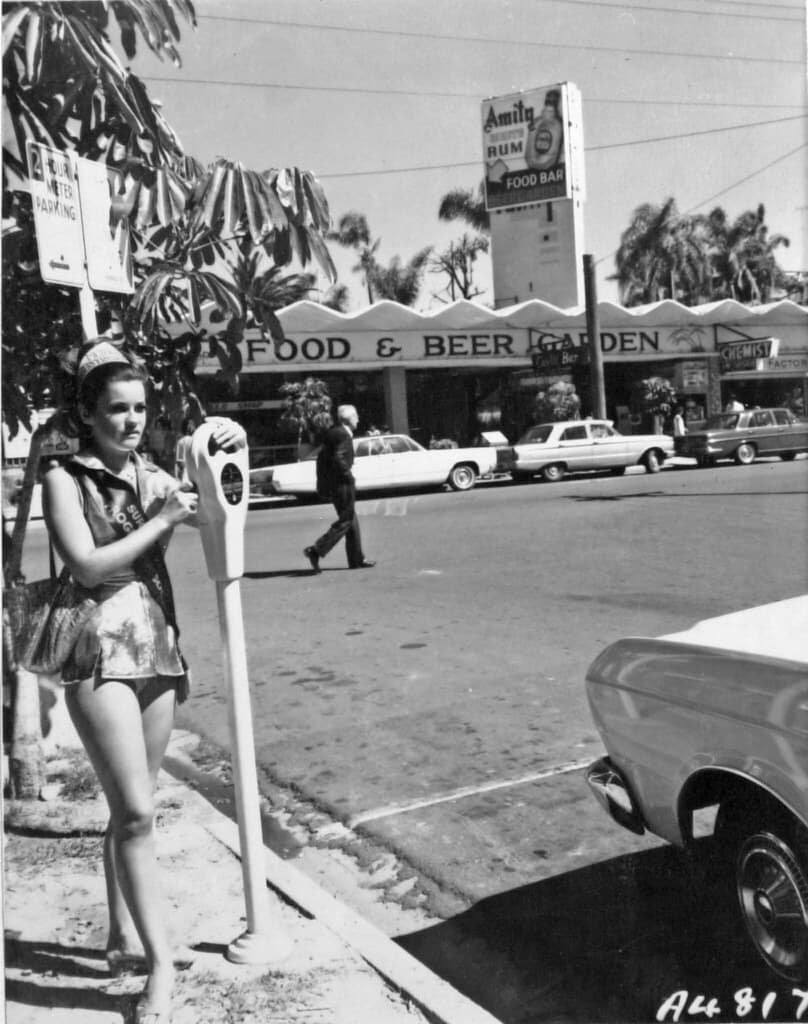
Meter Maid, Surfers Paradise, September 1969
The surf here rolls in unobstructed from the Coral Sea, building into chunky beach breaks that draw serious wave-riders willing to make the trek. Between sets, you'll spot the dark silhouettes of manta rays cruising the shallows and, during migration months, humpback whales throwing themselves skyward just beyond the breakers. The sand is coarse underfoot—crushed shell mixed with quartz—and the colour shifts from bone-white to rust-orange depending on the angle of afternoon light.
Orchid Beach operates on island time: no shops, limited mobile signal, generator power after dark. You bring what you need or do without. Dingoes patrol the tide line at dawn, and the only foot traffic comes from campers walking to Indian Head or up to the Champagne Pools. It's K'gari at its least mediated—just sand, salt, and the constant work of wind reshaping everything.


