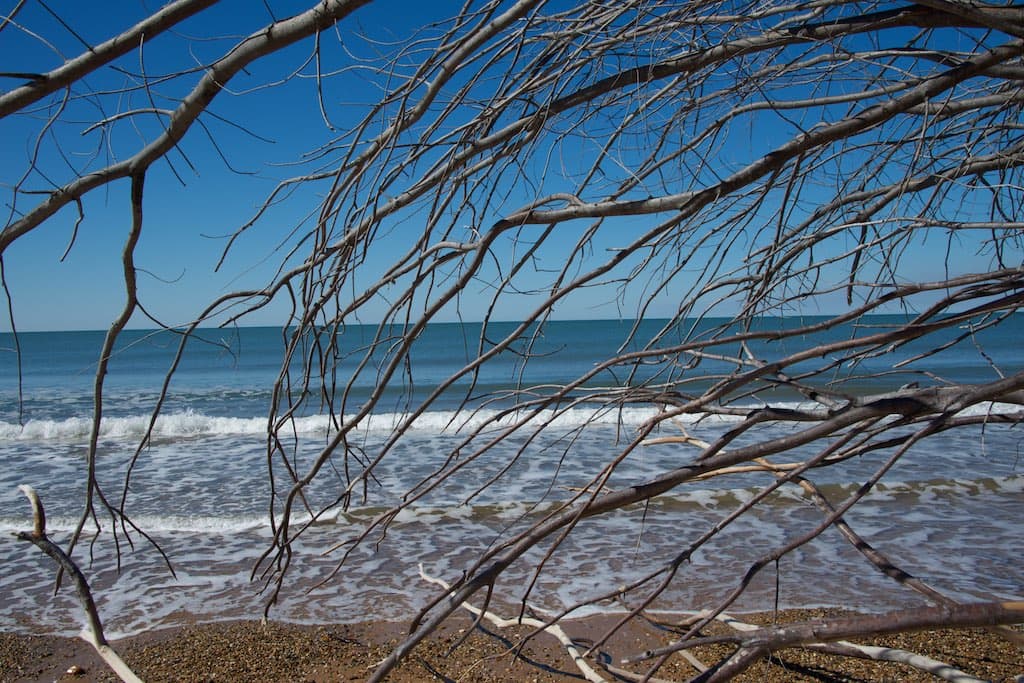
Counting the waves…
Counting the waves…

The drive to Miara takes you past cane fields that hum with cicadas, then onto a gravel lane where the pavement surrenders to sand. You park beneath Norfolk pines that lean slightly west, shaped by years of onshore winds. The beach itself is wide and slate-gray when wet, drying to a pale tan under the midday sun. River mouth currents carve shallow channels; at low tide, you can wade across sandbars while egrets stalk the edges for baitfish. This is a beach that rewards early mornings and late afternoons. Locals bring their kelpies and cattle dogs here at dawn, letting them chase gulls along the waterline. By dusk, families stake out spots near the river mouth, unfolding chairs and opening eskies as the sky turns apricot then bruised purple. The few weatherboard holiday shacks that dot the foreshore are painted in sun-faded blues and greens, their verandas strung with fishing nets and crab pots. There's no surf club, no patrolled flags, no kiosk selling overpriced ice creams. What you get instead is space—long stretches where your footprints are the only ones, where the only soundtrack is wind through casuarinas and the occasional thrum of a tinnie heading upriver. The ocean here feels less like a destination and more like a neighbor you've known your whole life.
Places, rentals, tours and events within walking and driving distance of Miara Beach.
Photos
Miara Beach is located where the river meets the ocean, creating unique conditions. Swimming safety depends on tides, currents, and river flow, which can vary considerably. There are no lifeguard patrols or stinger nets at this remote beach. Always check local conditions before entering the water, be aware of changing tides and currents where freshwater meets saltwater, and avoid swimming alone. During Queensland's stinger season (November-May), protective clothing is recommended. The beach's isolation means help is not immediately available in emergencies.
Miara Beach can be enjoyed year-round thanks to Queensland's favorable climate. The dry season (May-October) offers comfortable temperatures, lower humidity, and spectacular sunsets with clearer skies. This period also falls outside the marine stinger season, making water activities more appealing. Summer months (November-April) bring warmer weather and occasional afternoon storms, but the beach remains beautiful and less crowded. For photography enthusiasts, golden hour and sunset visits are particularly rewarding any time of year, as the beach is known for its scenic evening light.
Miara Beach is located in the small community of Miara, Queensland, well off major tourist routes. Access typically requires driving on local roads, and visitors should have a reliable vehicle. Being a lightly developed area, parking facilities are likely informal and limited—expect roadside parking or small unsealed areas rather than designated car parks. A standard vehicle can usually access the area, though conditions may vary seasonally. It's advisable to use GPS coordinates or detailed local directions, as signage may be minimal in this remote location.
Miara Beach is in a lightly developed, off-the-beaten-path location with minimal commercial infrastructure. Visitors should not expect cafes, restaurants, or shops at the beach itself. The small community of Miara may have very limited services, so it's essential to bring your own food, water, and supplies. Public facilities like restrooms or showers are unlikely to be available. Accommodation options in the immediate area are probably scarce; visitors typically stay in larger nearby towns and make Miara a day trip destination. Always arrive self-sufficient for a true local beach experience.
Miara Beach is known as a dog-friendly destination, making it popular with locals who bring their pets. The beach's remote, lightly developed nature means it's generally welcoming to dogs, though you should always check current local council regulations for any restrictions or leash requirements. The quiet, uncrowded environment is ideal for dogs to exercise and explore. Responsible pet ownership is essential—always clean up after your dog, keep them under control around wildlife, and bring fresh water for them. The river-ocean setting provides varied terrain for energetic dogs to enjoy.