Counting the waves…
Counting the waves…
A refined fusion of water purity, environmental stability, and communal vibrancy for Tangalooma Beach.
View MethodologyAnalyzed via live sensors and environmental data.
Wave height, wind, and atmospheric stability.
Live footfall and crowd balance metrics.
Community reviews and curated sentiment.
“You step off the ferry onto powdered coral sand that squeaks beneath your feet. Behind you, the turquoise shallows of Moreton Bay stretch toward Brisbane's skyline; ahead, rusted hulls of deliberately scuttled vessels…”
Limited recent visitor reports — live OBI telemetry is your best guide for current conditions.
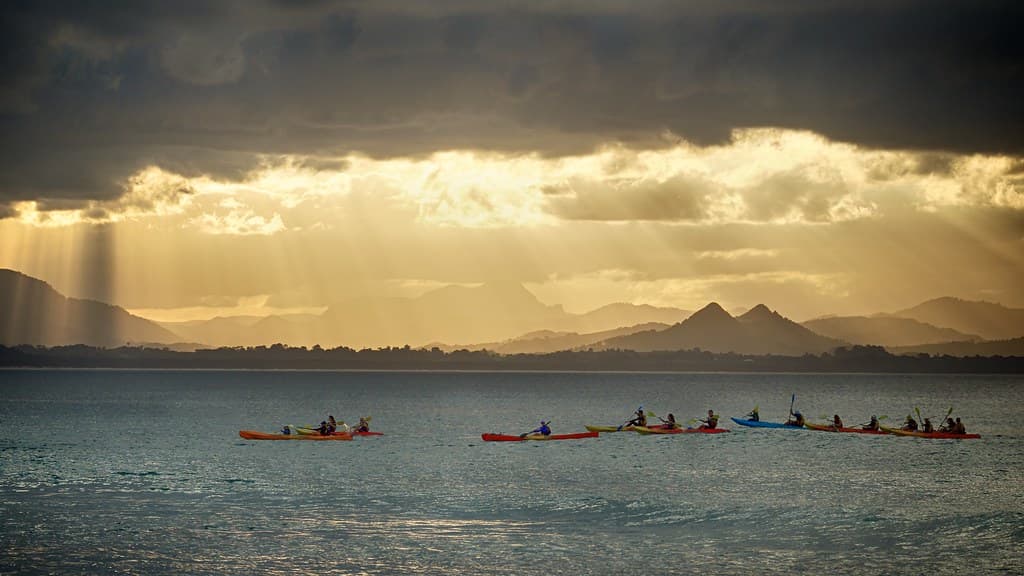
Tangalooma sits on the western shore of Moreton Island, a sand mass so vast it ranks as the world's third-largest sand island. The beach curves in a gentle arc, protected by the shipwrecks that now serve as a breakwater and a snorkeling reef teeming with wobbegong sharks, trevally, and kingfish. At low tide, you can wade out to the wrecks; at high tide, you paddle a kayak through their skeletal frames while reef herons perch on the corroded bows.
The Tangalooma Island Resort anchors the northern end, its tiered accommodations climbing the dunes behind a stretch of sand groomed smooth each morning. Families spread picnic blankets beneath pandanus palms, children dig moats around sandcastles, and paddleboarders glide over seagrass beds where dugongs occasionally surface. The water stays shallow for fifty meters, warm and waveless—a rarity on Queensland's open coast.
 Credit: Unsplash
Palm trees frame a beach with ocean and distant hills
 Credit: Unsplash
A large body of water with boats in it
Fifteen scuttled hulls harbor grouper
Spot stingrays gliding over seagrass
Wild pod visits nightly jetty
Where it is
Tangalooma Beach
Moreton Island, Queensland, Australia
-27.168700°, 153.363500°
Weather
Loading…
Swell
—
Temp
Warm · Restorative
UV Index
Moderate
Wind
—
Tidal State
Last known
Max Sunlight
—
Ideal Shade
—
Jan - Dec (Peak)
Mar - Nov (Off-season)
Historical data suggests peak visibility and stable sea temperatures occur during the prime visitation window.
Near Tangalooma Beach
Explore dining, stays, nightlife, and activities near Tangalooma Beach in Moreton Island, Australia. Every listing below is a real place linked to this beach — open a card for reviews, maps, and booking options.
Food, cafés, and dining close to Tangalooma Beach — curated from places linked to this beach.
Stays and lodging options near Tangalooma Beach for your beach trip.
Select a category to load nearby places.
Unlock restaurants, luxury stays and curated maritime experiences within 2km
Tangalooma Beach is generally safe for swimming, with calm, sheltered waters protected by Moreton Island's position. The beach doesn't have patrolled swimming areas or stinger nets, so swim with caution and stay close to shore. The resort area has a designated swimming zone near the jetty. Watch for boat traffic, especially near the Tangalooma Wrecks. Marine stingers can be present October through May, so consider wearing a stinger suit during these months. Always check conditions with resort staff before entering the water.
Tangalooma Beach is enjoyable year-round, with each season offering different experiences. June through October offers pleasant weather, calm seas, and humpback whale watching opportunities. Summer (December-February) brings warm water perfect for swimming but can be humid with occasional afternoon storms. April-May and September-November provide comfortable temperatures and fewer crowds. The western-facing beach offers stunning sunsets throughout the year. Book accommodation well ahead for school holidays and weekends, as the resort fills quickly during peak periods.
Tangalooma Beach is accessible only by boat, as no vehicle barges service the resort area. The Tangalooma Island Resort operates daily ferry services from Brisbane's Holt Street Wharf at Pinkenba, with the journey taking approximately 75 minutes. Day-tripper and overnight packages include return ferry transfers. There's no parking at Tangalooma itself. Visitors can park at the Brisbane departure terminal. Private boats can access Tangalooma, with moorings available through the resort. Four-wheel-drive access to other parts of Moreton Island requires separate barge services.
Tangalooma Island Resort dominates the beach area, offering hotel rooms, villas, and apartments ranging from budget to luxury. The resort has multiple restaurants including buffet dining, a beachfront café, and bars. A general store sells basic supplies, snacks, and takeaway food, though prices reflect the island location. Day visitors can purchase meal packages or bring their own food and use resort facilities. No other commercial accommodation exists directly at Tangalooma Beach, though camping is available elsewhere on Moreton Island with permits.
The famous Tangalooma Wrecks are clearly visible from Tangalooma Beach, located just offshore in shallow water. These 15 deliberately sunk vessels form a breakwater and popular snorkeling site. You can walk to the wrecks during low tide, though snorkeling at high tide offers better fish-viewing opportunities. The wrecks are a short swim from shore for confident swimmers, or accessible via kayak and paddleboard rentals. Sunset views of the wrecks from the beach are particularly photogenic, making them one of Moreton Island's most photographed features.
Photos