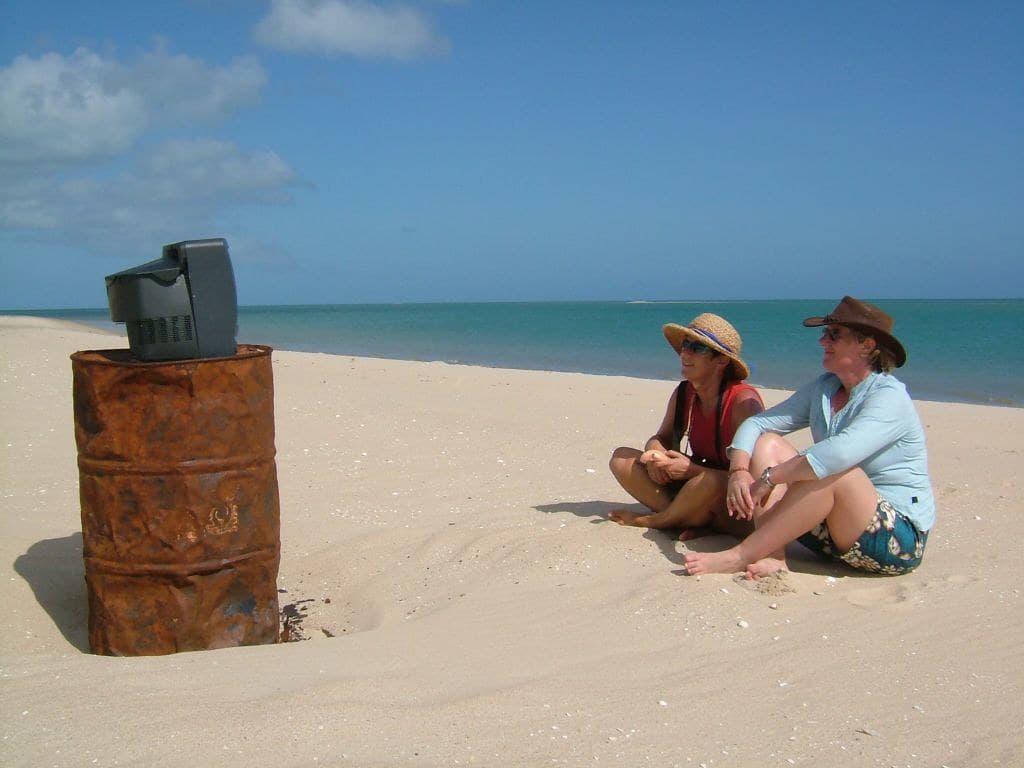
Counting the waves…
Counting the waves…

The boat ride from Thursday Island takes you past uninhabited cays and turtle-feeding grounds, the water shifting from navy to jade as you approach Mountaintop Island's southeastern shore. When you finally step onto the beach, the sense of removal is immediate—no resorts, no beach umbrellas, just a crescent of bone-white sand backed by dense coastal scrub where fruit bats hang in afternoon shadows. You'll wade into bathwater-warm shallows where visibility extends thirty feet to the sandy bottom. Hermit crabs scuttle near the high-tide line, and if you arrive at dawn, you might catch green turtles surfacing just beyond the break. The beach curves gently for half a kilometre, ending where volcanic rock tumbles into the sea and creates shallow pools teeming with juvenile reef fish. Bring everything you need—fresh water, shade, provisions—because services don't exist here. That absence is precisely the point. You'll share the sand with occasional traditional owners from neighbouring islands, who've navigated these waters for millennia. By midafternoon, the light turns golden-amber, throwing the rainforest canopy into sharp relief against the sky, and you'll understand why some places resist development: they're already complete.
Places, rentals, tours and events within walking and driving distance of Mountaintop Island Beach.
Photos
Swimming conditions at remote Queensland beaches can vary significantly with tides, currents, and marine life. Since Mountaintop Island Beach is an untouched, secluded location, there are no lifeguard patrols or stinger nets. Before swimming, check local conditions, be aware of seasonal marine stingers (typically November-May), and never swim alone. Strong currents can occur at any beach, so stay close to shore if you're uncertain. Given its remote nature, it's essential to bring first aid supplies and inform someone of your plans before visiting.
Queensland's climate allows year-round beach visits, though each season offers different conditions. The dry season (May-October) typically brings mild temperatures, lower humidity, and reduced rainfall, making it ideal for beach activities. Summer months (November-April) are warmer but bring higher humidity, afternoon storms, and marine stinger season. For the best combination of pleasant weather and solitude, visit during shoulder seasons (April-May or September-October). Always check weather forecasts before visiting remote locations, as conditions can change rapidly and affect access.
Access to Mountaintop Island Beach requires careful planning as it's a remote, untouched location. You'll likely need to reach Mountaintop Island by boat or potentially small aircraft, as most Queensland islands aren't connected by bridges. Contact local tour operators or marine services for current access options. Due to its hidden, natural state, formal parking facilities are unlikely to exist. If boat access is available, you may need to anchor offshore or use a small tender. Always research current access methods and any permits required before attempting to visit this isolated destination.
Given Mountaintop Island Beach's description as untouched and offering great solitude, you should expect no amenities, facilities, or nearby accommodation. This is a truly remote destination where you must be completely self-sufficient. Bring all food, water, sun protection, and supplies you'll need for your visit. There are no restaurants, shops, toilets, or shelter. The nearest services would likely be on the Queensland mainland or larger inhabited islands. Plan accordingly by packing out all rubbish, bringing adequate provisions, and considering this a wilderness experience rather than a developed beach destination.
Mountaintop Island Beach stands out for its genuine remoteness and untouched natural state, increasingly rare along Queensland's coast. Unlike popular beaches with development and crowds, this location offers authentic solitude and pristine natural beauty for visitors seeking true escape. The combination of isolation and scenic surroundings creates an experience closer to wilderness exploration than typical beach-going. However, this uniqueness comes with responsibility—visitors must be experienced, self-reliant, and committed to leaving no trace. It's ideal for adventurous travellers who value unspoiled nature over convenience and are prepared for the challenges of accessing remote locations.