Counting the waves…
Counting the waves…
A refined fusion of water purity, environmental stability, and communal vibrancy for Turtle Bay Beach.
View MethodologyAnalyzed via live sensors and environmental data.
Wave height, wind, and atmospheric stability.
Live footfall and crowd balance metrics.
Community reviews and curated sentiment.
“You'll walk past most tourists who never glance down the unmarked track. Here, pandanus palms lean over caramel-toned sand, and the tide pools hold still water warm as bathwater. The only soundtrack: waves folding onto…”
Limited recent visitor reports — live OBI telemetry is your best guide for current conditions.
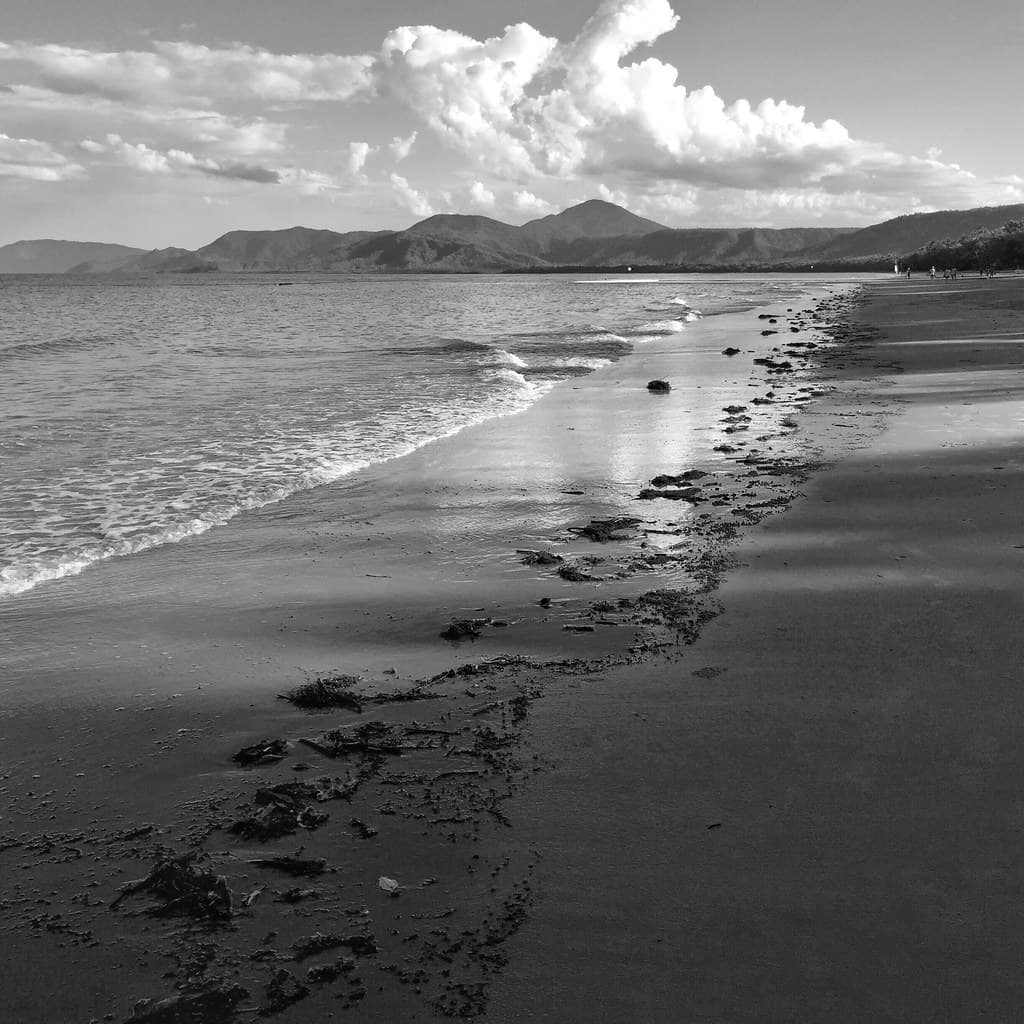
Turtle Bay lies tucked between rainforest headlands just north of Port Douglas, a beach that reveals itself only to those who know where to look. The approach feels almost accidental—no signage, no carpark fanfare—just a narrow sandy path through she-oak and pandanus that opens onto a gentle arc of shore. At low tide, the water recedes to expose a limestone shelf dotted with shallow pools, each one a temporary aquarium of striped fish and soft coral fragments.
The sand here carries a faint ochre tint, darker than the blinding white of the tourist beaches, and it holds the imprint of your footsteps longer in the damp morning air. Strangler figs frame the northern end, their roots cascading down the slope like natural sculpture, while the southern point juts into the sea as a jumble of weathered boulders. Between swims, you'll find shade beneath the coastal canopy, where the air smells of salt and decomposing palm fronds.
 Credit: Unsplash
a view of a beach with a mountain in the background
 Credit: Unsplash
aerial photograph of beach
Low tide reveals limestone shelves
Pandanus palms frame the shore
Calm water before wind picks up
Where it is
Turtle Bay Beach
Port Douglas, Queensland, Australia
-16.498600°, 145.493200°
Weather
Loading…
Swell
—
Temp
Warm · Restorative
UV Index
Moderate
Wind
—
Tidal State
Last known
Max Sunlight
—
Ideal Shade
—
May - Sep (Peak)
Jan - Dec (Off-season)
Historical data suggests peak visibility and stable sea temperatures occur during the prime visitation window.
Select a category to load nearby places.
Unlock restaurants, luxury stays and curated maritime experiences within 2km
Turtle Bay Beach is generally calm and sheltered, making it suitable for swimming in most conditions. However, like all tropical Queensland beaches, marine stingers (jellyfish) are present during stinger season (November to May), so wearing a stinger suit is recommended. The beach is unpatrolled, meaning there are no lifeguards on duty, so swim at your own risk and stay close to shore. Always check local conditions before entering the water, and avoid swimming alone or during rough weather.
Turtle Bay Beach can be visited year-round, though the dry season (May to October) offers the most comfortable conditions with lower humidity, minimal rainfall, and no marine stingers. During these months, you'll enjoy clear skies and calm seas. The wet season (November to April) brings afternoon storms and higher stinger risk, but mornings are often beautiful with fewer visitors. For the quietest experience, visit on weekdays or early mornings when most tourists head to the busier Port Douglas beaches.
Turtle Bay Beach is located within the Sea Temple Resort complex in Port Douglas, approximately 5 kilometres north of the town centre along Captain Cook Highway. Access is primarily for resort guests, though the beach itself is public. Limited street parking may be available nearby on Veivers Road, but access through the resort grounds can be restricted. Alternatively, you can reach the beach by walking along the coastline from Four Mile Beach during low tide, though this requires careful timing and awareness of tidal conditions.
Turtle Bay Beach has minimal public facilities as it's situated within a private resort area. The Sea Temple Resort offers dining options for guests, but public amenities like cafes, restaurants, and shops are limited at the beach itself. For the best range of facilities, head to Port Douglas town centre (5 kilometres away), where you'll find numerous restaurants, cafes, supermarkets, and accommodations. Bring your own food, water, and beach essentials when visiting Turtle Bay, as beachside amenities are not readily available for day visitors.
Turtle Bay Beach remains relatively undiscovered because it's tucked within the Sea Temple Resort complex, making access less straightforward than the more popular Four Mile Beach in central Port Douglas. Its location north of town means fewer tourists stumble upon it, and limited signage keeps it off most visitors' radars. The restricted access through private resort grounds also deters casual beachgoers. This combination creates a peaceful, pristine environment that appeals to those seeking seclusion, though the beach itself remains public property under Queensland law.
Photos