Counting the waves…
Counting the waves…

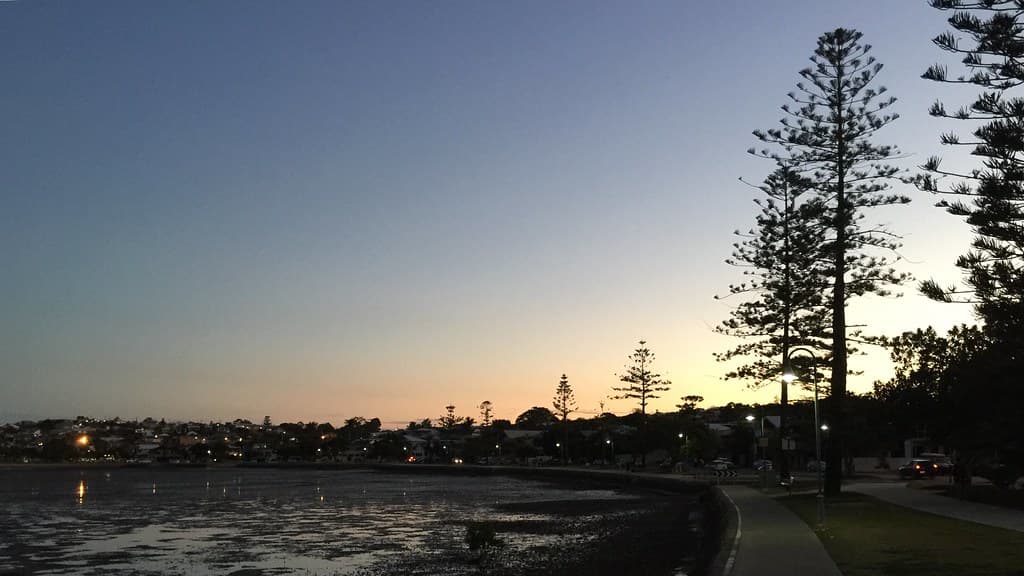
The beach doesn't so much meet the water as negotiate with it. Twice a day the tide pulls back across Moreton Bay, leaving behind ribbed sand, shallow pools catching afternoon light, and a natural pathway that locals have walked for generations. King Island sits out there, reachable on foot during the lowest tides, a pilgrimage that draws families with buckets, photographers chasing wading birds, and anyone craving that particular satisfaction of walking where boats normally glide. Back on shore, Norfolk pines frame picnic tables and barbecue shelters along the grassy foreshore. The water here is shallow and calm—more suited to paddling than swimming—but that's precisely the point. Children wade knee-deep hunting soldier crabs while kiteboarders skim across the flats when the wind picks up from the southeast. The sand underfoot is firm, compacted by tides, and littered with tiny shells that crunch softly as you walk. Sunset claims the western sky in shades of apricot and violet, silhouetting the island and turning the mudflats into mirrors. The cafés along the esplanade fill with runners finishing loops and couples sharing fish and chips on benches facing the bay. This isn't a beach for crashing surf or postcard turquoise; it's a beach that asks you to slow down, check the tide chart, and meet it on its own mutable terms.
Places, rentals, tours and events within walking and driving distance of Wellington Point Beach.
Photos
Wellington Point Beach is generally calm and family-friendly, but swimming conditions vary significantly with tides. The beach features very shallow, muddy flats during low tide, making swimming impractical at these times. High tide offers better swimming opportunities, though the water remains quite shallow. There are no surf lifeguard patrols, so swimmers should exercise caution. The protected bay location means waves are typically minimal. Always check tide times before visiting and supervise children closely, as the extensive tidal flats can be disorienting.
Wellington Point Beach is enjoyable year-round, with Queensland's subtropical climate offering warm summers and mild winters. For the famous walk to King Island, visit during low tide—check local tide charts as timing varies daily. Early mornings and late afternoons are ideal for avoiding summer heat and enjoying spectacular sunsets over Moreton Bay. Weekdays tend to be quieter than weekends. Winter months (June-August) offer comfortable temperatures for walking and picnicking, while summer provides warm water but can be humid and occasionally stormy.
Wellington Point Beach is approximately 25 kilometres southeast of Brisbane CBD. By car, take the Gateway Motorway and follow signs to Wellington Point via Main Road. There's a large free car park directly adjacent to the beach near the Wellington Point Recreation Reserve. Additional street parking is available in surrounding residential areas. The beach is accessible via public transport—catch a train to Wellington Point Station (Cleveland line), then it's roughly a 15-minute walk to the waterfront. Bike paths also connect to the area.
Wellington Point offers good amenities for a day visit. The beachfront has public toilets, barbecue facilities, picnic shelters, and a children's playground. Several cafes and restaurants line the nearby shopping precinct on Main Road, within walking distance. You'll find fish and chips shops, bakeries, and casual dining options. There's no accommodation directly on the beach, but Wellington Point has some nearby hotels and holiday rentals. The historic Wellington Point Hotel overlooks the water and offers meals with bay views. Bring your own supplies for beach picnics.
Yes, at low tide you can walk across the tidal flats to King Island, approximately 2 kilometres offshore. This iconic experience takes 30-45 minutes each way across sand and mud. It's essential to check tide times carefully and start your walk no later than two hours before low tide, allowing enough time to return before the tide rises. Wear old shoes as the flats are muddy, and bring water. The exposed sandbar can disappear quickly as tide turns. Many locals walk to the island for picnics, but always prioritise safety and monitor conditions.