Counting the waves…
Counting the waves…

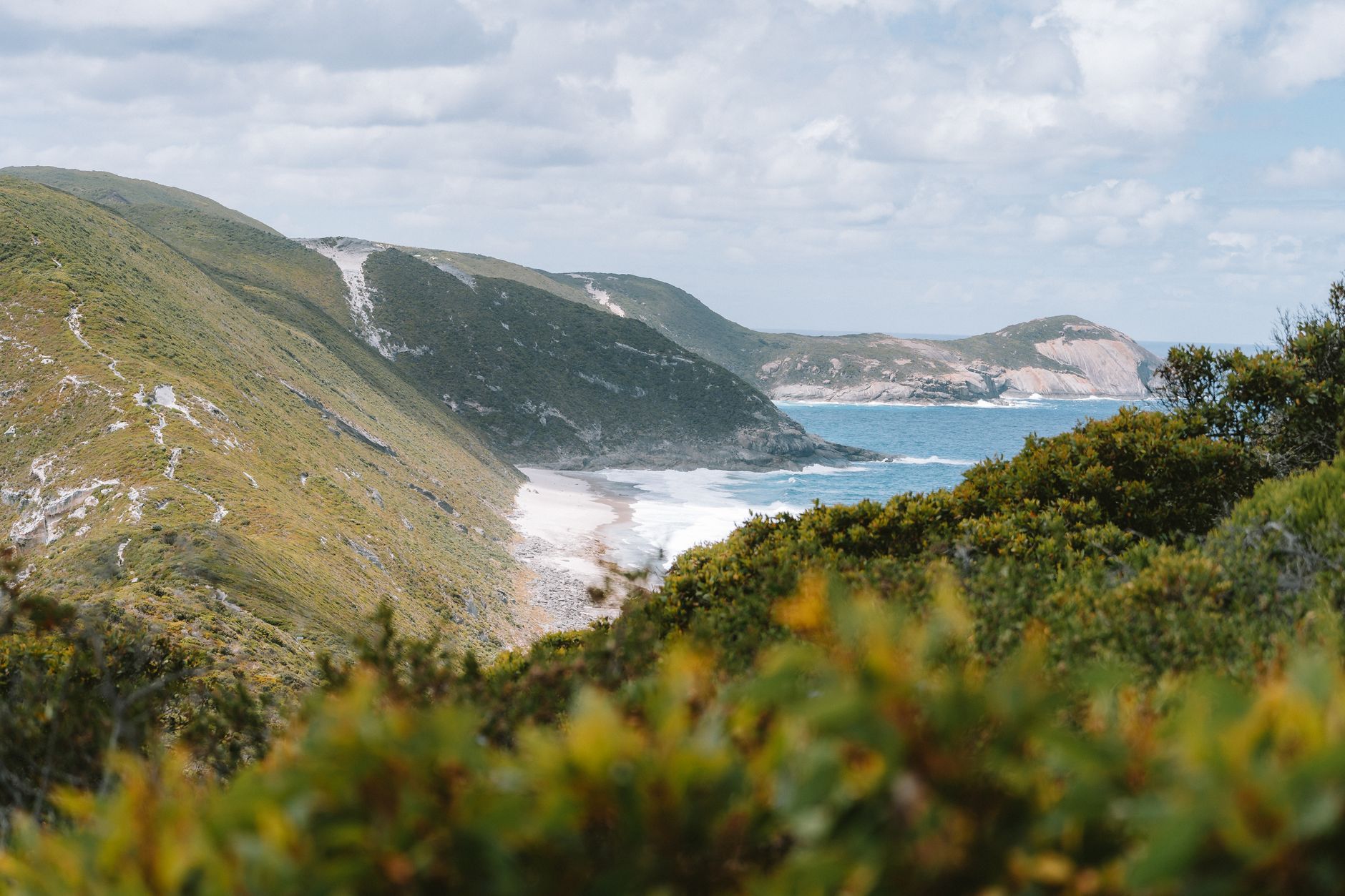
Big Hill Beach unfolds in a single glance—maybe two hundred meters of blonde sand pressed between the rocky outflow of Yellow Gin Creek and the dark shoulder of the hill that gives the place its name. The creek mouth shifts with every big tide, carving temporary channels through the sand and depositing driftwood in sculptural piles along the upper beach. You'll watch egrets stalk the shallows where fresh water muddies the turquoise. The hill itself rises steeply behind you, its flanks covered in eucalypt and she-oak that rustle in the prevailing southeast trades. Most visitors spread towels near the creek, where the mixing waters stay shallow and warm through the afternoon. The eastern end, where volcanic boulders tumble into the surf, holds tide pools alive with hermit crabs and small fish—bring old sandals for the scramble. Come in the late afternoon when the angle of light sets the hillside glowing and the beach empties out. The sun drops behind Big Hill itself, throwing long shadows across the sand before the sky ignites in bands of coral and violet. You won't find beach clubs or jetski rentals here. Just the sound of creek water braiding over stones, the occasional four-wheel-drive crunching down the access track, and the certainty that you've stumbled onto something quietly, stubbornly local.
Places, rentals, tours and events within walking and driving distance of Big Hill Beach.
Photos
Big Hill Beach is located at the mouth of Yellow Gin Creek, which means swimming conditions can vary depending on tides, currents, and creek flow. Creek mouths typically experience changing water conditions and potential currents, so swimmers should exercise caution. As with many remote Queensland beaches, there are no lifeguard patrols or safety nets. Always check tide times, avoid swimming alone, and be aware that water quality may be affected by creek runoff after heavy rainfall. The compact size of the beach means conditions can change quickly.
Big Hill Beach can be visited year-round, though Queensland's dry season (May to October) typically offers the most comfortable weather with lower humidity and minimal rainfall. The beach is known for its scenic sunsets, making late afternoon visits particularly rewarding. Summer months (December to February) can be hot and humid with occasional tropical storms. For photography and sunset viewing, check local sunset times and aim to arrive 30-60 minutes beforehand. Weekdays are generally quieter than weekends at this hidden beach location.
Big Hill Beach is located in Wunjunga, a small locality in Queensland. Access details for this hidden beach can be limited, so it's advisable to use GPS coordinates or local maps. As a compact, less-developed beach, parking facilities may be informal or limited compared to major tourist beaches. A vehicle suitable for potentially unsealed roads may be necessary. Before visiting, check with the local council or tourism information for current access conditions and any restrictions, as coastal access can change due to weather or environmental management.
Big Hill Beach is a hidden, undeveloped beach with no onsite amenities. Visitors should come fully prepared with food, water, and supplies. Wunjunga is a small locality with limited services, so stock up on provisions in larger nearby towns before your visit. Public facilities like toilets, showers, or picnic tables are unlikely to be available. For accommodation, you'll need to look at options in the nearest regional centres. Always practice Leave No Trace principles and take all rubbish with you when visiting remote beaches.
Big Hill Beach's location at the mouth of Yellow Gin Creek creates a unique coastal environment where freshwater meets the ocean. This creek mouth setting typically produces diverse ecosystems, interesting birdwatching opportunities, and distinctive landscape features. The beach sits beneath Big Hill, providing a dramatic backdrop and shelter. Creek mouths often feature changing sand formations, tidal pools, and varied habitats. This setting makes it particularly scenic for photography and nature observation, especially during golden hour when the hill casts dramatic shadows and colours across the compact beach area.