
Counting the waves…
Counting the waves…

The water at Bicheno numbs your ankles within seconds—this is the Tasman Sea, after all, fed by currents that have traveled thousands of miles without touching land. You'll need a wetsuit, but once you're beneath the surface, the discomfort dissolves into wonder. Weedy sea dragons drift through golden kelp like fragments of living lace, their leaf-like appendages undulating with each current shift. Cuttlefish hover near the rocks, flashing colors across their skin, while schools of striped morwong patrol the reef edges. Above water, the beach stretches in a gentle arc between two granite headlands, their lichen-covered surfaces burnished orange and gray. The sand here is coarse, flecked with shell fragments and rounded pebbles that the tide rearranges nightly. Early morning walkers leave the only footprints, and by mid-afternoon, easterly winds whip up whitecaps that make the bay look almost Mediterranean—if you ignore the water temperature. The township of Bicheno clings to this stretch of coastline with a utilitarian charm: weatherboard cottages, a working harbor where fishing boats unload the day's catch, and cafés that serve abalone fritters alongside flat whites. You're here for what lies beneath the surface, but the rhythm of this place—unhurried, anchored to tides and seasons—makes you linger longer than planned.
Places, rentals, tours and events within walking and driving distance of Bicheno Beach.
Photos
Bicheno Beach offers generally calm swimming conditions, particularly in the protected areas near the blowhole end. The beach is popular for snorkeling due to its relatively sheltered waters and rocky platforms that attract marine life. However, conditions can change with weather and tides, so always check local conditions before entering the water. Swimming between the flags when lifeguards are present is recommended. The eastern end tends to be calmer, while the northern section can experience stronger currents. Wear appropriate snorkeling gear and be mindful of rocks when entering the water.
Bicheno Beach can be visited year-round, with each season offering different experiences. Summer (December to February) provides the warmest weather and water temperatures ideal for swimming and snorkeling, though it's the busiest period. Autumn and spring offer milder conditions with fewer crowds and pleasant temperatures for beach walks. Winter remains accessible but cooler, with water temperatures requiring wetsuits for extended snorkeling. For the best snorkeling visibility, aim for calm, clear days regardless of season. Early mornings typically offer the calmest conditions and best underwater visibility.
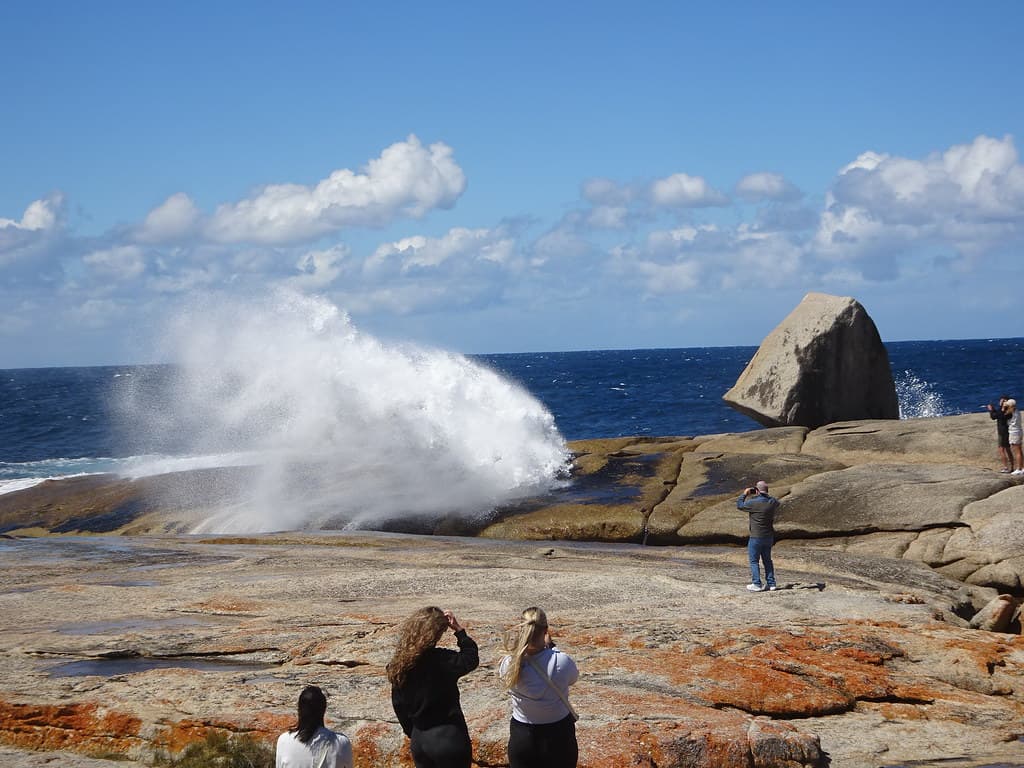
Bicheno Beach is located on Tasmania's east coast, approximately 2.5 hours' drive from Hobart and 1.5 hours from Launceston via the Tasman Highway. The beach is easily accessible from Bicheno township, with the main access point off Burgess Street. Free public parking is available at several locations along the beachfront, including near the Bicheno Blowhole at the southern end. Additional parking can be found along Esplanade and near the boat ramp. During peak summer periods, parking may be limited, so arriving early is advisable.
Bicheno township, immediately adjacent to the beach, offers a good range of amenities including cafes, restaurants, takeaway shops, and a supermarket for supplies. Public toilets and shower facilities are available near the beach. Accommodation options range from beachfront holiday parks and caravan parks to motels, self-contained apartments, and bed and breakfasts, many within walking distance of the beach. Several cafes along the esplanade offer ocean views and fresh seafood. The town also has fuel stations, medical services, and visitor information facilities for travellers.
Bicheno is famous for its little penguin colony, though the main viewing area is not directly at Bicheno Beach itself. The penguins nest in the rocky areas around the coastline, and organized evening penguin tours operate in Bicheno, taking visitors to designated viewing areas where penguins return to their burrows at dusk. These tours run year-round and are conducted by trained guides who ensure minimal disturbance to the wildlife. Independent penguin spotting along the coast should be done respectfully, maintaining distance and avoiding flash photography to protect these protected birds.