Counting the waves…
Counting the waves…

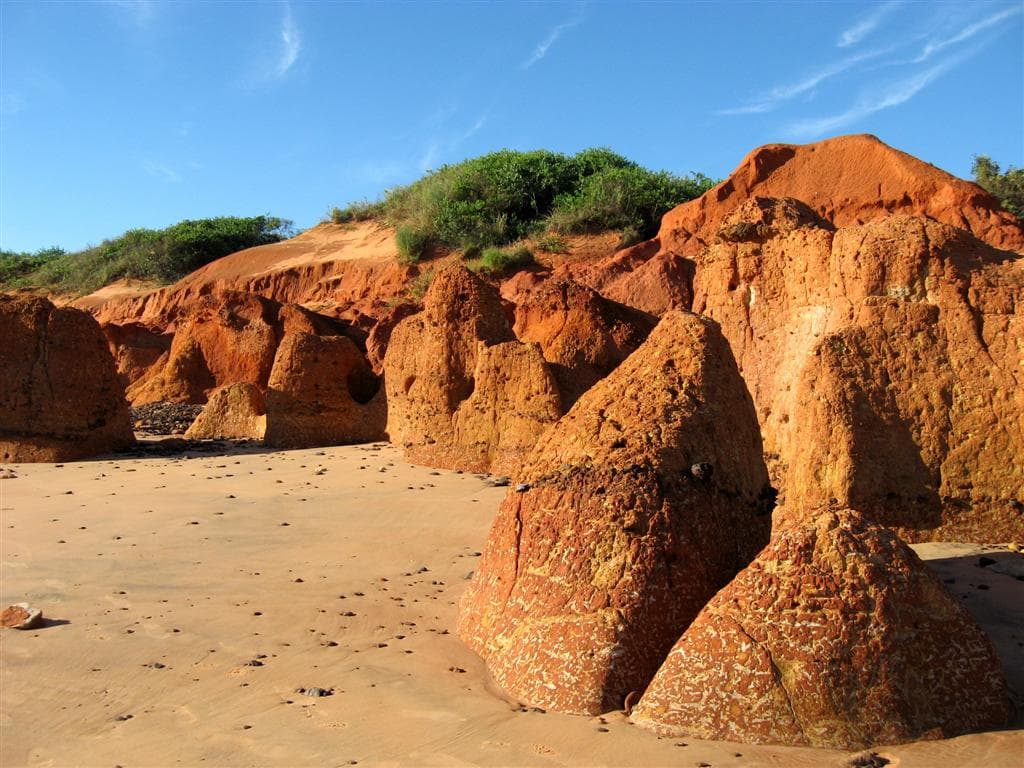
Quondong Point curves along Broome's eastern fringe, where the pindan soil stains the sand a deep rust that contrasts sharply with the pale blue of Roebuck Bay. You won't find jet skis or beachfront bars here—just a long stretch of shoreline backed by low dunes and pandanus palms, the kind of place where families spread out without staking territorial claims over every square metre. The beach takes its character from the tides: at low water, vast mudflats appear, drawing waders that pick their way across the exposed seabed, while high tide brings the ocean close enough to wet your toes without leaving your towel. The headland itself is a tumble of dark rock platforms, worn smooth by centuries of swells and offering tide pools that trap small fish and crabs between the surges. Walk north and the beach opens wider; head south toward the point and you'll find yourself alone except for the occasional local with a fishing rod. There's no surf to speak of—the bay's protected waters lap rather than crash—but that makes it ideal for children who want to wade without being knocked sideways. Bring your own shade. The few trees along the beach access offer limited relief from the Kimberley sun, which burns white and relentless most of the year. Pack out whatever you pack in; this isn't a patrolled beach with bins at every entry point. What you gain in solitude, you forfeit in services—a fair trade when the only sounds are wind, water, and the occasional four-wheel-drive crunching along the track behind the dunes.
Places, rentals, tours and events within walking and driving distance of Quondong Point Beach.
Photos
Swimming conditions at Quondong Point Beach require caution due to strong tides and currents typical of Broome's coastline. The beach is unpatrolled, so swimmers should be confident in their abilities and always check tide times before entering the water. During stinger season (November to May), marine stingers may be present, so protective clothing is recommended. The beach's remote nature means help isn't immediately available, making it better suited for paddling and beachcombing rather than serious swimming, especially for families with young children.
Quondong Point Beach can be visited year-round, though the dry season (May to October) offers the most comfortable conditions with warm days, cool evenings, and minimal rainfall. During this period, expect temperatures between 20-30°C and clear skies ideal for beach activities. The wet season (November to April) brings high humidity, afternoon storms, and extreme heat, but fewer crowds. Early mornings and late afternoons provide the best light for photography and cooler temperatures. Check tide tables beforehand, as low tide reveals more beach area for exploration.
Quondong Point Beach is located approximately 15 kilometres south of Broome town centre. Access is via unsealed roads, so a 4WD vehicle is recommended, particularly during the wet season when roads can become challenging. The beach is less developed than Broome's main beaches, so facilities are limited. Parking is available in informal areas near the beach access points. Plan your visit with adequate supplies and ensure your vehicle is suitable for the terrain. Always inform someone of your plans when visiting more remote beaches.
Quondong Point Beach has minimal on-site amenities, reflecting its quiet, undeveloped character. There are no cafes, shops, or toilet facilities directly at the beach, so visitors should bring all necessary supplies including water, food, and sun protection. Accommodation options are located back in Broome town, approximately 15 kilometres away, ranging from hotels and resorts to caravan parks and holiday rentals. The beach's isolation is part of its appeal for those seeking a peaceful escape from Broome's busier tourist spots like Cable Beach.
Unlike the famous Cable Beach with its tourist crowds and camel rides, Quondong Point Beach offers a secluded, natural experience with minimal development and far fewer visitors. The beach features rugged coastal scenery with rock formations and tidal pools, contrasting with Cable Beach's long, flat expanses of white sand. Its remote location means you'll likely have stretches of beach to yourself, making it ideal for peaceful walks, photography, and nature observation. However, this isolation also means no lifeguards, facilities, or commercial activities that Cable Beach provides.