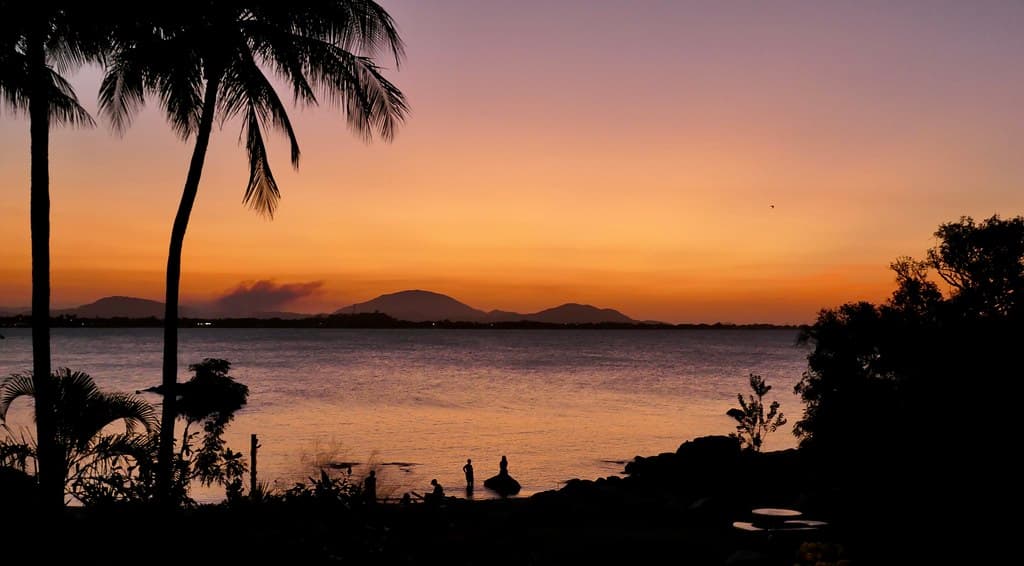
Counting the waves…
Counting the waves…

Turquoise Bay earns its name honestly—the water shifts from pale jade in the shallows to saturated cerulean where the reef drops away, a gradient so pronounced you can trace it from the dune-backed shore. The beach sits within Cape Range National Park, where spinifex and acacia give way to a crescent of fine sand that slopes gently into one of Western Australia's most accessible coral systems. You'll notice the current immediately: a natural conveyor belt that begins at the bay's southern drift entry and sweeps snorkelers north along the reef for roughly 200 meters before depositing them back at the beach. The drift snorkel is brilliantly simple. Wade in at the marked entry point, float face-down, and let the Indian Ocean do the work. Beneath you, staghorn and plate corals shelter schools of fusiliers, while Maori wrasse patrol the deeper channels. Blacktip reef sharks rest in sandy pockets. Green turtles surface for air, unbothered by your presence. The current maintains a lazy, predictable pace—fast enough to cover ground without effort, gentle enough for beginners. Timing matters here. Arrive before 9 a.m. and you'll have entire coral bommies to yourself, the morning light angling through the water in shafts that illuminate every scale and spine. By midday, tour buses arrive from Exmouth, 60 kilometers south, but the reef is generous enough to absorb the crowds. Pack reef-safe sunscreen, a rash guard, and water; the Pilbara sun is unforgiving, and shade is scarce once you leave your vehicle.
Places, rentals, tours and events within walking and driving distance of Turquoise Bay.
Photos
Turquoise Bay is generally safe for swimming and snorkeling, with calm, clear waters protected by a fringing reef. The famous drift snorkel starts at the northern end, where you can float with the current back to shore. Always check conditions before entering, as currents can strengthen during tidal changes. Wear reef-safe footwear to protect against coral and rocks. Marine stingers may be present during warmer months (November-May), so consider protective clothing. Swim between the flags when lifeguards are present during peak season, and never snorkel alone.
Turquoise Bay is spectacular year-round, though each season offers different experiences. April to October provides cooler, dry weather with comfortable temperatures (20-30°C) and excellent visibility for snorkeling. November to March brings hotter conditions (30-40°C) and occasional cyclones, but also whale shark season and vibrant marine life. Water temperature stays warm throughout the year (22-28°C). For the best snorkeling visibility and pleasant weather, visit during the Australian winter months of June through September when conditions are typically calm and clear.
Turquoise Bay is located in Cape Range National Park, approximately 60km north of Exmouth and about 350km from Karratha. From Exmouth, drive north on Yardie Creek Road for roughly 20 minutes. The beach has a designated car park with spaces for around 40 vehicles, though it fills quickly during peak season and school holidays. A park entry fee applies (daily or annual pass options available). The access road is unsealed but suitable for 2WD vehicles in dry conditions. Arrive early morning to secure parking during busy periods.
Turquoise Bay has basic facilities including toilets and picnic tables with shade, but no food, water, or shops. You must bring all supplies, drinking water, and snorkeling gear from Exmouth (20km south). The nearest town, Exmouth, offers supermarkets, restaurants, and various accommodation options including hotels, caravan parks, and holiday rentals. Within Cape Range National Park, there are several campgrounds (Mesa, Kurrajong, Lakeside) requiring advance bookings. No accommodation exists directly at Turquoise Bay itself, so plan for day visits or camping elsewhere in the park.
The drift snorkel is Turquoise Bay's signature experience, allowing you to float effortlessly with a gentle longshore current while observing coral gardens and marine life. Start at the northern drift entry point, snorkel parallel to shore, and let the current carry you 200-300 meters south to the main beach exit. The journey takes 15-30 minutes depending on current strength. You'll see colorful reef fish, coral formations, and potentially turtles or rays in shallow water. The current does the work, making it accessible for confident swimmers while offering exceptional reef viewing.