
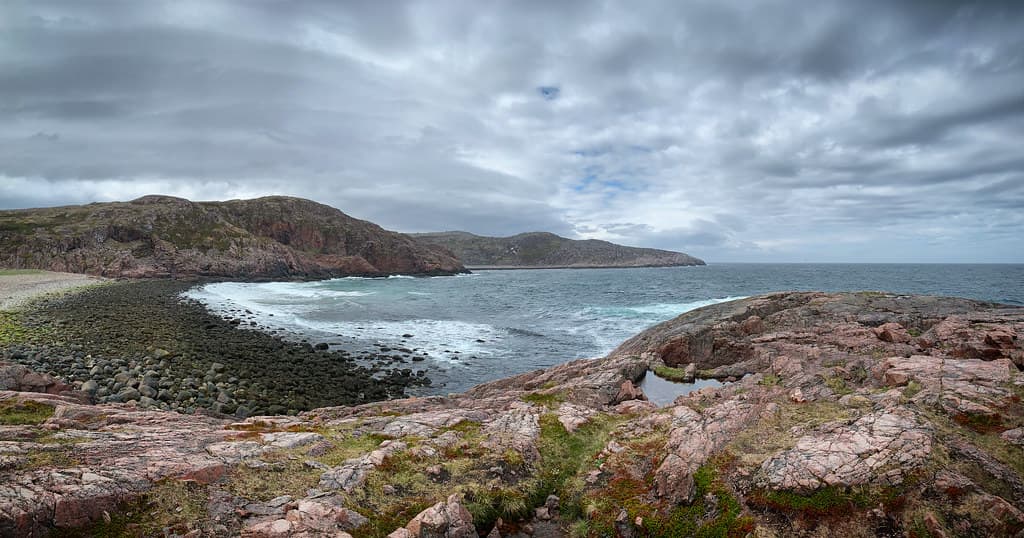
The approach to Guba Beach takes you through scrubland where the scent of sun-heated earth gives way gradually to salt air. You'll crest a low rise and suddenly the Caspian opens before you, vast and borderless. The beach itself curves gently, its sand fine-grained and pale, marked by the previous tide's high-water line of dried seaweed and small shells.
“The dune formations here create a dynamic landscape that changes visibly season to season, shaped by Caspian winds and time.”
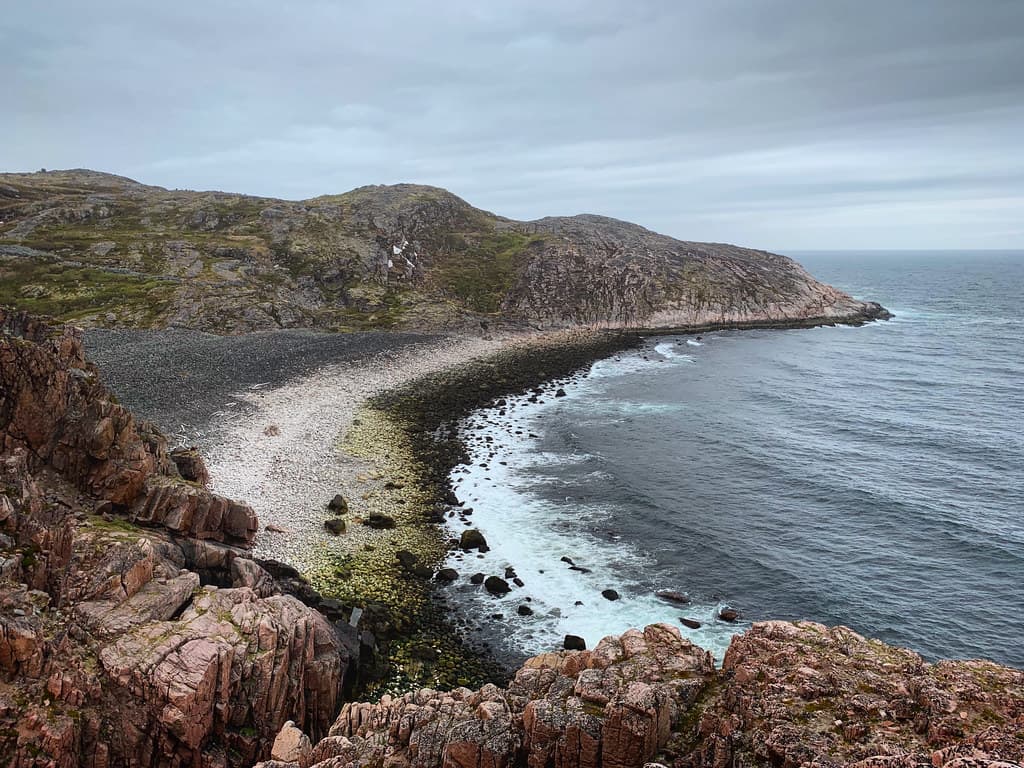 Credit: Flickr
Coast of the Arctic ocean near Teriberka, Russia, June 2019
Unlike the developed stretches closer to Khachmaz proper, this section of coast retains a rough-edged authenticity. A few seasonal shacks sell cold drinks and sunflower seeds, but there are no loungers in regimented rows, no thumping speakers. You'll hear waves, wind, and occasionally the distant put-put of a fishing boat's motor. The water temperature hovers around 24 degrees Celsius in summer, warm enough for extended swimming without the shock of cold seas.
The landscape behind the beach rises in gentle undulations covered with drought-resistant vegetation. Hawks circle overhead, riding thermals. By late afternoon, the quality of light transforms ordinary scenes—a weathered boat hull, a child's abandoned bucket—into tableaux worth your camera's attention. Fishermen wade knee-deep in the shallows, casting nets with practiced economy of motion. This is coastal Azerbaijan functioning as it has for generations, resisting the pressure to become something more polished and less real.


