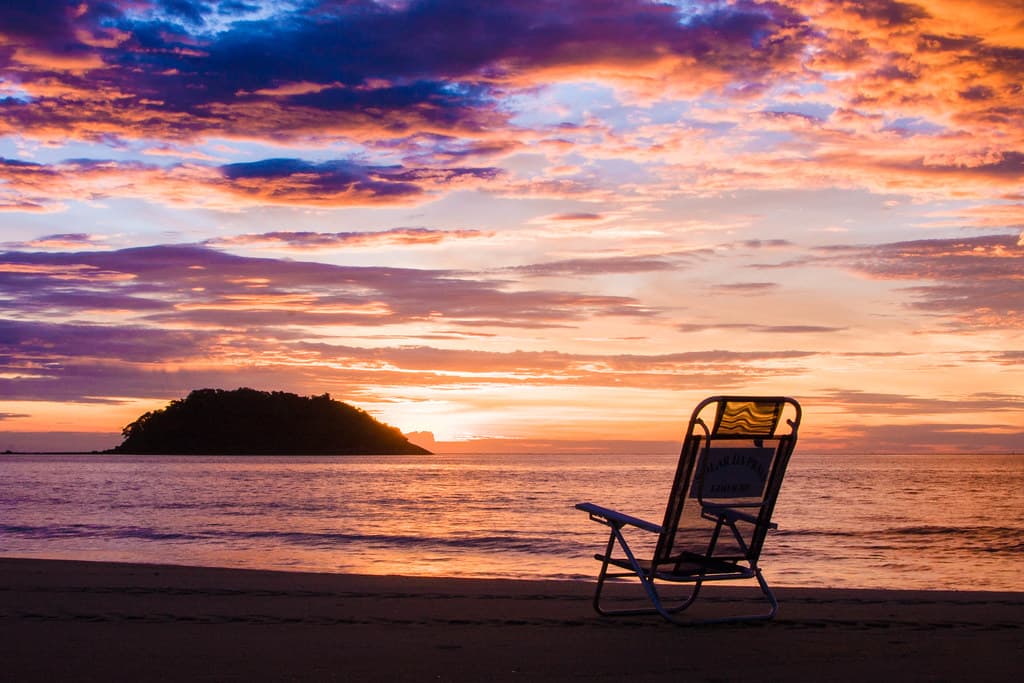
Counting the waves…
Counting the waves…
Superagüi exists outside the easy reach of paved roads, which explains the emptiness. The boat from Paranaguá weaves through mangrove estuaries where the water turns tea-colored from tannins, past stilted fishing shacks and oyster beds. When the sand finally appears, it gleams like ground shells, fine-grained and pale, extending in both directions until the beach curves out of sight. Behind this strand, the national park rises in layers of green—bromeliads clinging to tree trunks, vines looping between branches, the canopy alive with birdsong. The water offshore remains calm most days, protected by the island's position within the bay system. You'll wade into wavelets that barely reach your knees, the bottom visible beneath you—sand ripples, the occasional crab shuffling sideways, nothing more dramatic. This is not a beach for adrenaline. Instead, it offers the luxury of time: hours spent watching frigatebirds soar on thermals, studying the way light filters through palm fronds, feeling your breathing slow to match the gentle surf. The village behind the dunes holds perhaps two hundred people, their lives governed by tides and fishing seasons. You'll eat whatever came from the bay that morning—shrimp still sweet with brine, grilled corvina, rice studded with pequi. At night, with no streetlights to dilute the darkness, the Milky Way becomes a luminous river overhead, and the only sounds are waves folding onto sand and the forest exhaling into the dark.
Places, rentals, tours and events within walking and driving distance of Praia de Superagüi.
Photos
Praia de Superagüi is generally safe for swimming, known for its calm and tranquil waters. The beach is part of a protected national park area, which helps maintain its pristine condition. However, always check local conditions upon arrival, as ocean currents can vary. There are no lifeguards stationed regularly, so exercise caution and swim in designated areas. The peaceful nature of this beach makes it suitable for families and less experienced swimmers, but it's wise to stay alert and avoid swimming alone or too far from shore.
The best time to visit Praia de Superagüi is during Brazil's summer months from December to March, when you'll experience warm temperatures and sunny skies ideal for beach activities. The dry season from April to September also offers pleasant weather with fewer crowds. Avoid visiting during heavy rain periods, typically in winter months, as access can be challenging. Since the beach is located in a national park area, weather conditions greatly affect boat transportation availability. Weekdays tend to be quieter than weekends, offering a more peaceful experience of this scenic destination.
Getting to Praia de Superagüi requires a combination of road and boat travel. From Curitiba, drive approximately 90 kilometers to Paranaguá port, which takes about two hours. From Paranaguá, you'll need to take a boat to Superagüi Island, as the beach is only accessible by water. The boat journey typically takes 1-2 hours depending on sea conditions. Some visitors alternatively travel via Guaraqueçaba. Since this is a remote beach in a protected area, plan ahead and confirm boat schedules, as service may be limited depending on weather and season.
Accommodation and dining options near Praia de Superagüi are limited due to its remote, protected status within a national park. You'll find small pousadas (guesthouses) and basic lodging run by local families on Superagüi Island, offering simple but comfortable stays. Restaurants are modest, typically serving fresh seafood and traditional Brazilian cuisine prepared by locals. Facilities are rustic and eco-friendly to preserve the natural environment. It's advisable to book accommodation in advance, especially during peak season. Some visitors choose to stay in Paranaguá and take day trips to the beach instead.
Praia de Superagüi's uniqueness lies in its protected status within the Superagüi National Park, one of Brazil's most pristine coastal ecosystems. The beach features untouched white sand stretching for kilometers, backed by Atlantic rainforest and mangroves. Its remote location means minimal development and crowds, offering an authentic natural experience. The area is home to diverse wildlife including dolphins, sea turtles, and rare bird species. The combination of tranquil waters, scenic beauty, and ecological significance makes this beach special for nature lovers seeking an unspoiled paradise away from commercial tourism.