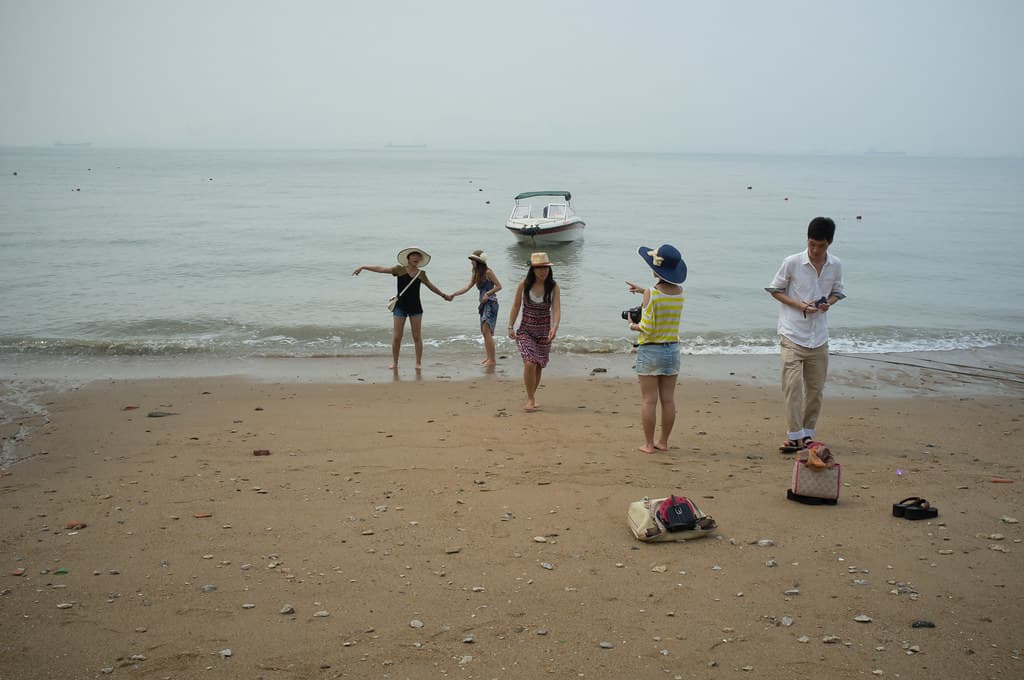
Counting the waves…
Counting the waves…
The shoreline unfolds in chaotic geometry—charcoal-grey boulders stacked like a giant's abandoned game, each one polished smooth by centuries of typhoon swells. You pick your way across the stones, the clatter of shifting pebbles beneath your feet mixing with the percussion of waves breaking against the larger formations. Salt spray mists your face when the swells hit just right, and the air tastes of brine and sun-baked seaweed. Tide pools the size of bathtubs collect in the depressions, their edges fringed with purple-black mussels and rust-colored barnacles. Small crabs dart sideways into crevices as your shadow passes. The water here isn't the inviting blue of tropical postcards—it's the steely green-grey of the East China Sea, opaque and muscular, carrying silt from river deltas upstream. Photographers arrive before dawn, tripods balanced precariously on the uneven terrain, chasing the moment when fishing boats drift past the headland and the rising sun ignites the wet rocks in gold. By midday you'll have the place to yourself, just the rhythmic boom of surf and the occasional diesel chug of a passing trawler breaking the solitude.
Places, rentals, tours and events within walking and driving distance of Tong'an Beach.
Photos
Swimming at Tong'an Beach requires extra caution due to its pebble and rocky composition. The uneven seabed with rocks and pebbles can make entry and exit challenging, and special footwear is recommended to protect your feet. Water conditions can vary significantly, with currents potentially stronger near rocky areas. This beach is less developed for swimming compared to sandy beaches, with limited lifeguard services. It's primarily suited for wading and exploration rather than extended swimming. Always assess conditions carefully, avoid swimming alone, and be particularly cautious during high tide or rough weather when rocks become slippery.
Tong'an Beach is naturally less crowded than popular sandy beaches, making it ideal for visitors seeking solitude. The least crowded times are weekdays during spring (March-May) and autumn (October-November) when weather remains pleasant. Early mornings and late afternoons offer the most peaceful experiences and best photography light. Summer weekends see increased local visitors, though crowds remain modest compared to mainstream beaches. Winter months are quietest but cooler, suitable for photographers and explorers rather than swimmers. The hidden nature of this beach means it rarely experiences overwhelming crowds, even during holidays.
Reaching Tong'an Beach typically requires a combination of public transportation and local knowledge, as it's less commercialized than major beaches. From Quanzhou, take a bus or taxi toward the coastal Tong'an area, though you may need to ask locals for specific directions as signage may be limited. Private car or taxi is most convenient, especially since the beach's hidden location makes public transport access less straightforward. Consider hiring a local driver or joining a tour if you're unfamiliar with the area. GPS coordinates may be helpful, and downloading offline maps is advisable.
As a hidden beach, Tong'an Beach has limited facilities directly on-site. Food options typically consist of small local restaurants or seafood vendors in nearby villages serving simple, authentic Fujian cuisine. Don't expect extensive menus or tourist-oriented establishments. Accommodation is similarly limited near the beach itself; visitors often stay in Quanzhou city or nearby towns and make a day trip. Bringing your own snacks and water is advisable. For meals, exploring nearby fishing villages can yield authentic local dining experiences. If staying overnight, research accommodation in surrounding areas in advance.
Tong'an Beach attracts photographers due to its unspoiled rocky landscape, unique pebble formations, and dramatic coastal scenery unmarred by commercial development. The combination of rocks, pebbles, and weathered coastal features creates compelling compositions not found at typical sandy beaches. Its hidden nature means fewer people in shots, allowing for pristine landscape photography. Different lighting conditions throughout the day produce varied moods—golden hour illuminates the rocks beautifully. The Instagrammable qualities come from its raw, authentic character. Photographers appreciate the opportunity to capture Fujian's natural coastline without modern intrusions, making it ideal for nature and seascape photography.