Counting the waves…
Counting the waves…
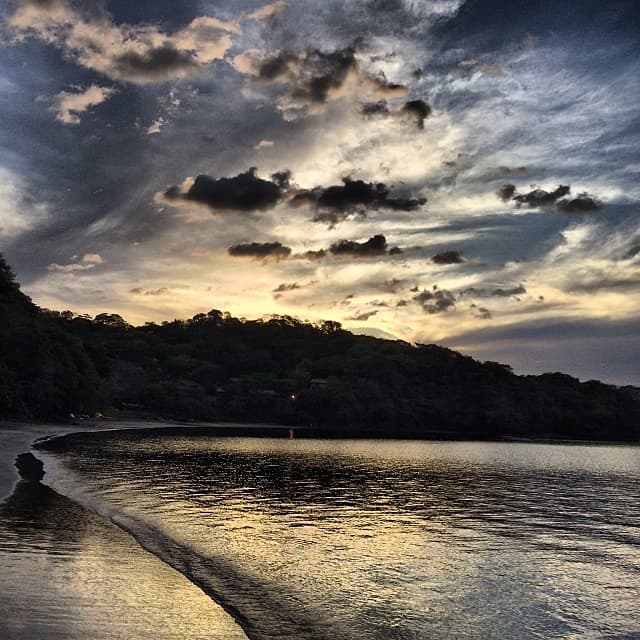
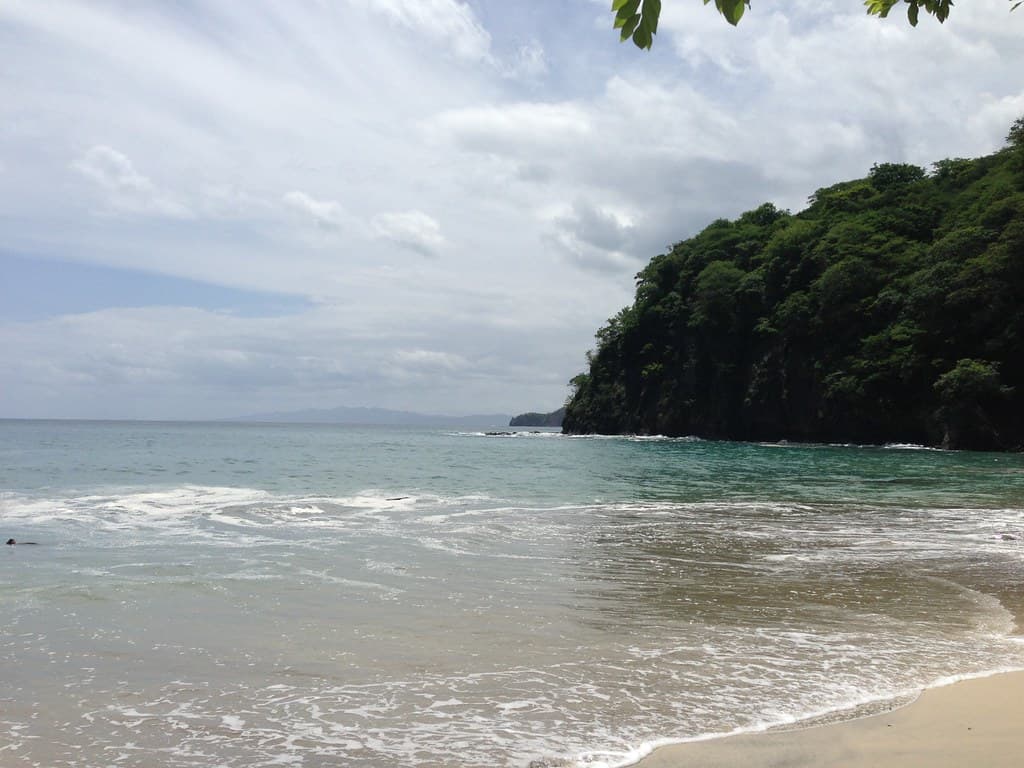
You'll spot them before you even step onto the sand: iguanas draped over volcanic boulders like living sculptures, their dewlaps pulsing in the heat. The beach takes its name from these prehistoric residents, who share the shoreline with hermit crabs scuttling across driftwood and howler monkeys that punctuate the afternoon quiet with guttural calls. The sand here is the color of wet cardboard, packed firm near the waterline where small waves arrive in gentle sets. Bahía Culebra stretches wide and undeveloped, the forest pressing close enough that you can hear the snap of branches when coatis forage in the understory. No palapas, no loungers—just a few weathered logs where you can sit and watch frigatebirds ride the thermals above the headlands. The water stays calm most days, warming to bathtub temperature by mid-afternoon, shallow enough that you can wade out fifty yards and still touch bottom. As the sun drops toward the Pacific, the sky floods with tangerine and violet, the silhouette of the Papagayo Peninsula darkening against the horizon. Families spread blankets on the upper beach, and kids chase ghost crabs into their burrows while parents uncork thermoses of cold beer. By the time the last light drains from the sky, the only sounds left are the tide and the nocturnal forest waking up.
Places, rentals, tours and events within walking and driving distance of Playa Iguanita.
Photos
Swimming at Playa Iguanita is generally safe thanks to its protected location within Bahía Culebra. The bay setting creates calmer conditions than open-ocean beaches, though waves and currents can vary seasonally. No lifeguards are stationed here, and the beach's undeveloped nature means fewer people around in emergencies. The wildlife refuge status means natural conditions prevail—watch for rocks and marine life. During dry season, waters are typically tranquil; wet season may bring stronger surf. The remote character requires self-reliance, so swim conservatively and never alone. Always assess conditions before entering the water.
Playa Iguanita remains relatively uncrowded year-round due to its protected wildlife refuge status and undeveloped character. For maximum solitude, visit during the green season (May through November) on weekdays, when even fewer visitors make the trip. Early mornings any time of year offer the most peaceful experience. The dry season (December-April) brings better weather but slightly more visitors, though crowds never approach levels of more developed beaches. Since facilities are minimal, most beachgoers prefer more accessible options, naturally limiting visitor numbers. The lack of major resorts nearby helps maintain the beach's quiet, wild atmosphere throughout the year.
Reaching Playa Iguanita requires more effort than developed Papagayo beaches. From Liberia Airport, drive toward Playas del Coco, then follow signs toward Bahía Culebra. The final approach may involve unpaved roads depending on your exact route. A 4WD vehicle is recommended during rainy season. Some visitors access the beach by boat from Playas del Coco or other nearby points. There are no direct public transportation options to this specific beach. GPS coordinates are helpful as signage may be limited. The relative difficulty of access contributes to the beach's undeveloped, pristine character and wildlife refuge protection.
Playa Iguanita has no restaurants, hotels, or commercial facilities directly on the beach due to its wildlife refuge status and undeveloped character. Visitors should bring their own food, water, and supplies for the day. The nearest accommodations and dining are in Playas del Coco, approximately 15-20 minutes away, which offers various hotels, vacation rentals, and restaurants. Some resorts around Bahía Culebra are relatively close. The lack of development is intentional, preserving the beach's natural setting. Pack out all trash, as there are no waste facilities. This wild character is precisely what makes Playa Iguanita special.
Playa Iguanita sits within a protected wildlife refuge, offering excellent opportunities to observe Costa Rican coastal wildlife in a natural setting. Iguanas, as the name suggests, are commonly spotted along the beach and in surrounding vegetation. Marine birds including pelicans, frigatebirds, and herons frequent the area. During nesting season, sea turtles may use the beach, though this varies by timing. Howler monkeys sometimes visit nearby trees. Tide pools and shallow waters host various fish and crabs. The undeveloped bay setting preserves habitat that supports this biodiversity, making wildlife observation a key attraction beyond typical beach activities.