
Counting the wavesβ¦

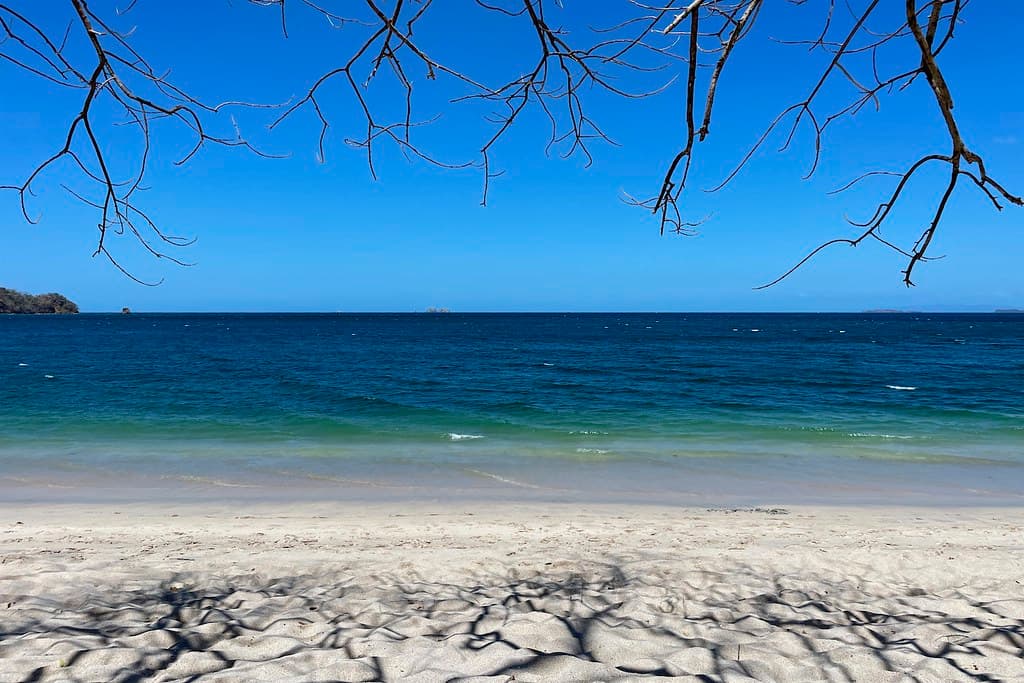
Playa Roble unfolds as a working beach first, a tourist destination second or perhaps not at all. The sand carries a coarse texture, individual grains visible and substantial rather than powdery, mixed with fragments of coral and volcanic minerals that give it a salt-and-pepper appearance. Almond trees lean seaward at improbable angles, their roots exposed by years of erosion, branches hung with drying fishing nets and the occasional hammock. The water enters gently here, the seafloor sloping so gradually that even at high tide you can walk out thirty meters before needing to swim. Local dogs patrol the wrack line each morning, nosing through kelp tangles for anything edible, their tracks joining those of ghost crabs and sanderlings. By mid-morning, fishing pangas return and beach themselves sideways to the surf, captains tossing the morning's catch into blue plastic totes while pelicans loiter nearby, opportunistic and patient. Sunset brings the village to the sand. Teenagers organize impromptu soccer matches, using driftwood as goalposts. Vendors push carts selling cas juice and mangoes sprinkled with chile and lime. The sun descends behind a headland to the north, casting the beach into soft shadow while the sky above continues blazing orange and pink. As darkness settles, the beach empties except for courting couples walking the tide line and the steady pulse of waves arriving from thousands of miles of open Pacific.
Places, rentals, tours and events within walking and driving distance of Playa Roble.
Photos
Playa Roble generally offers calm swimming conditions, especially during dry season (December-April). As with most Pacific beaches in Guanacaste, waves can vary depending on tides and weather. The beach lacks lifeguards, so swimmers should exercise caution and avoid going out too far. Check current conditions locally and watch for posted warnings. The sandy bottom makes entry gentle, but always be aware of changing tides and occasional rip currents along Costa Rica's Pacific coast.
The best time to visit Playa Roble is during the dry season from December through April, when you'll enjoy sunny skies and calm seas. For fewer crowds, consider visiting on weekdays or during shoulder months like November or early May. Early mornings and late afternoons offer the most tranquil atmosphere, as this beach sees mostly local visitors. The beach's west-facing orientation makes it excellent for sunset viewing year-round, though weather is more predictable during dry months.
Playa Roble is located very close to the village of Brasilito in Guanacaste. From Brasilito's main beach area, you can walk along the coast or take a short drive. The beach is accessible via local roads, though some may be unpaved. If staying in nearby Conchal or Flamingo, it's a quick drive of 5-10 minutes. Most visitors rent a car to explore this area, though taxis are available from major hotels. Look for local signage or ask residents for specific directions.
As a small local beach, Playa Roble itself has limited facilities. However, the nearby village of Brasilito offers several restaurants, sodas (local eateries), and small hotels within walking distance or a short drive. For more dining and lodging options, the resorts of Playa Conchal and Flamingo are just minutes away and offer everything from casual beachfront restaurants to upscale resorts. It's wise to bring water and snacks if planning to spend the day, as on-beach services are minimal.
Playa Roble stands out for its authentic local character and absence from most tourist itineraries. Unlike the busy resort beaches of Conchal or Flamingo nearby, Playa Roble maintains a quiet, undeveloped atmosphere where you're more likely to encounter local families than tour groups. The beach offers a genuine glimpse of coastal life in Guanacaste without commercial development. Its small size and scenic setting make it perfect for travelers seeking a peaceful alternative to the region's more famous beaches while still being conveniently located.