Counting the waves…
Counting the waves…

The trail from Hacienda Pinilla's groomed fairways ends abruptly at a jumble of black volcanic rock, polished smooth by centuries of swells. You navigate carefully—barnacles still cling to the higher stones—until the coastline opens into a cove where waves detonate against offshore reefs with the percussion of distant thunder. Tide pools trapped between boulders shimmer with sergeant majors and spotted blennies darting through anemone forests. Local surfers know the name Roca Bruja, but few resort guests venture this far south. The paddle-out demands respect: sharp reef below, shifting channels between sets, and a current that tugs persistently northward. When the sets align, barrels unzip across the inside section with enough hollow space to crouch through. Between waves, pelicans skim the lineup, their wingtips grazing the backs of swells. As afternoon light slants westward, the cliff face behind you glows ochre while shadows pool in rock crevices. You'll hear howler monkeys in the canopy before you see them—their guttural calls competing with the white noise of surf. The walk back requires timing; high tide claims the rocky passage entirely, turning the beach into an island accessible only by those who read tide charts and carry headlamps.
Places, rentals, tours and events within walking and driving distance of Playa Roca Bruja Pinilla.
Photos
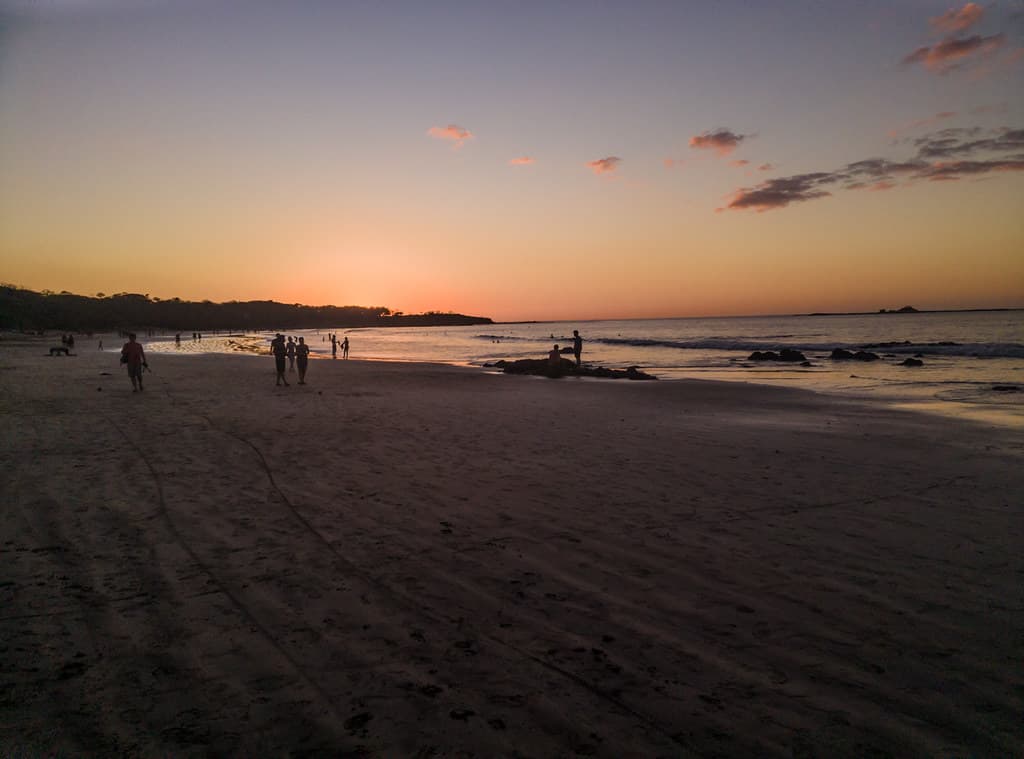
Playa Roca Bruja is a rocky beach section known more for surfing than swimming. The rocky terrain and surf conditions make it challenging and potentially dangerous for casual swimmers. Strong currents and waves breaking over rocks create hazards, especially during high tide or large swells. Experienced surfers frequent this area for its breaks, but families and non-surfers should exercise extreme caution. If you choose to enter the water, wear protective footwear due to the rocky bottom, stay aware of wave sets, and avoid swimming alone at this remote location.
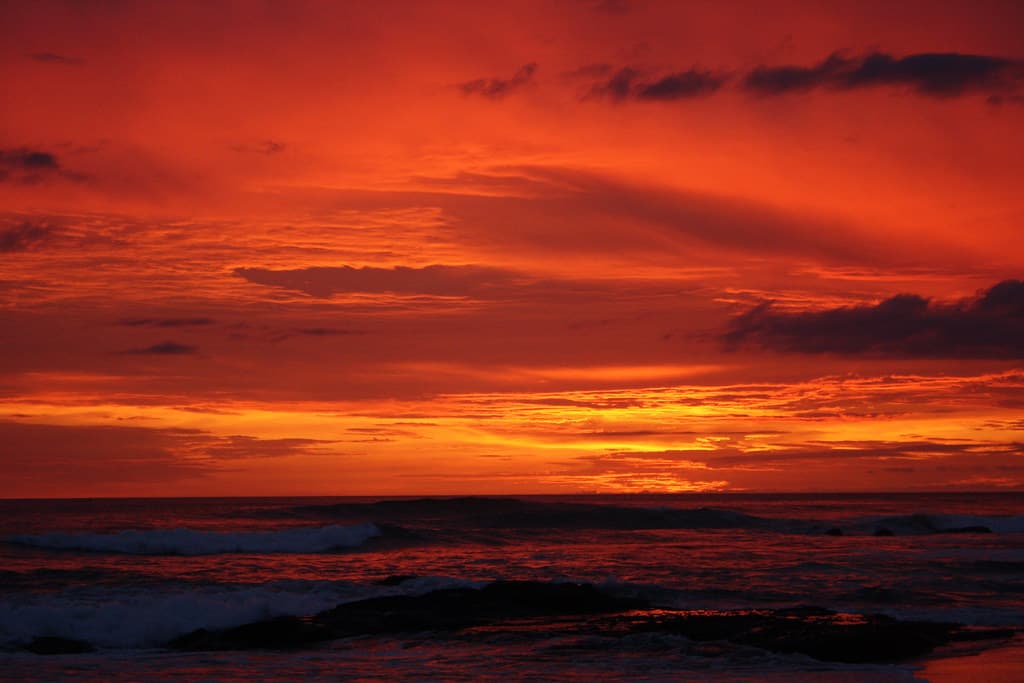
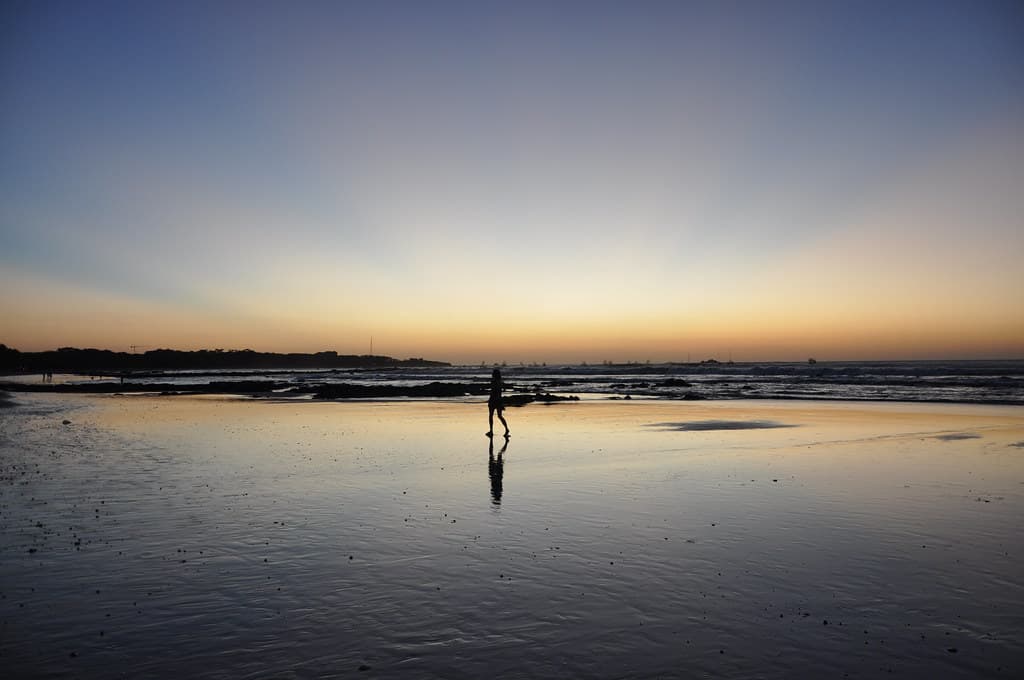
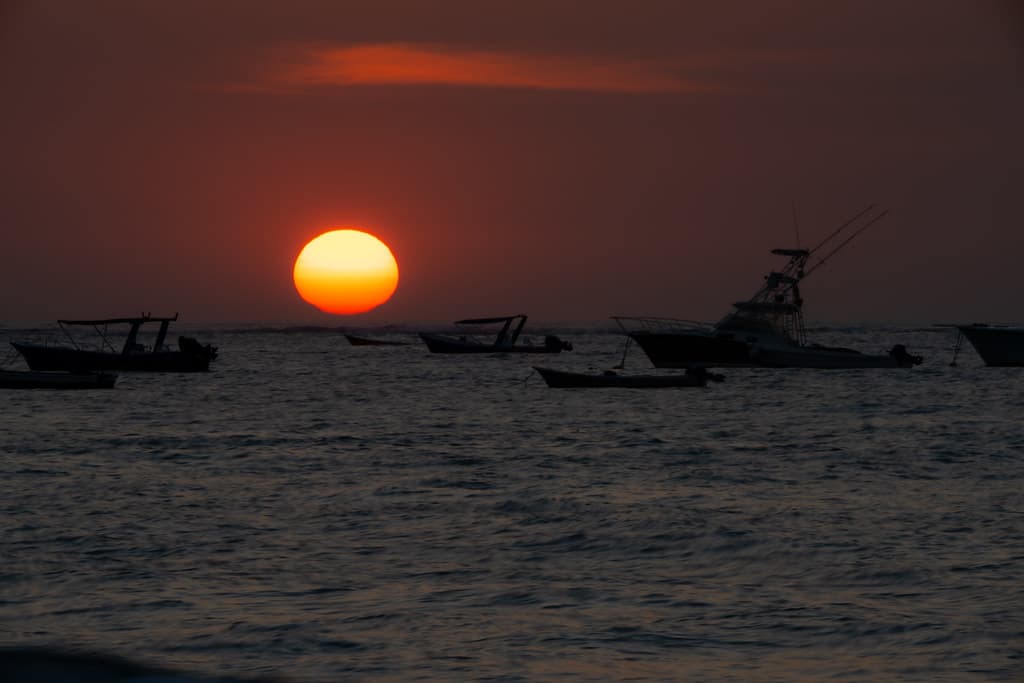
For surfing, Playa Roca Bruja sees the best swells during the rainy season from May through November, particularly during southern hemisphere winter months (June-August). The dry season (December-April) offers more predictable weather and beautiful sunsets, ideal for scenic visits and photography. Early mornings provide the best light and typically lighter winds. Low tide reveals more of the rocky landscape and tide pools. Given its location between popular Avellanas and Pinilla, visiting on weekdays ensures even greater solitude at this already lesser-known spot.
Playa Roca Bruja is located within or near Hacienda Pinilla, a private resort community in Guanacaste. Access typically requires passing through Hacienda Pinilla checkpoints; some areas may be restricted to residents and guests. The beach sits between Playa Avellanas and Playa Pinilla along the coast. A 4x4 vehicle is helpful for navigating the region's roads, particularly during rainy season. Some visitors walk along the beach from adjacent access points at low tide. Check access policies beforehand, as private property restrictions may apply in certain sections.
Hacienda Pinilla offers upscale accommodations including vacation rentals, condos, and the JW Marriott Guanacaste Resort, with on-site restaurants and amenities. Nearby Playa Avellanas has more casual options including beachfront restaurants and small hotels popular with surfers. Tamarindo, about 20 minutes north, provides the widest range of dining and lodging from budget to luxury. Given Playa Roca Bruja's remote rocky nature, bring your own food, water, and sun protection for beach visits, as no facilities exist directly at this lesser-known coastal section.
Playa Roca Bruja offers a lesser-known alternative to the crowded breaks at nearby Avellanas and Tamarindo. Its rocky configuration creates distinct surf characteristics that attract experienced surfers seeking less competition for waves. The dramatic rocky landscape provides exceptional sunset photography opportunities with interesting foreground elements. Being situated between two more famous beaches, it maintains a hidden quality despite being in a popular region. The combination of challenging surf conditions, scenic rocky coastline, and relative isolation creates an experience for those willing to explore beyond the well-trodden Guanacaste beach circuit.