Counting the waves…
Counting the waves…
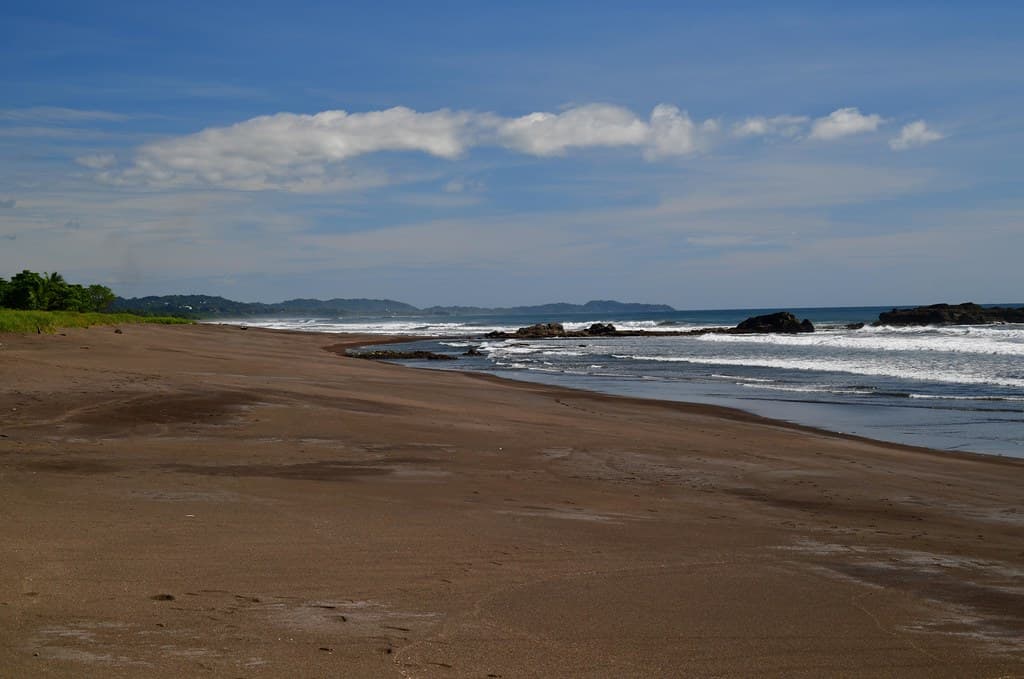
You park near a hand-painted sign that locals repaint every rainy season, then follow a footpath through low brush until the cove opens below: a tight crescent of sand no more than seventy meters wide, hemmed in by dark volcanic rock that weathers to rust and charcoal. The beach faces northwest, catching swells but baffling wind, so the water often stays calmer here than on the exposed coastline. Shade trees overhang the back of the cove, their roots knotted into the sand like arthritic fingers. Mid-morning the sun climbs high enough to light the entire cove, turning the sand pale gold and the shallows a milky jade. Hermit crabs patrol the wrack line, and ghost crabs dart into burrows at your approach. There's no reef to snorkel, no dramatic surf to watch—just the reliable metronome of waist-high waves folding onto shore, erasing and redrawing the beach with each tide. A few tide pools collect in the northern rocks, warm and still, where anemones pulse and tiny fish dart between your toes. By late afternoon the cove falls into shadow as the sun drops behind the headland, but the sky stays bright overhead—a bowl of copper and violet. Couples arrive then, spreading blankets on the cooling sand, uncorking thermoses of spiked coffee or cheap wine. The isolation isn't absolute—you'll hear voices carry from Ostional when the wind shifts—but it's enough to feel private, claimed, yours. Moonrise over the ocean is the real show: a silver disc lifting from the horizon, painting a molten path across the swells. It's hard to leave before it clears the water.
Places, rentals, tours and events within walking and driving distance of Playa La Luna.
Photos
Playa La Luna is generally calmer than exposed Pacific beaches due to its cove shape, making it more suitable for swimming than nearby surf beaches. However, always check local conditions as currents can vary with tides. The secluded nature means there are no lifeguards on duty, so swim at your own risk and never alone. During high tide or stormy weather, waves can pick up even in this protected cove. Ask locals about current conditions before entering the water.
The dry season from December through April offers the most reliable weather with minimal rain and consistent sunshine. For fewer crowds, visit during the shoulder months of November or early May. Early mornings and late afternoons are ideal for experiencing the beach's tranquil atmosphere and capturing stunning sunset views. The cove's secluded location means it rarely feels overcrowded even during peak tourist season, making it a peaceful choice year-round for those seeking solitude.
Playa La Luna is located north of Ostional village along the coastal road. Access typically requires a vehicle, preferably a 4x4 during rainy season when roads can become rough and muddy. From Ostional, head north and look for informal access paths leading to the beach; local directions are helpful as signage may be limited. The area is remote, so GPS can be unreliable. Consider hiring a local guide or asking at your accommodation for specific directions and current road conditions.
Playa La Luna itself has no developed infrastructure, so you won't find restaurants or hotels directly on the beach. The nearby village of Ostional offers basic sodas (local eateries) and limited budget accommodation options. For more comprehensive services, travelers typically stay in Nosara, about 15-20 minutes south, which has a full range of hotels, vacation rentals, and restaurants. Bring your own food, water, and supplies when visiting this beach for the day.
Playa La Luna's intimate cove setting and relative obscurity make it a true hidden gem along the Guanacaste coast. Unlike the more developed beaches in the region, this small beach maintains an untouched, local character that appeals to couples and travelers seeking privacy. The calm waters and scenic surroundings provide excellent opportunities for relaxation and photography without the typical tourist crowds. Its proximity to Ostional also means you're near one of Costa Rica's most important sea turtle nesting sites.