Counting the waves…
Counting the waves…
A refined fusion of water purity, environmental stability, and communal vibrancy for Playa Negra.
View MethodologyAnalyzed via live sensors and environmental data.
Wave height, wind, and atmospheric stability.
Live footfall and crowd balance metrics.
Community reviews and curated sentiment.
“Playa Negra fires on anything from chest-high to overhead, peeling down a lava-rock reef with mechanical precision. The wave has shaped the town around it—surf lodges, board racks, and a rhythm dictated by tide charts.”
Limited recent visitor reports — live OBI telemetry is your best guide for current conditions.
The reef at Playa Negra is older than the surf lodges, older than the dirt roads, a shelf of volcanic rock that's been grooming rights since long before anyone thought to ride them. The wave breaks best at mid to high tide, when the swell wraps around the point and peels down the reef for a hundred meters or more. You can see the lineup from the beach—dark shapes straddling boards, waiting, reading the horizon.
The village itself is small, strung along a coastal track lined with hibiscus and bougainvillea. Cafés serve casados and cold Imperials. Yoga studios occupy second floors. Everyone here either surfs or feeds the people who do. The black-sand beach gives Negra its name, though the color is more charcoal than true black, a reminder of the volcanic forces that built this coast.
 Credit: Unsplash
green tree under starry night
 Credit: Unsplash
people on beach during daytime
Long reef break at mid-tide
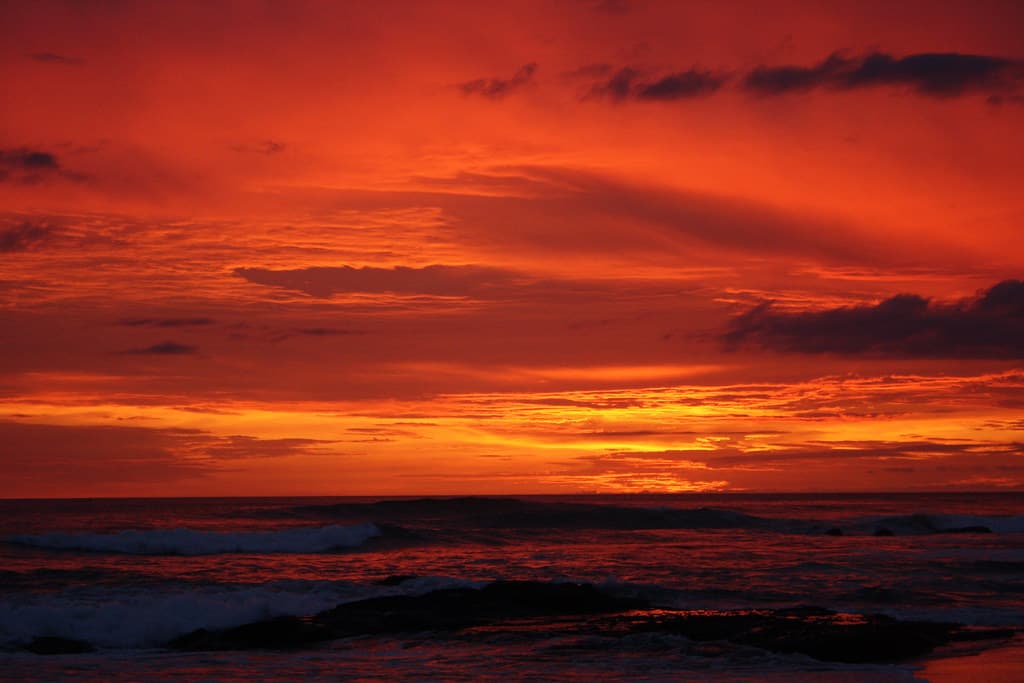
Silhouettes against sunset sets
Village cafés near the break
Prime Visitation
Best Weather|Less Crowds
Where it is
Playa Negra
Playa Negra, Guanacaste, Costa Rica
10.198800°, -85.824200°
Weather
Loading…
Swell
—
Temp
Warm · Restorative
UV Index
Moderate
Wind
—
Tidal State
Last known
Max Sunlight
—
Ideal Shade
—
Jan - Dec (Peak)
May - Nov (Off-season)
Best Weather|Less Crowds
Select a category to load nearby places.
Unlock restaurants, luxury stays and curated maritime experiences within 2km
Playa Negra is not recommended for casual swimming or beginner surfers. The beach is famous for its powerful right-hand reef break that breaks over a rock shelf, creating waves best suited for intermediate to advanced surfers. Strong currents, rocky bottom, and consistent surf make swimming dangerous. The reef is shallow at low tide, increasing risk of injury. Non-surfers can enjoy the beach for sunbathing and watching skilled surfers, but should stay out of the water unless experienced in reef breaks. Always check conditions and watch from shore before entering.
For surfing, Playa Negra works best during mid to high tide when there's enough water over the reef. The dry season (December-April) offers reliable weather, though the wet season brings excellent swells, particularly May through August. Early mornings provide offshore winds and fewer surfers competing for waves. Sunset sessions are popular when conditions align. The break is tide-dependent and can be inconsistent, so check surf forecasts before making the trip. Experienced surfers often visit during larger south and southwest swells. The uncrowded vibe makes any visit worthwhile for the right surfer.
Playa Negra is located south of Tamarindo, approximately 30-40 minutes by car. From Tamarindo, drive south following signs toward Playa Avellanas and Playa Negra. The journey involves partially paved roads that transition to rough dirt sections—4WD is highly recommended, especially during rainy season when roads deteriorate and river crossings may be required. The final approach can be particularly bumpy. Taxis from Tamarindo are available but expensive. Many surf-focused visitors rent vehicles or arrange transportation through their accommodations. GPS helps, as signage can be sporadic.
Playa Negra maintains a laid-back, surf-focused atmosphere with small hotels, surf camps, and vacation rentals catering primarily to wave riders. Hotel Playa Negra is a well-known beachfront property with a pool and restaurant. Other options include budget-friendly cabinas and mid-range boutique stays. Dining is limited to a few casual restaurants and the hotel restaurant, serving typical Costa Rican fare and fresh seafood. The vibe is decidedly low-key and unpretentious. Many visitors self-cater using nearby grocery stores or make trips to neighboring beaches and towns for more dining variety.
Playa Negra is famous for its long, fast right-hand point break that barrels over a rock reef, creating one of Costa Rica's most challenging and rewarding waves. The break offers powerful, hollow sections perfect for experienced surfers seeking barrels and high-performance waves. It's less crowded than many famous Costa Rican breaks, providing more waves per surfer. The wave's consistency during the right swell and tide conditions has made it legendary among knowledgeable wave hunters. Its remote location and reef setup require skill and ocean knowledge, filtering crowds and maintaining an authentic surf experience.
Photos