Counting the waves…
Counting the waves…
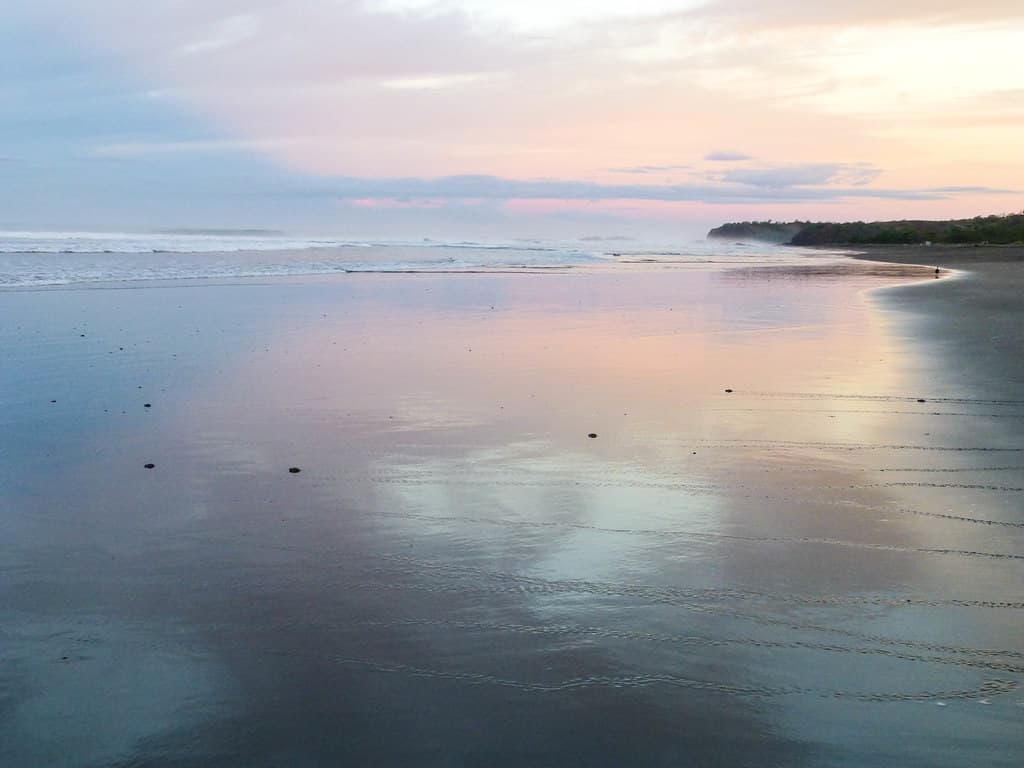
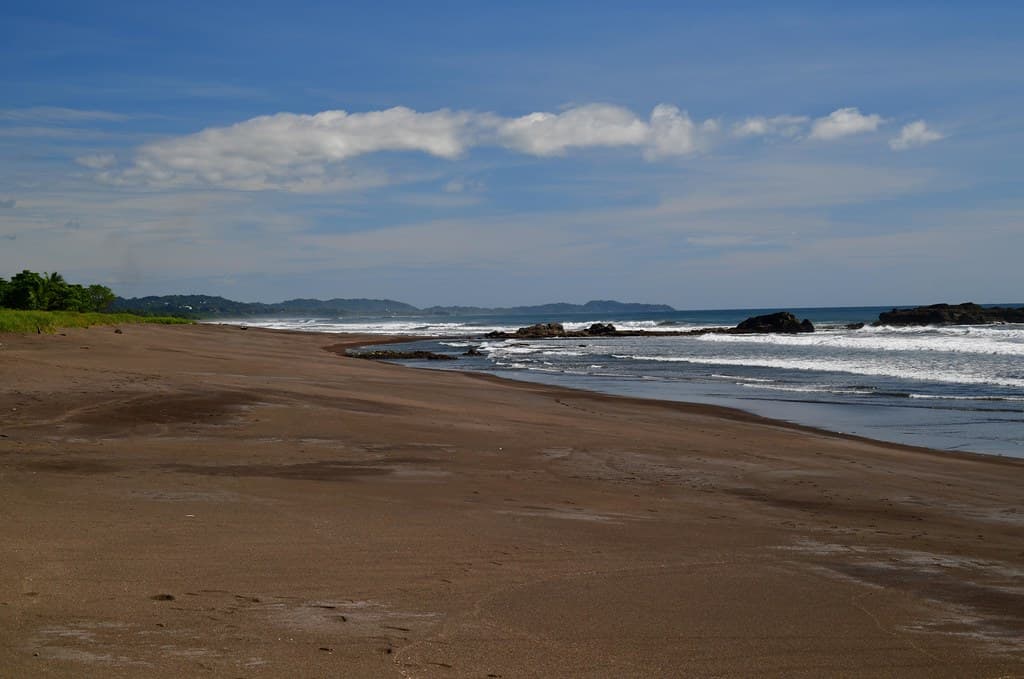
The dirt track ends at a cluster of almond trees, and beyond them the Pacific curves into a sheltered arc no wider than a football field. Volcanic rock juts from both ends, dark and barnacle-crusted, framing sand the color of raw honey. A single wooden panga sits tilted near the tideline, paint flaking in the salt air. When the tide pulls out, tidal pools form in the stone depressions, warming in the afternoon sun. You won't find a vendedor with a cooler of beer or a rental chair operation. What you will find: the rhythmic wash of small waves breaking over submerged rocks, the occasional howler monkey's roar from the forest canopy behind you, and water that shifts from jade green in the shallows to deeper cobalt where the bottom drops away. The headlands on either side block the wind that hammers the open beaches a few kilometers south. By late afternoon, the sun descends directly ahead, turning the water into hammered bronze. A fisherman might motor in, hauling his catch over the gunwale—snapper, usually, or the occasional small tuna. He'll nod, acknowledging your presence without surprise. You're the only outsider today, but he's seen a handful of others over the years, all drawn by the same rumor of a beach that doesn't perform for anyone.
Places, rentals, tours and events within walking and driving distance of Playa Pitahaya.
Photos
Swimming conditions at Playa Pitahaya vary with tides and swells. As a small cove, it can offer calmer waters than open beaches, but currents and rocky areas require caution. Always check conditions before entering the water, as this remote beach lacks lifeguards. The rocky terrain and boat access nature mean you should wear water shoes and be a confident swimmer. Visit during low to mid-tide for the best conditions, and never swim alone at this secluded location.
The dry season from December to April offers the most reliable weather and calmest seas for boat access to Playa Pitahaya. For fewer crowds and ultimate seclusion, visit on weekdays or during the green season (May-November), though afternoon rains are common. Early morning and late afternoon provide the best light for photography and sunset viewing. The beach remains relatively uncrowded year-round due to its hidden nature and boat-access requirement, making any time ideal for couples seeking privacy.
Playa Pitahaya is primarily accessed by boat from San Juanillo or nearby beaches, as overland access is extremely difficult or nonexistent. Local fishermen or tour operators in San Juanillo can arrange boat transport. Some visitors kayak from adjacent beaches during calm conditions. The nearest accessible town is San Juanillo, which is reached via rough dirt roads from Nosara or the main coastal highway. A 4x4 vehicle is strongly recommended for reaching the boat departure points in this remote area.
Playa Pitahaya itself has no facilities, restaurants, or accommodations due to its remote, undeveloped nature. Visitors should base themselves in nearby San Juanillo, which offers a handful of small hotels, vacation rentals, and local sodas (casual restaurants). The larger town of Nosara, about 30-40 minutes away, provides more extensive lodging and dining options. Pack all food, water, and supplies for your beach visit, as nothing is available on-site. This is truly a bring-your-own-everything destination.
Playa Pitahaya's defining feature is its extreme seclusion and boat-access requirement, making it one of the most hidden beaches in the Nosara area. Unlike the developed beaches nearby, this tiny cove remains virtually untouched and rarely visited, offering a true castaway experience. The combination of intimate size, dramatic cove setting, and lack of facilities creates a romantic, adventurous atmosphere perfect for couples willing to make the effort. It represents local discovery at its finest—a reward for travelers seeking beaches beyond the guidebook standards.