Counting the waves…
Counting the waves…
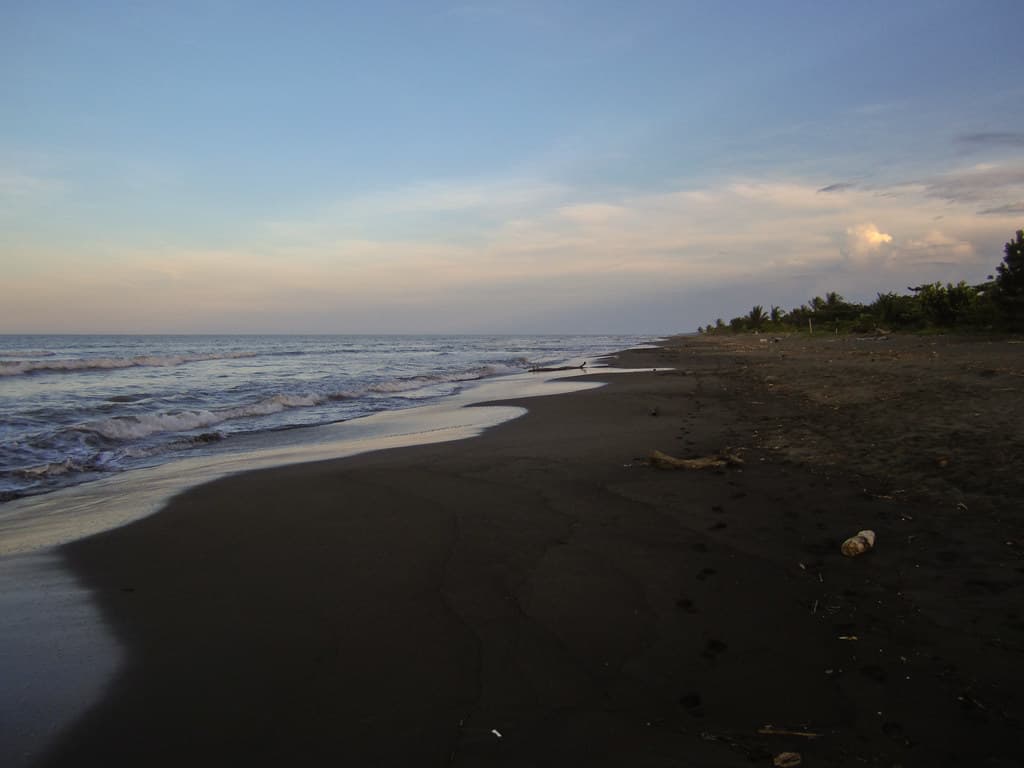
The panga rounds the final bend and the boatman cuts the engine, letting momentum carry you through the river mouth into open Caribbean. To your right stretches Playa Tres Amigos—two kilometers of unbroken sand backed by dense jungle, not a structure visible in either direction. The beach takes its name from three enormous ceiba trees that once marked this spot, though only their massive stumps remain, half-buried in sand and serving as landmarks for turtle researchers who patrol these shores. The sand here is the color of wet concrete, packed hard at low tide, scattered with seeds and fruit that tumbled from the forest canopy. Waves organize themselves into clean lines as they feel the sandbar, peeling left and right off subtle bottom contours. You might see jaguar tracks near the tree line—this coast remains wild enough that big cats still hunt the beach at night, taking nesting turtles and raiding crab burrows. By day, scarlet macaws cross overhead in pairs, their calls carrying over the surf noise. There's no infrastructure because there's no access—the jungle behind is impenetrable, the nearest road an hour away by boat. The handful of people who visit Tres Amigos are turtle researchers camping in tents during nesting season, surfers willing to organize boat shuttles for empty waves, or the very occasional adventure traveler staying at one of the remote ecolodges upriver. This is the Caribbean coast as it existed before any development—before tourism, before agriculture, before anything but jungle, beach, and the eternal conversation between river and sea.
Places, rentals, tours and events within walking and driving distance of Playa Tres Amigos.
Photos
Swimming at Playa Tres Amigos requires caution due to the beach's remote nature and potential for strong Caribbean currents. With very limited development, there are no lifeguards or safety services present. Water conditions vary with weather and tides, and the surf conditions that attract wave riders also indicate powerful ocean forces. Always swim with a companion and assess conditions carefully. The remoteness means emergency help would take significant time to arrive. If you're not a strong swimmer or unfamiliar with ocean conditions, it's best to wade rather than swim, or consult experienced locals before entering the water.
The optimal time to visit Playa Tres Amigos is during Costa Rica's drier months, particularly February through April and September through October, when access is easier and weather more predictable. However, the Caribbean coast can receive rain year-round. For surfers, check seasonal swell patterns. Given the boat access requirement or difficult land approach, plan visits when seas are calmer for safer transit. Visit on weekdays to maximize solitude, though you'll likely have the beach largely to yourself regardless. Early arrivals offer the best wildlife viewing and photography light along this undeveloped coastline.
Access to Playa Tres Amigos near Pacuare typically requires boat transport, making it more adventurous than most beaches. From Limón or nearby coastal towns, you'll need to arrange boat access with local operators or fishermen, as road access is very limited or nonexistent. The Pacuare area is remote with minimal infrastructure. Some hardy travelers may attempt land access through difficult trails, but this requires local guidance and appropriate preparation. Plan your visit carefully, arrange transportation in advance, and confirm return pickup times. The journey is part of the adventure but requires more planning than accessible beaches.
Accommodation and dining options near Playa Tres Amigos are extremely limited due to the remote location and minimal development. Pacuare is a small, undeveloped area without tourist infrastructure. You'll likely need to base yourself in Limón or another coastal town and arrange day trips. Bring all food, water, and supplies with you, as nothing is available at the beach itself. Some local families may offer homestays or basic meals if arranged in advance through connections. For comfort and services, stay in established towns and treat this as a wilderness beach excursion requiring self-sufficiency.
Playa Tres Amigos embodies true wilderness coastal experience in an increasingly developed Costa Rica. Its boat-access-only or difficult-trail approach keeps it genuinely remote and undiscovered by mainstream tourism. The beach offers pristine natural beauty without development, providing authentic escape for adventurous travelers. The combination of surfing potential, scenic wilderness character, and the journey required to reach it creates a sense of discovery increasingly rare on accessible coastlines. This is for travelers who value untouched nature and are willing to make the extra effort for beaches that remain wild and uncrowded.