
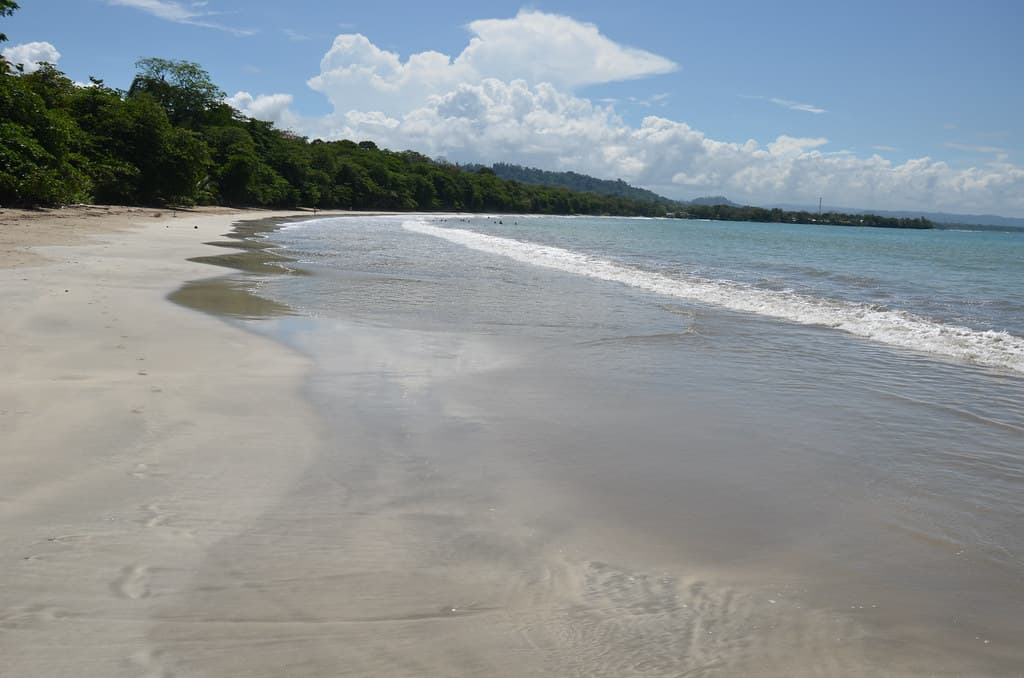
You leave Cahuita's village center and follow the shoreline north, where the developed beach quickly gives way to wilder terrain. The sand here runs darker than beaches to the south, mixed with volcanic minerals that create a charcoal-flecked surface. Coconut palms lean at improbable angles, their trunks scarred by time and weather, dropping shade in irregular patches. Small waves arrive with metronomic consistency, their foam leaving temporary lace patterns before retreating.
“The longest undeveloped beach stretch near Cahuita where families can swim safely in shallow water without navigating national park protocols.”
 Credit: Flickr
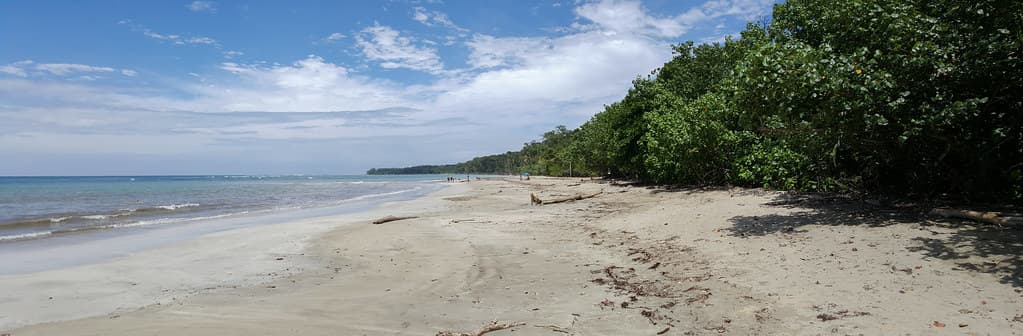
Playa Larga — photo by loic4467
The shallow angle makes this ideal water for children—you can wade out fifteen meters and still stand comfortably waist-deep, the bottom firm sand with occasional smooth stones. Small fish dart between your ankles while ghost crabs emerge from burrows to patrol the wrack line, their bodies translucent in morning light. The absence of reef offshore means clearer water after rains, though you sacrifice the snorkeling opportunities found at Playa Blanca inside the park.
Vegetation presses close to the high-tide mark, creating natural privacy screens between coconut palms. You'll spot three-toed sloths moving through the canopy like animated moss, and bright morpho butterflies the size of your hand floating erratically above the sand. A few local families maintain small properties behind the beach, but no commercial development interrupts the coastline. By mid-afternoon, onshore breezes build enough to rattle palm fronds and dry wet swimsuits in minutes.


