Counting the waves…
Counting the waves…
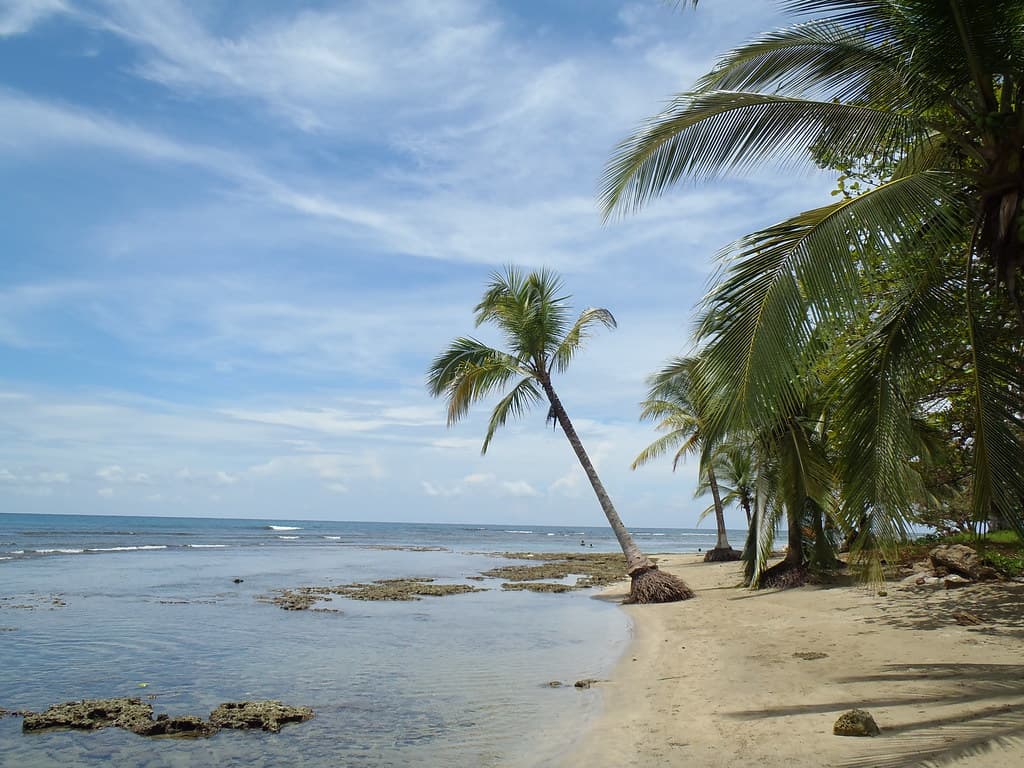
Playa Naranjo occupies a fold in the coastline where the Talamanca foothills nearly reach the water. You park along the Punta Uva road, near a faded wooden sign, and follow a path through a tunnel of wild ginger and heliconia. Within five minutes you emerge onto a beach that curves gently southward, bookended by headlands draped in climbing pandanus. The trees here—beach almond, coconut palm, mango—lean seaward at improbable angles, their roots exposed by erosion. You claim a spot in their shade and watch the surf, which arrives in disorganized pulses, each wave collapsing differently than the last. A half-dozen vultures roost in a dead ceiba at the beach's northern end, their wings spread wide to catch the morning thermals. The only other visitors are a pair of caballeros exercising their horses in the shallows, the animals snorting and tossing their heads against the reins. You swim carefully, aware of the sudden depth and the rip current that tugs persistently southward. The water temperature hovers near eighty-five degrees, warm enough that you stay in until your fingers prune. When you emerge, a coati is investigating your bag, its ringed tail raised like a question mark. You clap once and it retreats, but slowly, with obvious reluctance.
Places, rentals, tours and events within walking and driving distance of Playa Naranjo.
Photos
Swimming safety at Playa Naranjo depends on daily ocean conditions. As a secluded beach, there are no lifeguards on duty, so swimmers must exercise personal judgment and caution. The Caribbean coast can experience varying wave and current conditions, with calmer waters typically during the dry season. Always observe the water before entering and avoid swimming during rough conditions or if you're alone. The beach's secluded nature means fewer people around in case of emergencies. Strong swimmers will generally find conditions manageable during calm weather periods.
Playa Naranjo remains relatively uncrowded year-round due to its secluded nature, but the quietest times are outside the dry season peak of February-April. For the best combination of good weather and minimal crowds, consider visiting in January or May. The beach's hidden location means even during high season, you're unlikely to encounter the crowds found at popular tourist beaches. September and October see the heaviest rainfall, which keeps visitor numbers extremely low. Weekdays are generally quieter than weekends when some locals visit.
Playa Naranjo is located in the Punta Uva area, south of Puerto Viejo along the Caribbean coast. Access typically involves driving or taking the Puerto Viejo-Manzanillo bus to the Punta Uva area, then walking or following local paths to reach this secluded beach. The exact access route may require local knowledge as signage is minimal. You can ask at accommodations in Punta Uva for specific directions. The area is also accessible by bicycle from Puerto Viejo. Being a hidden beach, some exploration and possibly guidance from locals may be needed.
Playa Naranjo itself is a secluded beach without direct facilities, but the Punta Uva area offers various eco-lodges, cabins, and small hotels within walking or short driving distance. A few local restaurants and sodas serve Caribbean and Costa Rican cuisine nearby. For more extensive dining and accommodation options, Puerto Viejo (about 8-10 kilometers north) provides numerous choices from budget hostels to upscale hotels and diverse restaurants. Given the beach's secluded nature, visitors should bring water and snacks, as immediate beachside services are limited or nonexistent.
Playa Naranjo's defining characteristic is its exceptional seclusion and tranquility, even within the already quiet Punta Uva area. The beach offers stunning natural views surrounded by tropical forest, providing an intimate, peaceful environment perfect for relaxation and contemplation. Its hidden nature means visitors often have the beach largely to themselves, creating a true escape from tourist crowds. The pristine natural setting showcases the Caribbean coast's raw beauty without commercial development. This makes it ideal for travelers seeking solitude, nature immersion, and a genuine off-the-beaten-path beach experience.