
Playa Poza Colorada announces itself through water color before the beach comes into view: a pool of turquoise held inside red volcanic arms, the stone stained rust and crimson from iron oxide. The cove measures maybe thirty meters across, its beach a mixture of coarse sand and pebble fragments worn smooth by tidal action. Above the waterline, scrub vegetation clings to the headlands—salt-tolerant shrubs and the occasional stunted frangipani.
“The only named beach in the region where volcanic red rock creates such dramatic color contrast with spring-fed turquoise water.”
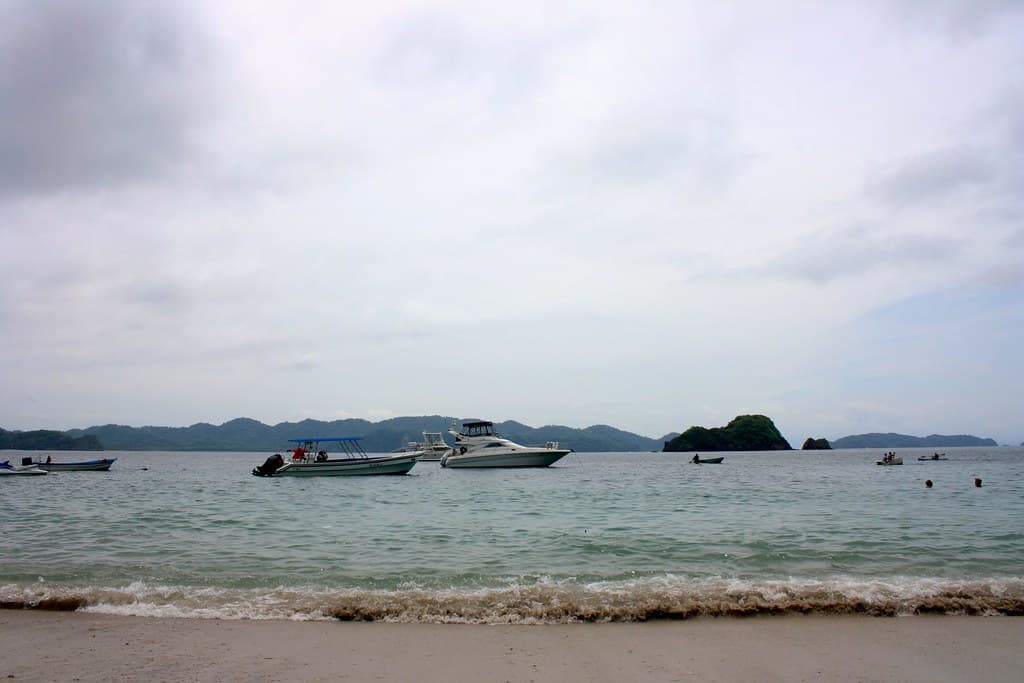 Credit: Flickr
Playa Poza Colorada — photo by Trevor.Huxham
You slip into water that's somehow three degrees cooler than the surrounding Gulf, fed by an underground spring according to locals. The bottom drops quickly to four meters, then plateaus into a sand and rubble field where garden eels retract into burrows at your approach. Along the red rock walls, Christmas tree worms bloom purple and gold from coral heads. A school of young jacks circles the cove perimeter, their silver flanks catching sunlight in synchronized flashes. You surface for air and find yourself surrounded by stone the color of dried blood, sky the blue of gas flame, water so clear you can count your toes at depth.
The boat captain knows this spot from childhood fishing trips with his father. No signs mark it, no tour operators include it in standard routes. You're here because you asked the right question in the right Paquera cantina, because you hired someone who still knows these hidden folds in the coastline. You have maybe an hour before the tide change makes anchoring difficult. Use it: dive, float, memorize the color of water you'll spend years trying to describe and never quite capturing.


