
You follow tire ruts through coastal scrub until the mango grove appears, a thick stand of trees marking where freshwater once seeped through limestone. Playa Mangos opens beyond them: a sand crescent tucked between rocky points, the shore littered with fallen fruit at certain times of year. The beach carries a ripe sweetness when mangos drop in March and April, fermenting in tide pools and attracting clouds of butterflies that mob the wrack line.
“The only Gulf beach named for its fruit trees, where mango season transforms the shoreline into a sweet-smelling wildlife magnet.”
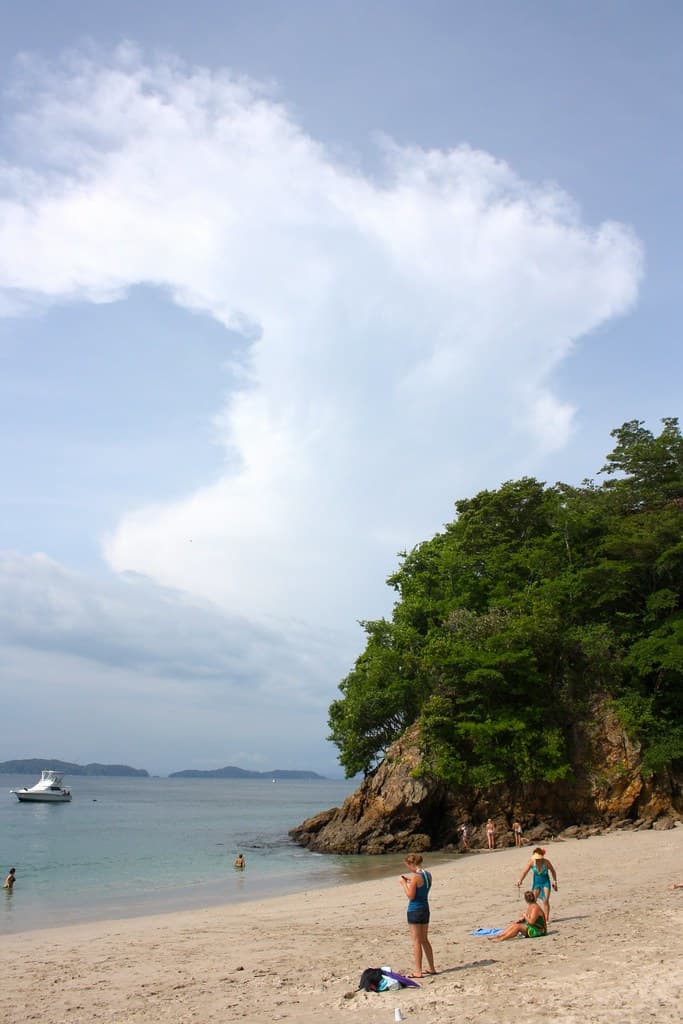 Credit: Flickr
Playa Mangos — photo by Trevor.Huxham
The water slides in turquoise over sand bottom, depth increasing gradually enough that you can walk twenty meters before it reaches your chest. Temperature hovers around eighty-five degrees year-round. You float on your back, ears underwater, hearing nothing but your own pulse and the muffled click of snapping shrimp in the shallows. A great blue heron stalks the waterline, freezing mid-step when your shadow crosses its hunting ground. Green iguanas sun themselves on driftwood logs, heads bobbing territorial warnings when you approach too close.
The cove's intimacy is the point—it holds maybe a dozen people comfortably before feeling crowded, and most days you'll count only hermit crabs and sanderlings. Shade comes free under the mango canopy. The sand stays soft and cool beneath the trees, perfect for spreading a sheet and spending hours with a book while the Gulf breathes its slow rhythm. By late afternoon, the light goes honey-gold and the water turns molten, reflecting sky and distant mountains in equal measure.


