Counting the waves…
Counting the waves…
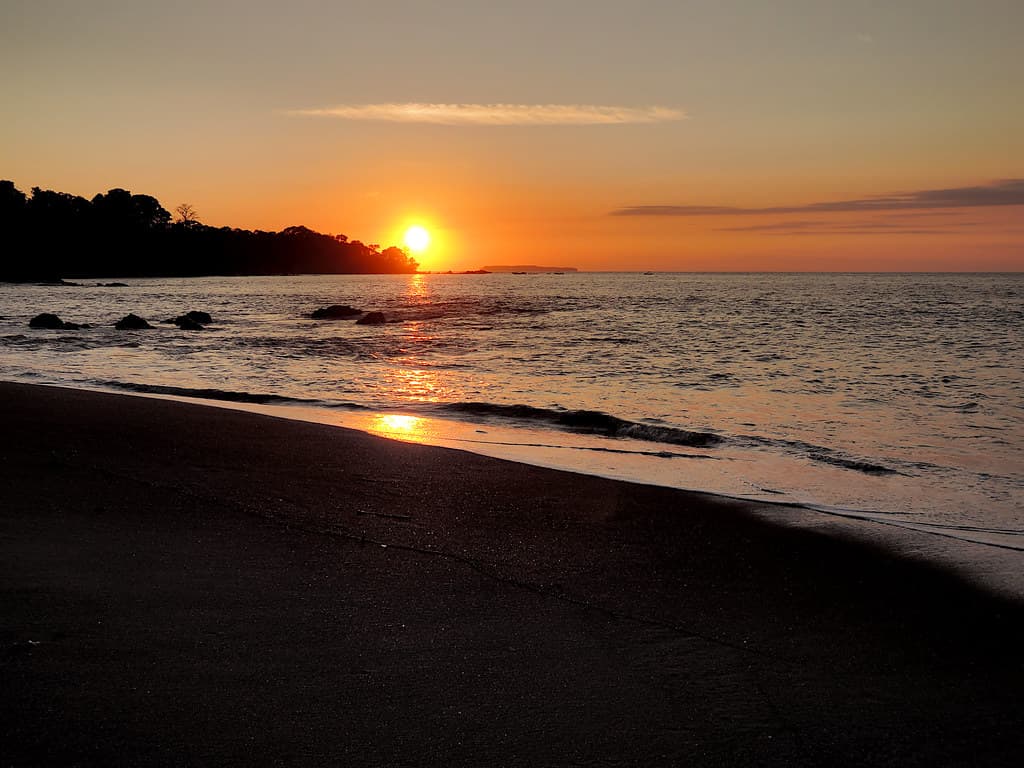
The beach stretches far enough that both ends dissolve into heat shimmer and coastal haze. Playa Ganado is wide, flat, and the color of wet cardboard where the tide retreats, lightening to wheat-gold where the sand dries. Behind you, the wetlands press close—a wall of green punctuated by the occasional ceiba tree rising above the mangrove canopy. Ahead, the Pacific rolls in with the patient monotony of a metronome. Most visitors arrive by boat, navigating the Sierpe River's network of channels until the wetlands release them near this beach. Some hike in via narrow trails through the coastal forest, emerging sandy-legged and triumphant. Either way, you'll likely have the place to yourself. The sand is littered with the ocean's castoffs: kelp ribbons, driftwood branches bleached bone-white, the occasional float from a distant fishing net. Frigate birds wheel overhead, their crooked wings silhouetted against clouds that build each afternoon into towers of vapor. Sunsets here are uncomplicated and enormous. The sun drops into the Pacific with no landmass to interrupt it, staining the wet sand bronze and casting your shadow a hundred feet long. As dusk thickens, howler monkeys begin their evening chorus from the forest edge, a sound so deep it resonates in your chest. By the time stars emerge, you understand why some beaches resist development—they're complete exactly as they are.
Places, rentals, tours and events within walking and driving distance of Playa Ganado.
Photos
Swimming safety at Playa Ganado depends on ocean conditions, which can vary with tides, swells, and seasons. Being a remote beach near wetland areas, currents can be unpredictable, especially near the river influence zones. The beach typically offers calmer conditions during dry season mornings and protected spots along its length. Since the area lacks lifeguards and emergency services are distant, swimmers should be cautious and assess conditions carefully. Avoid swimming alone, watch for changing tides, and ask local boat operators about current conditions before entering the water.
The dry season from December through April provides the most favorable conditions for visiting Playa Ganado, with easier boat access and lower chances of rain. These months offer calmer seas and better opportunities for beach activities and sunset viewing. Since the beach requires boat transport or hiking, dry season makes access significantly more manageable. The beach sees very few visitors year-round, so overcrowding is never a concern. Early mornings provide the best light and typically the calmest conditions. Green season visits are possible but require more flexible planning due to weather.
Playa Ganado is typically accessed by boat from Sierpe or via hiking trails from nearby coastal areas. Boat transport is the most common and reliable method, arranged through local operators in Sierpe who know the wetland channels and coastal routes. The journey time varies depending on starting point and water conditions. Some adventurous travelers reach the beach via coastal trails, though these can be challenging and require local guidance. There is no road access directly to the beach. Always arrange transportation with experienced local operators and confirm return pickup times before departure.
Playa Ganado is a completely undeveloped beach with no restaurants, accommodations, or facilities of any kind. Visitors must bring all food, drinking water, sun protection, and other supplies from Sierpe or their base location. There are no shops, bathrooms, or services available. Plan this as a wilderness day trip and pack appropriately, including items for waste removal to maintain the beach's pristine condition. The nearest food and lodging options are in Sierpe village. Some boat tours may include basic provisions, but confirm details when booking transport.
Playa Ganado's location on the wetland fringe between the Sierpe River system and the Pacific Ocean creates a distinctive ecological setting rarely found elsewhere. The long, remote sand beach offers a genuine wilderness experience without development or crowds, appealing to travelers seeking authentic seclusion. Its position near the extensive Térraba-Sierpe wetlands, one of Central America's largest mangrove systems, provides opportunities to observe unique wildlife and landscapes. The beach's remoteness and boat-or-trail access requirement have kept it off standard tourist circuits, preserving its natural character and offering spectacular sunset views.